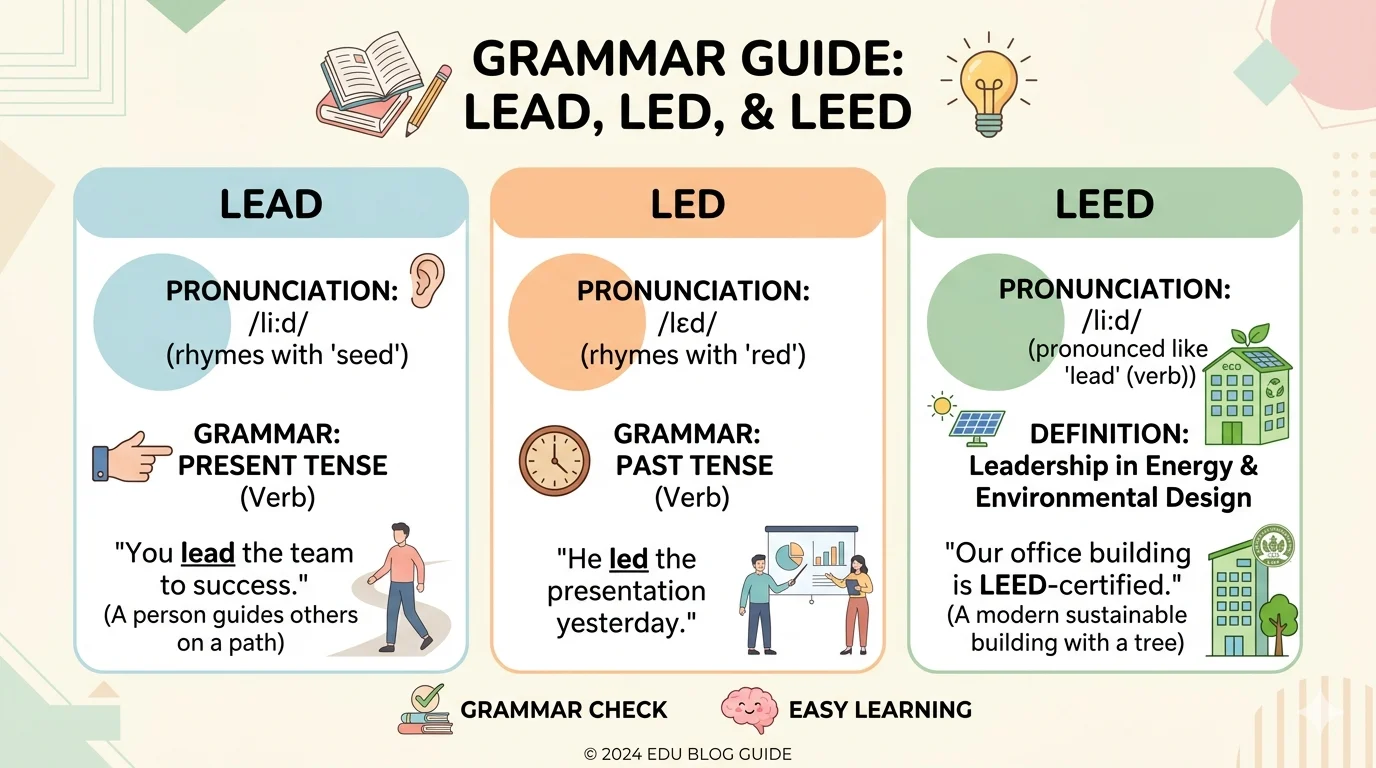
“Leed or lead” is one of the most searched grammar questions online. Many learners, students, and even professionals get confused about the correct spelling, pronunciation, and past tense of this word. Some people write leed, others write lead, and many are unsure whether led is correct.
The confusion becomes bigger because lead has multiple meanings and different pronunciations. On top of that, LEED is a completely different word used in green building certification. This is why people often search:
- What is the difference between LEED and lead?
- What is the past tense of lead?
- How do I say I led a project?
This complete guide explains leed or lead meaning, grammar, pronunciation, and real-life examples in simple English so you can use these words correctly in writing and speech.
What Is the Difference Between Leed or Lead?
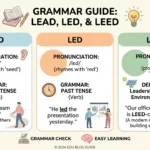
The word leed is not correct in English. The correct forms are lead, led, and LEED.
| Word | Correct? | Meaning | Example |
|---|---|---|---|
| lead | ✔ | present tense verb | I lead the team |
| led | ✔ | past tense of lead | I led the team |
| leed | ✘ | spelling mistake | ❌ not used |
| LEED | ✔ | green building certification | LEED Gold building |
Easy Rule to Remember
You lead today, but you led yesterday.
What Is the Difference Between LEED and Lead?
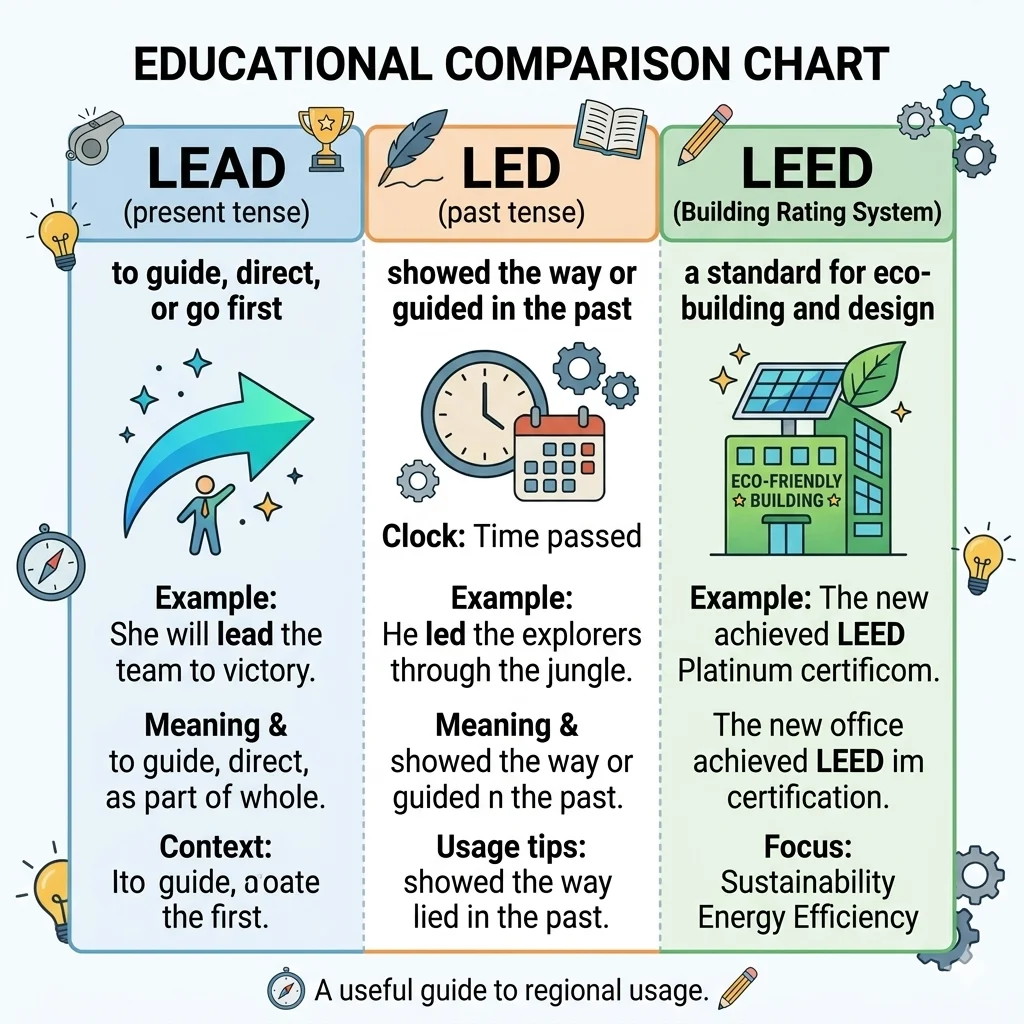
Many users confuse LEED with lead because they look similar, but they belong to different fields.
| Term | Meaning | Field |
|---|---|---|
| lead | to guide or direct | English grammar |
| led | past tense of lead | English grammar |
| LEED | Leadership in Energy and Environmental Design | architecture & sustainability |
LEED is a global certification system developed by the U.S. Green Building Council to measure environmentally friendly buildings.
Why Do People Confuse Leed and Lead?
The confusion exists because English spelling does not always match pronunciation. The present tense lead is pronounced like leed, so learners assume the spelling should also be leed. However, English keeps historical spellings, which is why the past tense is written led, not lead.
This problem is common with irregular verbs.
You can learn more about irregular verbs in our [Complete English Grammar Guide]
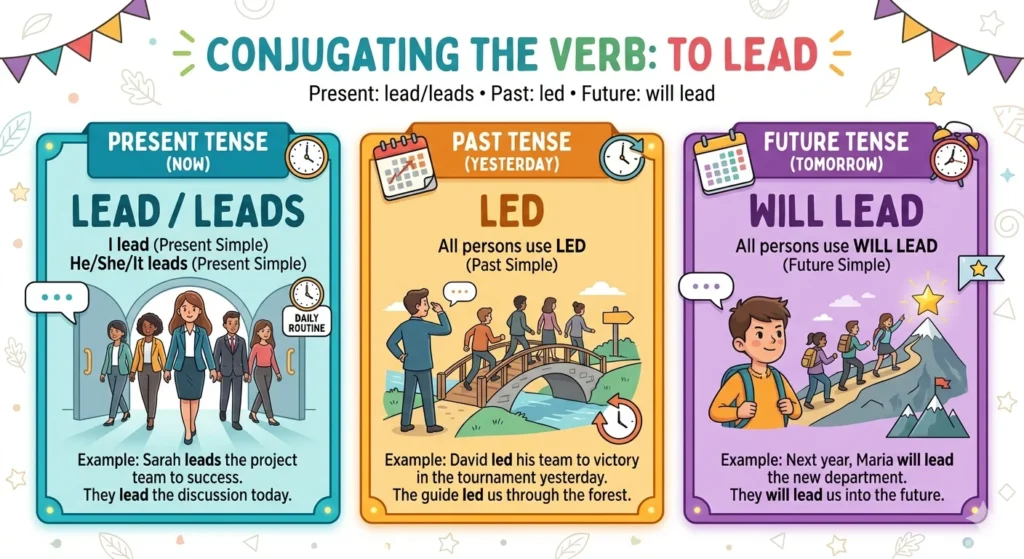
What Is the Past Tense of Lead?
The correct past tense of lead is led.
| Tense | Example |
|---|---|
| Present | I lead the team |
| Past | I led the team |
| Present Perfect | I have led the team |
| Future | I will lead the team |
Common Error
❌ I lead the project last year
✔ I led the project last year
Leed or Lead Pronunciation – How to Say It Correctly
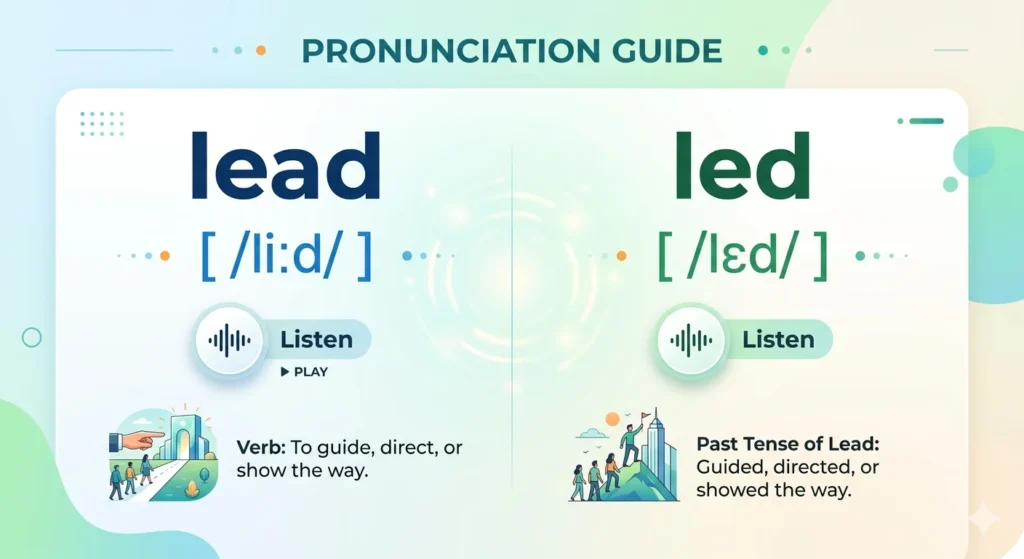
| Word | Pronunciation | Sounds Like |
|---|---|---|
| lead (verb) | /liːd/ | leed |
| led | /lɛd/ | led |
| lead (metal) | /lɛd/ | led |
This pronunciation difference is the main reason learners search for leed or lead pronunciation.
What Does Lead Mean in English?
The word lead has three different meanings depending on context.
1. Lead as a verb
To guide or direct someone.
She will lead the meeting.
2. Lead as a noun
An advantage or position in front.
Our team has a strong lead.
3. Lead as a metal
A heavy toxic metal used in batteries and pipes.
Lead pipes can be dangerous to health.
What Is LEED? Full LEED Definition
LEED stands for Leadership in Energy and Environmental Design. It is a rating system used worldwide to evaluate green buildings.
Buildings are scored based on:
- energy efficiency
- water conservation
- indoor air quality
- sustainable materials
LEED Certification Levels
| Level | Points |
|---|---|
| Certified | 40–49 |
| Silver | 50–59 |
| Gold | 60–79 |
| Platinum | 80+ |
Many modern schools, hospitals, and offices aim for LEED certification to reduce environmental impact.

Goose or Geese: Which One Is Actually Correct?
Which Spelling Should You Use?
Use this simple rule:
| Situation | Correct Word |
|---|---|
| Present or future action | lead |
| Past action | led |
| Green building discussion | LEED |
Example:
She will lead the team tomorrow.
She led the team last year.
Leed or Lead in Everyday Examples
In Emails
I led the client presentation yesterday.
In Job Resumes
Many people ask: How do I say I led a project?
Correct:
Led a team of 8 engineers to complete the project successfully.
In News Headlines
The captain led his team to victory.
Common Mistakes with Leed or Lead
Mistake 1: Writing leed
❌ I will leed the meeting
✔ I will lead the meeting
Mistake 2: Using lead instead of led
❌ She lead the class yesterday
✔ She led the class yesterday
Mistake 3: Confusing metal with verb
The pipes are made of lead
She will lead the project
Leed or Lead – Complete Comparison Table
| Word | Type | Pronunciation | Meaning | Example |
|---|---|---|---|---|
| lead | verb | leed | guide | I lead the team |
| led | verb | led | guided | I led the team |
| lead | noun | led | metal | lead battery |
| LEED | acronym | leed | green building rating | LEED certified office |
Leed or Lead in Formal Writing
Correct grammar is especially important in professional writing.
Academic Example
The research was led by a team of scientists.
Business Example
The CEO led the company through a major transformation.
Using correct tense shows professionalism and attention to detail.
Frequently Asked Questions About Leed or Lead
What is the difference between LEED and lead?
Lead is a verb or metal, while LEED is a sustainability certification system.
Is it LEED or lead the way?
The correct phrase is:
Lead the way
How do I say I led a project?
Use:
I led a project.
This is the correct past tense in resumes and reports.
What does lead mean in English grammar?
Lead means to guide, direct, or be in charge of something.
What is the past tense of lead?
The past tense of lead is led.
Is leed ever correct in English?
No. Leed is always a spelling mistake unless it is used as a proper name.
Conclusion
The confusion between leed or lead happens because English pronunciation does not always match spelling, and the word lead has multiple meanings. In addition, the acronym LEED introduces another layer of confusion for learners and professionals.
To avoid mistakes, remember these simple rules:
- Use lead for present and future actions.
- Use led for past tense.
- Never write leed in standard English.
- Use LEED only when referring to environmentally certified buildings.
By following these rules, you can write clearly, communicate professionally, and avoid one of the most common grammar mistakes in English.

“Charles Dickens shares soulful prayers and uplifting reflections on PrayVibe.com, guiding readers toward hope, comfort, and a deeper connection with God.”