Have you ever wondered “everyone or everybody which is correct?” Or perhaps you’ve searched “should I say everyone or everybody” when writing an email, essay, or social media post. Since both words are commonly used in everyday English, it’s easy to feel unsure about which one sounds better or whether one is more grammatically correct than the other.
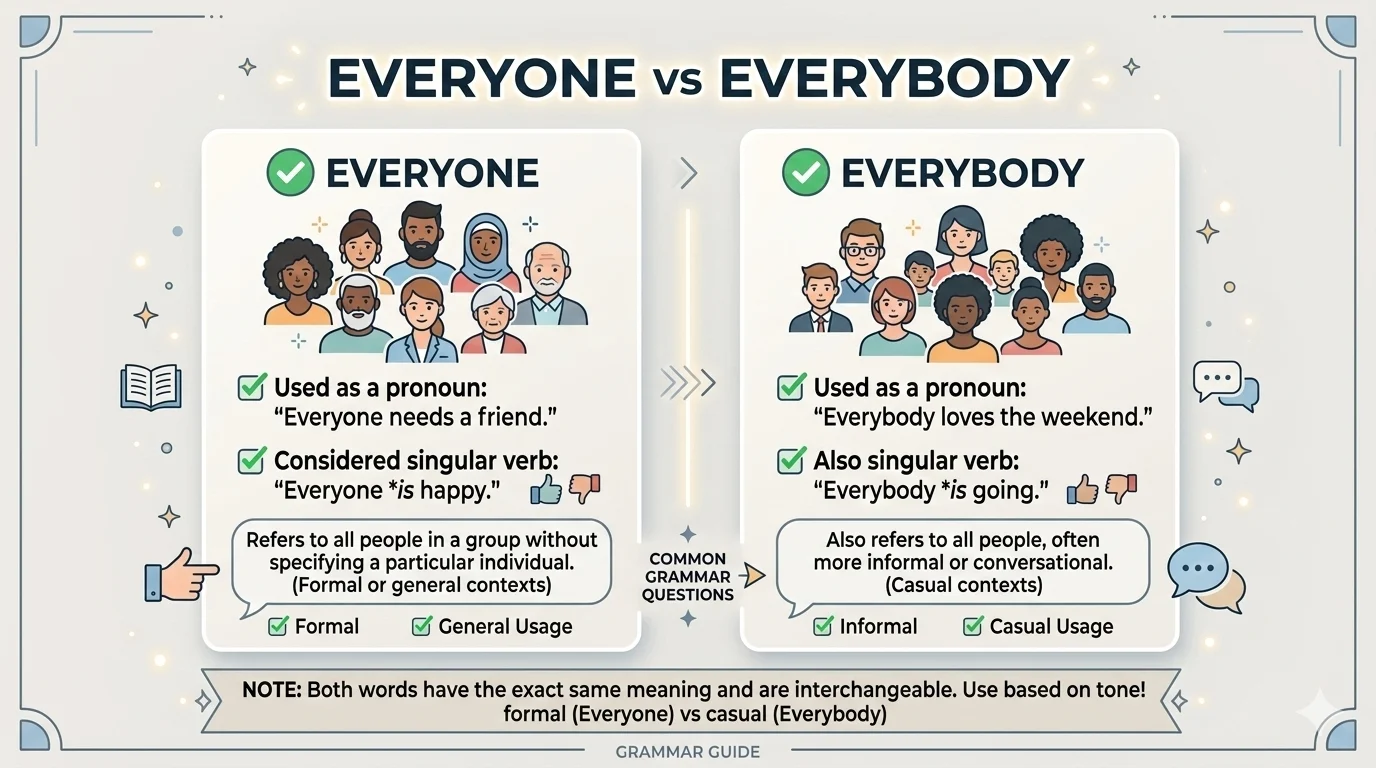
When comparing everyone vs everybody, the good news is that both words are correct and have the same meaning. They are used to refer to all the people in a group, which is why many writers ask “when to use everyone or everybody” and whether there is any real difference between them.
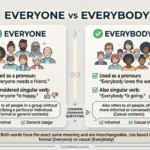
While the meaning remains the same, there are small differences in tone and style. In general, everyone is often considered slightly more formal, while everybody tends to sound more casual and conversational. Understanding these subtle differences can help you choose the word that best fits your audience and writing situation.
In this guide, you’ll learn the difference between everyone vs everybody, when to use each one, and whether one is better suited for formal or informal communication.ules, real-life examples, common mistakes, and advice on which word to use in different situations.
Everyone or Everybody
The everyone or everybody answer is straightforward:
Both everyone and everybody mean all people in a group. They are singular indefinite pronouns, so they use singular verbs.
Examples
- Everyone is ready for the meeting.
- Everybody is excited about the event.
Remember: Even though these words refer to multiple people, the verb is always singular:
✔ Everybody is happy.
✔ Everyone is welcome.
❌ Everybody are happy.
This answers the common question: “everybody is or are?” The correct form is everybody is.
Everyday Greetings Examples
- Hello everyone or hello everybody
- Hi everyone or hi everybody
- Good morning everyone or good morning everybody
- Good night everyone or good night everybody

The Origin of Everyone or Everybody
To understand everyone or everybody meaning, it helps to look at their origin.
Both words are combinations of smaller words:
| Word | Formation |
|---|---|
| Everyone | Every + One |
| Everybody | Every + Body |
History
- Every (Old English) → all members of a group
- One → a single person
- Body → historically referred to a person
Over time, these combinations became standard pronouns.
Similar Pronoun Pairs
| Word Pair | Meaning |
|---|---|
| Someone / Somebody | One person |
| Anyone / Anybody | Any person |
| No one / Nobody | No person |
Today, the difference is mostly tone:
- Everyone → slightly formal
- Everybody → casual and friendly
British English vs American English
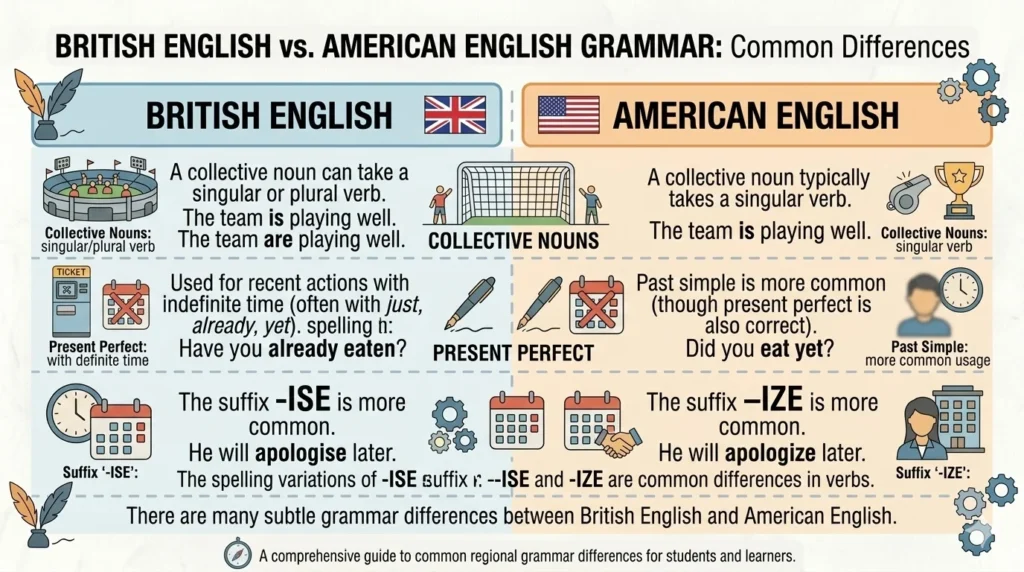
Unlike many words, everyone or everybody do not change spelling between British and American English.
| Feature | Everyone | Everybody |
|---|---|---|
| Meaning | All people | All people |
| Grammar | Singular verb | Singular verb |
| Tone | Slightly formal | Casual/friendly |
| Writing | Very common | Common |
| Conversation | Common | Very common |
Examples
- Formal writing: Everyone must submit the report by Friday.
- Casual speech: Everybody enjoyed the concert last night.
Grammar rules remain the same in all cases.
Which Spelling Should You Use?
Many writers ask: “everyone or everybody which is correct?”
Both are correct, but audience and tone matter.
Professional / Formal
Use everyone:
- Hello everyone, welcome to today’s presentation.
- Thank you everyone for attending the meeting.
Casual / Friendly
Use everybody:
- Hi everybody! Thanks for joining the event.
- Good morning everybody! Hope you have a great day.
Common Greetings & Messages
- Happy New Year everyone or everybody
- Merry Christmas everyone or everybody
- Happy Thanksgiving everyone or everybody
- Have a great weekend everyone or everybody
All forms are correct; choose based on tone and audience.
Common Mistakes with Everyone or Everybody
Even simple words can be tricky.
1. Using a Plural Verb
❌ Everybody are ready.
✔ Everybody is ready.
2. Confusing Similar Pronouns
| Word | Meaning |
|---|---|
| Everyone | All people |
| Everybody | All people |
| Everything | All things |
| Everywhere | All places |
Mixing them causes errors in writing.
3. Overthinking Greetings
- hello everyone or everybody
- hi everyone or everybody
- good afternoon everyone or everybody
Both forms are correct in greetings.
Everyone or Everybody in Everyday Examples
Email Example
Hello everyone,
Thank you for joining today’s meeting.
Workplace Announcement
Good afternoon everyone,
The conference will begin shortly.
Social Media Post
Hi everybody!
Thanks for your support this week.
Appreciation Notes
- Thanks everyone for helping today.
- Thank you everybody for attending the event.
- Special thanks to everyone or everybody who contributed.
Holiday Messages
- Happy New Year everyone or everybody
- Merry Christmas everyone or everybody
- Happy Thanksgiving everyone or everybody

Focused or Focussed – Which Spelling Is Correct in English?
Everyone or Everybody – Google Trends & Usage
Search data shows everyone is slightly more popular in written English.
| Country | More Popular Word | Approx % Usage |
|---|---|---|
| United States | Everyone | 65% |
| United Kingdom | Everyone | 60% |
| Canada | Everyone | 62% |
| Australia | Everyone | 61% |
Everyday conversation still favors everybody, especially in speeches and songs.
“Hi everybody!” → simple, friendly greeting.
Comparison Table
| Phrase | Correct Usage |
|---|---|
| everyone or everybody | Both correct |
| hello everyone or everybody | Both correct |
| hi everyone or everybody | Both correct |
| good morning everyone or everybody | Both correct |
| good night everyone or everybody | Both correct |
| thank you everyone or everybody | Both correct |
| thanks everyone or everybody | Both correct |
| have a great weekend everyone or everybody | Both correct |
FAQs
- Is it proper to say everyone or everybody?
Yes, both are correct and widely used. - When to use everyone or everybody?
Everyone → formal writing, professional communication
Everybody → casual, friendly conversation - Which is correct: Hello everyone or Hello everybody?
Both greetings are correct. - What is the grammar rule for everybody?
Everybody is singular, so always use a singular verb.
Example: Everybody is welcome. - Everyone or everybody synonyms?
All people, everyone present, all of you. - Do you say hello everyone or everybody?
Both are natural and correct. - To everyone or everybody – which is correct?
Both phrases are correct depending on context.
Conclusion
Both everyone and everybody mean all people in a group and take a singular verb.
The difference is tone:
- Everyone → slightly formal, professional, common in writing
- Everybody → casual, friendly, common in speech
For greetings like hello everyone or everybody, good morning everyone or everybody, or thank-you messages, both are correct. A simple rule: formal → everyone, casual → everybody.
Next time you write a greeting or message, think about your audience. This small choice can make your writing sound professional or friendly, while staying grammatically correct.

“Virginia Woolf offers reflective, soothing prayers on PrayVibe.com, guiding readers toward inner calm, hope, and a deeper sense of spiritual clarity.”