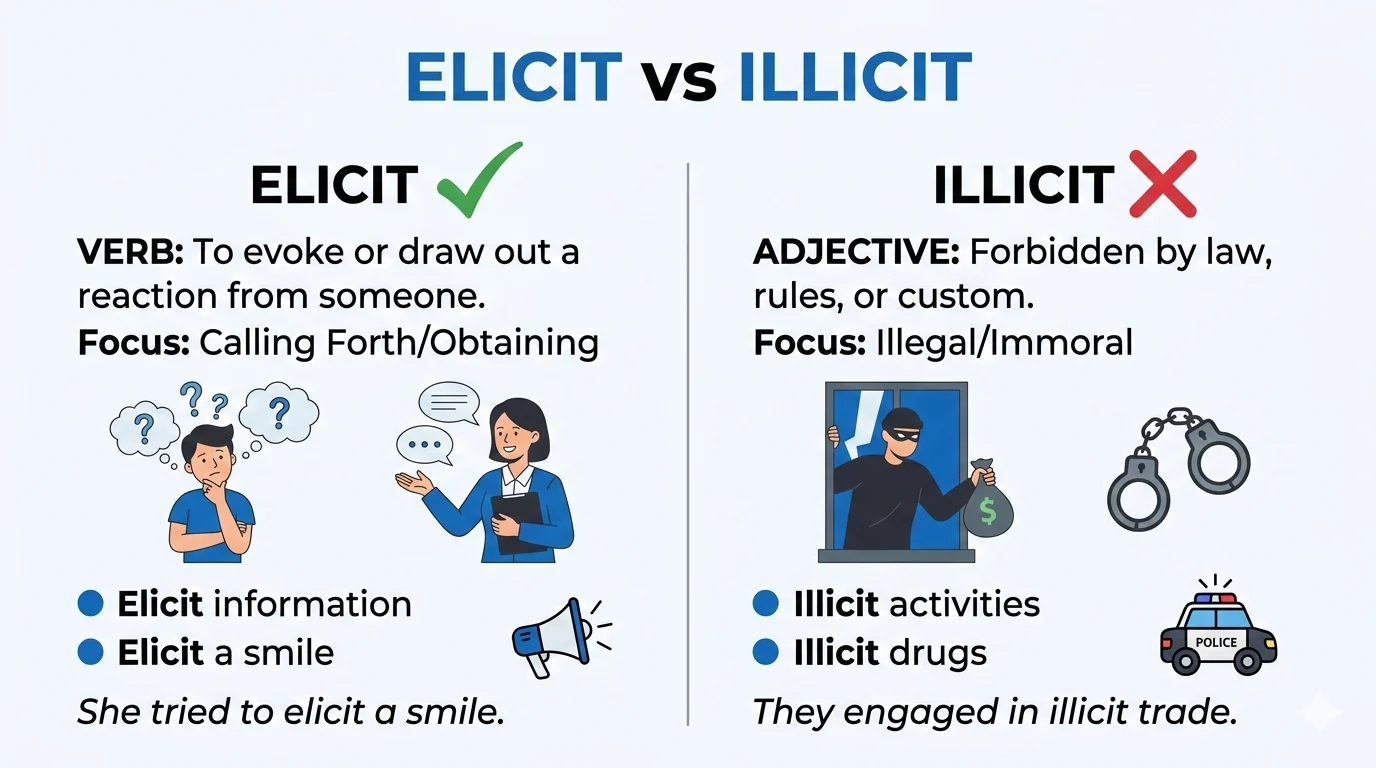
Have you ever wondered whether to use elicit or illicit? You’re not alone. These commonly confused words look and sound similar, but they have completely different meanings. Elicit means to draw out or evoke a response, emotion, or information, while illicit refers to something illegal or forbidden. Using the wrong word can confuse readers, change the meaning of your sentence, and make your writing less accurate.
Understanding the difference between elicit vs. illicit is easier than it seems. Although they share similar spelling and pronunciation, they belong to different parts of speech and are used in completely different contexts. Learning when to use each word will help you avoid common English vocabulary and grammar mistakes while writing with greater clarity and confidence.
In this guide, you’ll discover the difference between elicit and illicit, along with clear definitions, pronunciation, real-life examples, common usage mistakes, and easy memory tricks. By the end, you’ll know exactly how to choose the correct word in any sentence and use both words with confidence.
Elicit or Illicit
Elicit → to draw out a response, emotion, or information.
Illicit → illegal, forbidden, or against the law.
Featured Snippet Definition
Elicit or illicit are commonly confused English words. Elicit means to draw out responses or feelings, while illicit means illegal or not allowed by law.
Simple Examples
- The teacher asked questions to elicit answers.
- Police stopped the illicit sale of fake medicines.
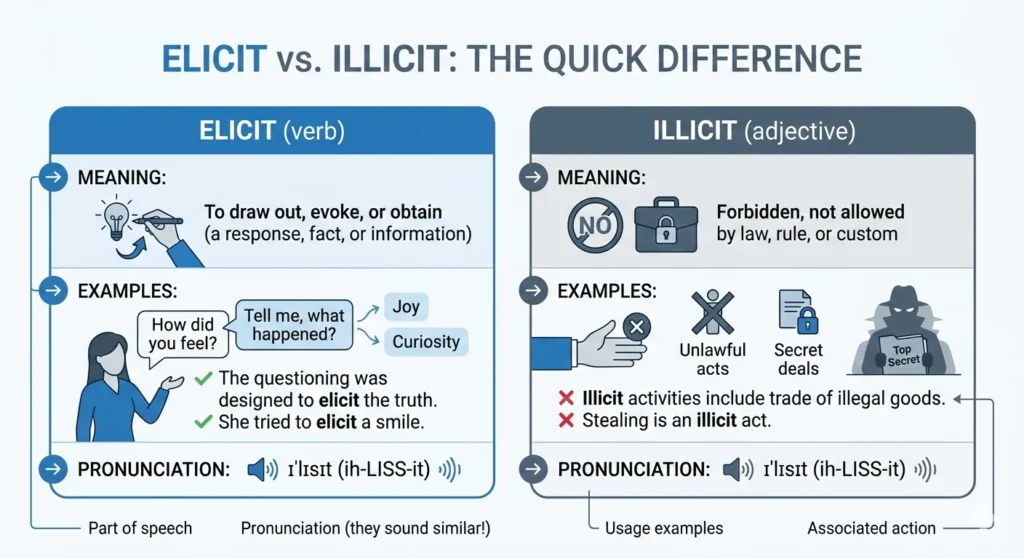
Illicit and Elicit Pronunciation
Both words are pronounced the same: ih-LIS-it
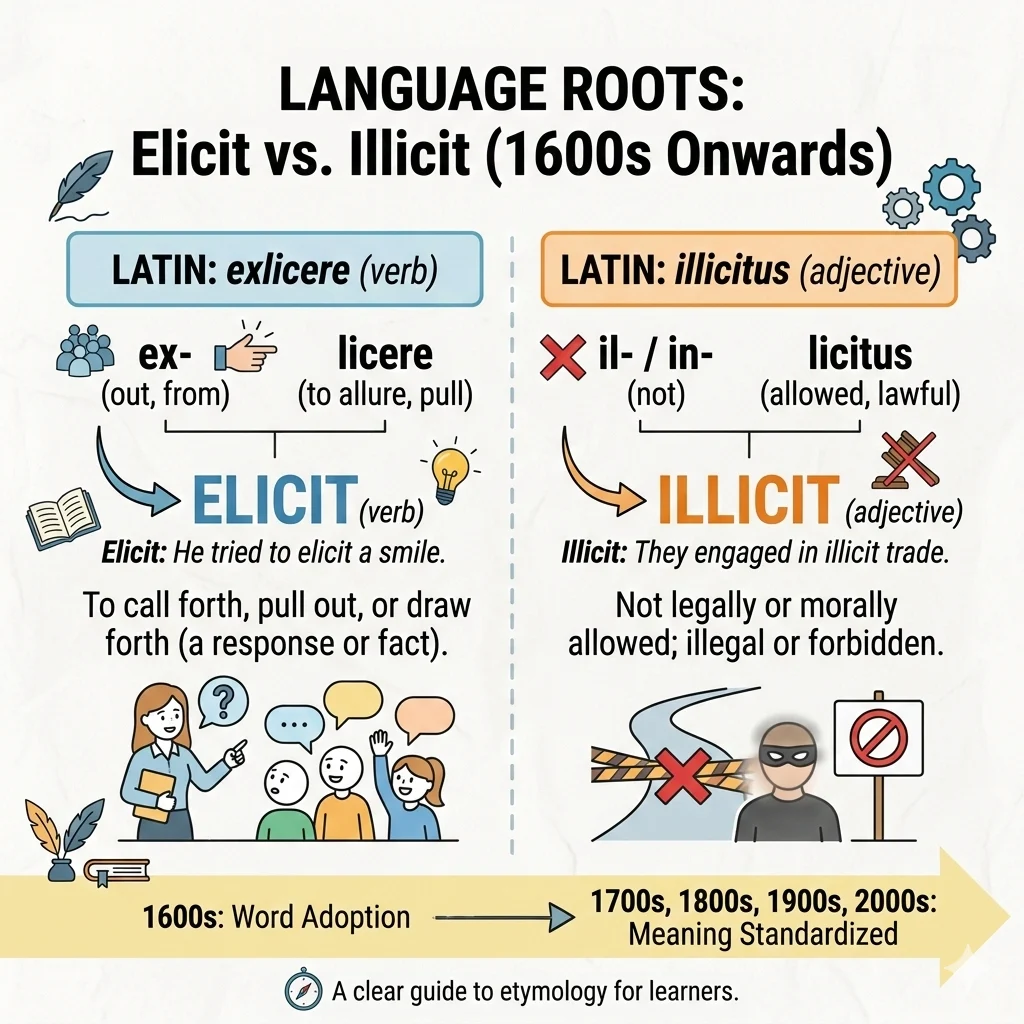
The Origin of Elicit or Illicit
Elicit Origin
- From Latin elicere meaning “to draw out.”
- Entered English in the 1600s.
- Always used as a verb.
Illicit Origin
- From Latin illicitus meaning “not allowed.”
- Formed from il- (not) + lawful root.
- Used as an adjective.
Why the Spellings Differ
The prefix il- in illicit means “not,” linking it to illegal acts.
The root of elicit relates to drawing out responses.
British English vs American English Spelling
Good news: spelling is the same in both forms of English.
| Word | US | UK | Meaning | Part of Speech |
|---|---|---|---|---|
| Elicit | elicit | elicit | draw out response | Verb |
| Illicit | illicit | illicit | illegal | Adjective |
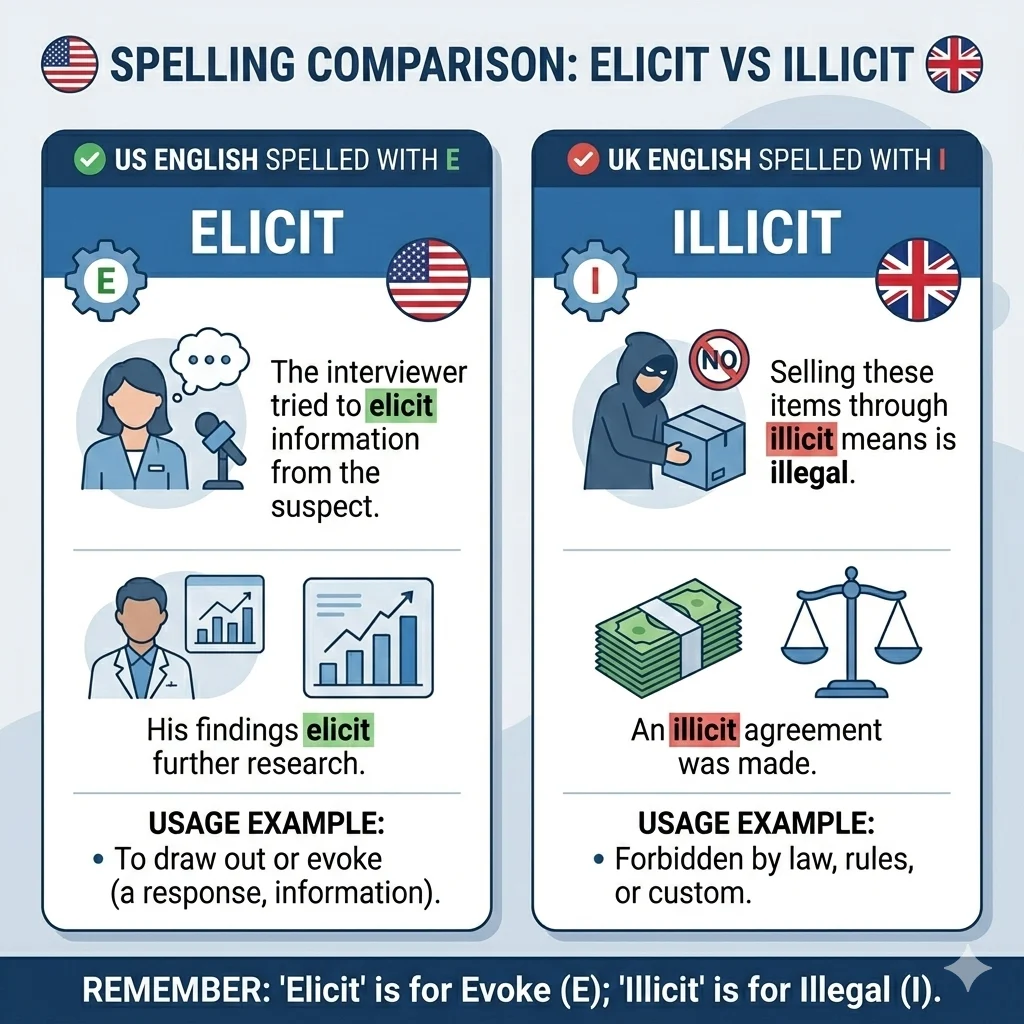
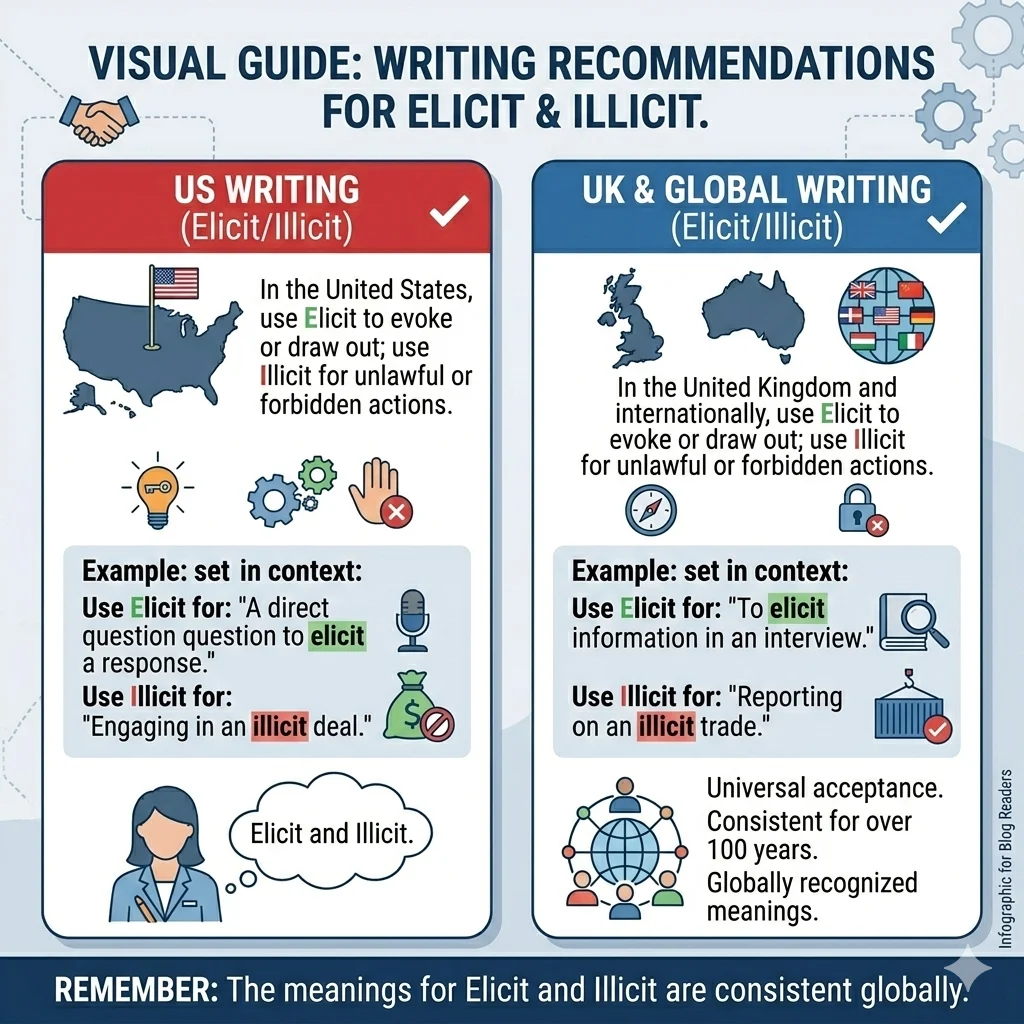
Which Spelling Should You Use?
US Audience
Use elicit for responses and illicit for illegal acts.
UK & Commonwealth
Spellings remain the same.
Global Writing
Focus on correct meaning and context.
Easy Memory Tricks to Remember Elicit vs Illicit
- Elicit → Evoke (E = E) → draw out a response
- Illicit → Illegal (Il = Il) → forbidden by law
👉 These tricks make it easy to remember.
Common Mistakes with Elicit or Illicit Usage
Mistake 1
❌ The survey aims to illicit feedback.
✔️ The survey aims to elicit feedback.
Mistake 2
❌ Police stopped elicit trade.
✔️ Police stopped illicit trade.
Mistake 3: Confusing with Solicit
- Solicit = ask directly
- Elicit = draw out naturally
Illicit vs Elicit vs Solicit – What’s the Difference?
| Word | Meaning | Example |
|---|---|---|
| Elicit | draw out response | The joke elicited laughter. |
| Illicit | illegal | Illicit drugs are banned. |
| Solicit | ask for | He solicited donations. |
What is the difference between elicit and illicit and solicit?
- Solicit → ask for something
- Elicit → bring out a response
- Illicit → illegal activity
Encorporate or Incorporate: Why One Form Is Incorrect
Elicit or Illicit Synonym Guide
Elicit Synonyms
- evoke
- obtain
- extract
- draw out
Illicit Synonyms
- illegal
- unlawful
- forbidden
- banned
Elicit or Illicit Examples in Sentences
Elicit Examples
- Good teachers elicit curiosity.
- The movie elicited strong emotions.
- Her smile elicited trust.
Illicit Examples
- Police seized illicit weapons.
- The company was fined for illicit trade.
- He sold illicit goods online.
How Do You Use Elicit and Illicit in a Sentence?
Correct Usage
- The survey will elicit honest opinions.
- Authorities shut down illicit activities.
Incorrect Usage
❌ The police elicited drugs.
✔️ The police seized illicit drugs.
What Does It Mean to Elicit Something?
To elicit something means to draw out a response, feeling, or information through questions or actions.
Examples:
- A kind word can elicit a smile.
- The survey aims to elicit honest opinions.
What Is Meant by Illicit?
Illicit meaning refers to something illegal, forbidden, or not approved by law.
Examples:
- Illicit drugs are banned.
- The company avoided illicit dealings.
Illicit Verb – Is Illicit Ever a Verb?
No. Illicit is never a verb. It is always an adjective.
❌ They illicit goods.
✔️ They sell illicit goods.
Elicit or Illicit in Everyday Examples
Emails
- We hope to elicit your feedback.
- Our company prohibits illicit payments.
News
- The speech elicited strong reactions.
- Police cracked down on illicit trade.
Social Media
- His post elicited thousands of comments.
- Accounts selling illicit goods were banned.
Workplace & Business Context
- Managers elicit ideas from employees.
- Companies must avoid illicit transactions.
Legal Context
- Courts punish illicit financial activity.
- Investigators elicit information from witnesses.
Elicit or Illicit – Google Trends & Usage Insights
Searches for elicit or illicit meaning continue to grow worldwide.
Who Searches This Topic?
- ESL learners
- IELTS & TOEFL students
- Bloggers & content writers
- Business professionals
Top Countries Searching
- United States
- United Kingdom
- India
- Pakistan
- Philippines
Why Confusion Continues
- Same pronunciation
- Similar spelling
- Used in formal writing
Clear communication keeps this topic relevant.
Comparison Table: Elicit vs Illicit at a Glance
| Feature | Elicit | Illicit |
|---|---|---|
| Meaning | draw out response | illegal |
| Part of Speech | verb | adjective |
| Usage | communication | law & crime |
| Example | elicit feedback | illicit trade |
| Pronunciation | same | same |
Quick Quiz: Test Your Understanding
Choose the correct word.
- The teacher tried to ___ answers.
- Police stopped ___ activities.
- The joke ___ laughter.
Answers
- elicit
- illicit
- elicited
FAQs
1. What is the difference between elicit and illicit and solicit?
Elicit draws out responses, illicit means illegal, and solicit means to ask for something.
2. How do you use elicit and illicit in a sentence?
The speech elicited applause. Police stopped illicit trade.
3. What is meant by illicit?
It means illegal, forbidden, or not allowed.
4. What does it mean to elicit something?
It means to draw out a response, emotion, or answer.
5. Are elicit and illicit pronounced the same?
Yes, both are pronounced ih-LIS-it.
6. Can illicit be used as a verb?
No, illicit is always an adjective.
7. Why do people confuse elicit and illicit?
They look similar and sound identical.
Conclusion
Understanding the difference between elicit and illicit is essential for clear communication. Although these words sound the same, their meanings are completely different. Elicit is a verb used to draw out responses, emotions, or information. Illicit is an adjective used to describe something illegal or forbidden.
Many people confuse these terms because of similar spelling and pronunciation. However, simple memory tricks make them easy to remember. Think Elicit → Evoke and Illicit → Illegal. These connections help you choose the correct word quickly.
Using the right word improves your writing in emails, academic work, business communication, and legal contexts. Whether you are a student, writer, or professional, mastering these commonly confused words will boost your confidence and credibility.
With the examples, tips, and comparisons in this guide, you can now use elicit and illicit correctly in everyday communication.

“Jane Austen shares heartfelt, graceful prayers on PrayVibe.com, offering comfort, hope, and gentle spiritual guidance to readers seeking peace and clarity.”