Many people feel confused when they see the words fulness and fullness. Both spellings appear in books, articles, and even in the Bible. Because of this, many readers search online for “fulness or fullness meaning” and ask questions like “Which is correct, fulness or fullness?” or “Does fullness have one L or two?”
The confusion exists because English spelling changed over time. Older texts sometimes used fulness, while modern English prefers fullness with two L’s. If you read religious books, historical literature, or old Bible translations, you may still see the spelling fulness.
Understanding the difference helps writers, students, and bloggers avoid mistakes. Using the correct spelling also improves clarity and professionalism in writing.
In this complete guide, you will learn the fulness or fullness meaning, see real fulness or fullness examples, understand how the word appears in the Bible, and explore its meaning in everyday language and even in medical terms. By the end, you will clearly know which spelling you should use in modern English.
Fulness or Fullness
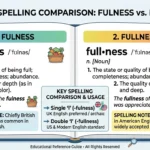
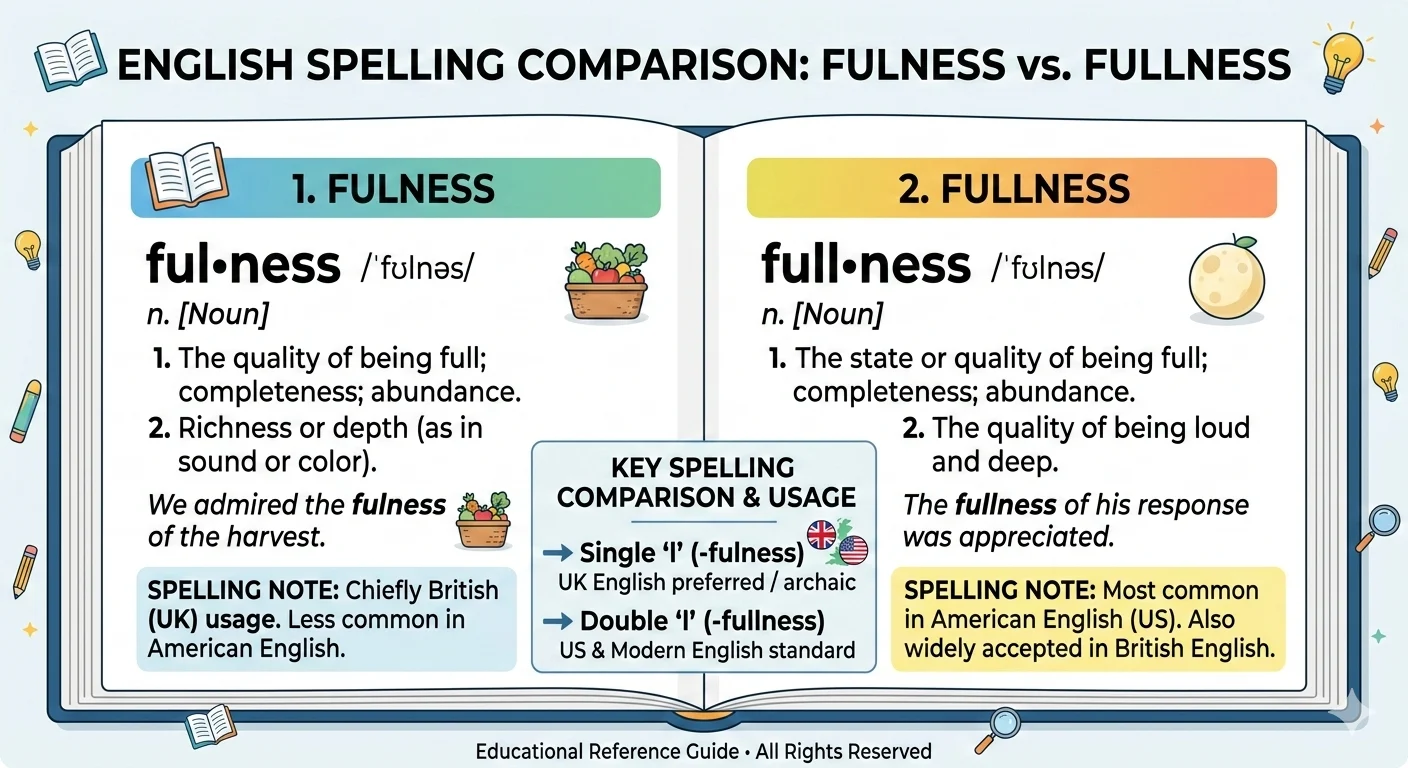
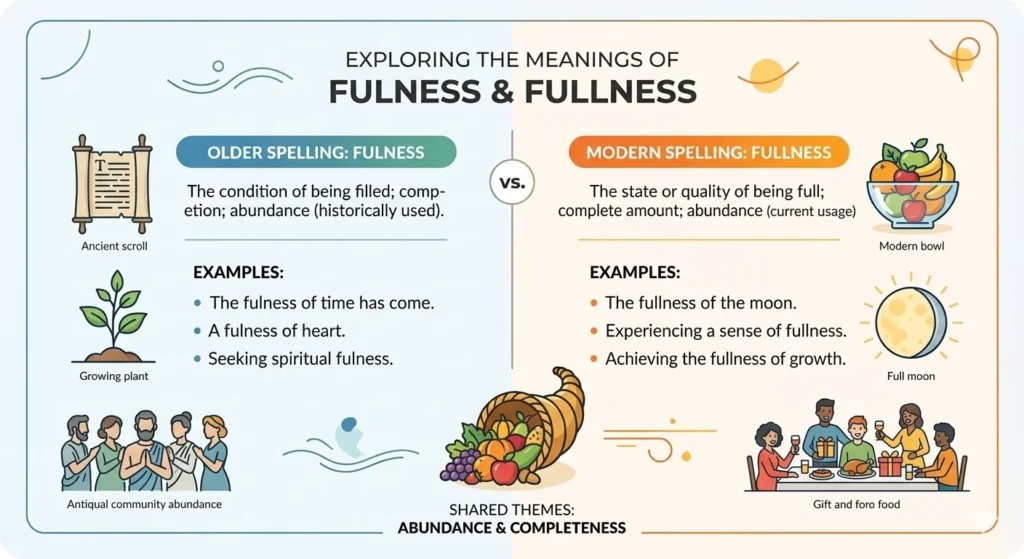
When comparing fulness or fullness, the correct and modern spelling is fullness.
Fullness means the state of being complete, filled, abundant, or satisfied.
The spelling fulness is an older variant. It appears mostly in historical writings and some older Bible translations.
Simple Definition
Fullness: the condition of being full, complete, rich, or abundant.
Quick Examples
- She felt the fullness of happiness after hearing the good news.
- The lake reached its fullness after days of rain.
- The Bible speaks about the fullness of God’s grace.
So in modern English writing, fullness is the correct spelling to use.
Fulness or Fullness Meaning
The fulness or fullness meaning refers to the state of something being complete, abundant, or fully filled.
The word can describe different types of situations, such as:
- emotional fullness
- spiritual fullness
- physical fullness
- natural abundance
Example Sentences
- The garden showed the fullness of spring.
- She lived life in its fullness.
- The valley displayed the fullness of nature.
The spelling fulness meaning is exactly the same. The difference is only in spelling, not meaning.
The Origin of Fulness or Fullness
To understand fulness or fullness, we must look at the word’s origin.
The word comes from the Old English word “full.” Over time, the suffix “-ness” was added to create a noun.
Word Formation
Full → adjective meaning filled
Full + ness → Fullness
In early English writing, people sometimes removed one letter when adding a suffix. Because of this, the spelling fulness appeared.
Later, English spelling became more standardized. Dictionaries and grammar guides started using fullness with two L’s.
Today, modern English uses fullness almost everywhere.
British English vs American English Spelling
Many English words change spelling between British English and American English.
Examples include:
- colour / color
- centre / center
- favour / favor
However, fulness or fullness UK spelling does not follow this rule. Both British and American English prefer the spelling fullness.
The spelling fulness is mostly historical rather than regional.
Spelling Comparison Table
| Feature | Fulness | Fullness |
|---|---|---|
| Modern usage | Rare | Very common |
| British English | Rare | Standard |
| American English | Rare | Standard |
| Older Bible texts | Sometimes used | Often updated |
| Modern dictionaries | Variant spelling | Preferred spelling |
So whether you write for the UK, USA, Canada, or Australia, the correct choice is fullness.

Which Spelling Should You Use?
If you are unsure about fulness or fullness, the best option is fullness.
Use Fullness For
- blog posts
- articles
- academic writing
- professional emails
- websites and SEO content
When You Might See Fulness
You may still see fulness in:
- older literature
- historical texts
- some older Bible translations
This is why many readers search for fulness or fullness Bible.
Modern translations and modern English writing use fullness almost exclusively.
Simple Rule
Always choose fullness unless quoting historical or religious text.
Common Mistakes with Fulness or Fullness
Because both spellings exist, writers sometimes make mistakes.
Mistake 1: Using Fulness in Modern Writing
Incorrect
The ocean reached its fulness.
Correct
The ocean reached its fullness.
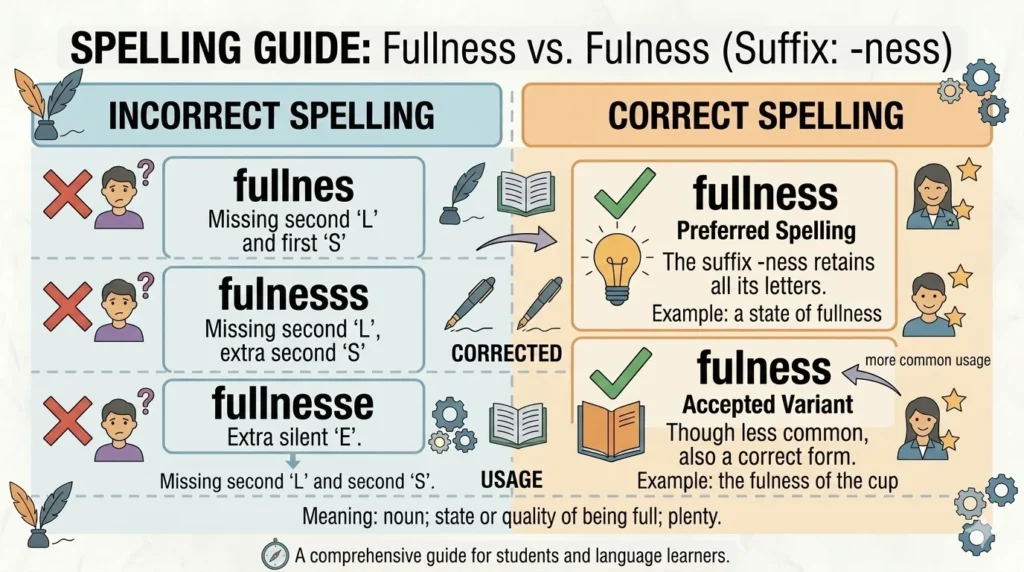
Mistake 2: Spelling Errors
Common incorrect spellings include:
- fullnes
- fulnesss
- fullnesse
Correct spelling: fullness
Mistake 3: Misunderstanding the Meaning
Some people think the word only relates to food or stomach fullness. However, it can also describe emotional, spiritual, and natural completeness.
Fulness or Fullness Examples
Looking at fulness or fullness examples helps understand how the word works in real sentences.
Example Sentences
- The moon appeared in its fullness tonight.
- She experienced the fullness of joy after the event.
- The valley showed the fullness of nature in spring.
- Some historical texts still use the spelling fulness.
These examples show that fullness is used in everyday language to express abundance and completeness.
Fullness Synonym
Sometimes writers use a fullness synonym to avoid repeating the same word.
Common synonyms include:
- abundance
- completeness
- richness
- totality
- plentitude
- satisfaction
Example:
Instead of writing fullness of happiness, you could write abundance of happiness.
Using synonyms improves writing style and readability.
Fulness or Fullness Meaning in the Bible
Many readers search for fullness meaning in the Bible.
In biblical language, fullness often refers to God’s complete presence, power, or blessing.
Common biblical expressions include:
- the fullness of time
- the fullness of God’s grace
- the fullness of divine love
Older Bible translations sometimes spell the word as fulness, which is why both spellings appear in religious texts.
However, modern Bible translations often update the spelling to fullness.
Fulness or Fullness Meaning in Medical Term
Another common question is fullness meaning in medical term.
In medical language, fullness describes a feeling of pressure, heaviness, or swelling in the body.
Examples include:
- Ear fullness – pressure or blockage inside the ear
- Abdominal fullness – bloating in the stomach
- Chest fullness – a heavy feeling in the chest
Doctors use this word to describe symptoms, not diseases.
What Is Fullness in the Body?
When people ask “What is fullness in the body?”, they are usually talking about a physical sensation.
Fullness in the body can feel like:
- pressure
- heaviness
- tightness
- swelling
Common causes include:
- overeating
- gas or bloating
- digestive issues
- ear pressure changes
- fluid buildup
Most of the time, the feeling of fullness is temporary.
Fulness or Fullness – Google Trends & Usage Data
Search data shows that fullness is far more common than fulness.
Popular Search Questions
People frequently search:
- Which is correct, fulness or fullness?
- Does fullness have one L or two?
- What is the meaning of the word fullness?
- Fulness or fullness examples
Global Usage
| Region | Common Spelling |
|---|---|
| United States | Fullness |
| United Kingdom | Fullness |
| Canada | Fullness |
| Australia | Fullness |
This data confirms that fullness is the standard modern spelling worldwide.
FAQs
Which is correct, fulness or fullness?
The correct modern spelling is fullness. The spelling fulness is an older version used mainly in historical texts.
Does fullness have one L or two?
The correct spelling has two L’s: fullness.
What is the meaning of the word fullness?
Fullness means the state of being complete, abundant, or fully filled.
What is fullness in the body?
It refers to a feeling of pressure or heaviness, often in areas like the stomach, ears, or chest.
Is fulness used in the Bible?
Yes. Some older Bible translations use fulness, but many modern translations use fullness.
Is fulness used in the UK?
Modern British English uses fullness, just like American English.
What is a synonym for fullness?
Common synonyms include abundance, completeness, richness, and satisfaction.
Conclusion
The confusion between fulness or fullness comes from the history of English spelling. Both forms existed in the past, but they are not used equally today.
In modern English, fullness with two L’s is the correct and standard spelling. It appears in dictionaries, academic writing, journalism, and everyday communication.
The spelling fulness is mostly historical. It appears in older literature and some older Bible translations, but it is rarely used in modern writing.
Understanding the fulness or fullness meaning helps writers avoid mistakes and communicate clearly. The word itself carries a powerful meaning. It can describe abundance, completeness, emotional richness, spiritual presence, and even physical sensations in the body.
For modern writing, blogs, articles, and professional communication, always choose fullness. This spelling is recognized globally and accepted in modern English.
Remember this simple rule:
Fullness is the correct modern spelling, while fulness is an older historical variant.
Using the correct spelling will make your writing clearer, stronger, and more professional.

“Charles Dickens shares soulful prayers and uplifting reflections on PrayVibe.com, guiding readers toward hope, comfort, and a deeper connection with God.”