Have you ever typed “teach affectively” in an email and paused, unsure if it was correct? You’re not alone. Many students, writers, and professionals confuse effectively or affectively because the words look almost identical but have very different meanings. A small mistake can make your writing unclear or change the message you want to send.
People search what is the difference between effectively and affectively? because they want to avoid grammar errors and communicate clearly. The confusion comes from the related words affect and effect, which are already among the most commonly mixed-up terms in English.
This guide explains the effectively or affectively meaning, provides clear affective vs effective examples, and shows how to use each word confidently. Whether you’re writing emails, reports, or social media posts, you’ll learn the correct usage and avoid common mistakes.
Authority note: This guide follows standard English grammar rules used in academic, business, and professional writing worldwide.
Effectively or Affectively
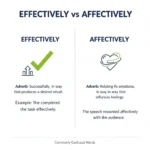
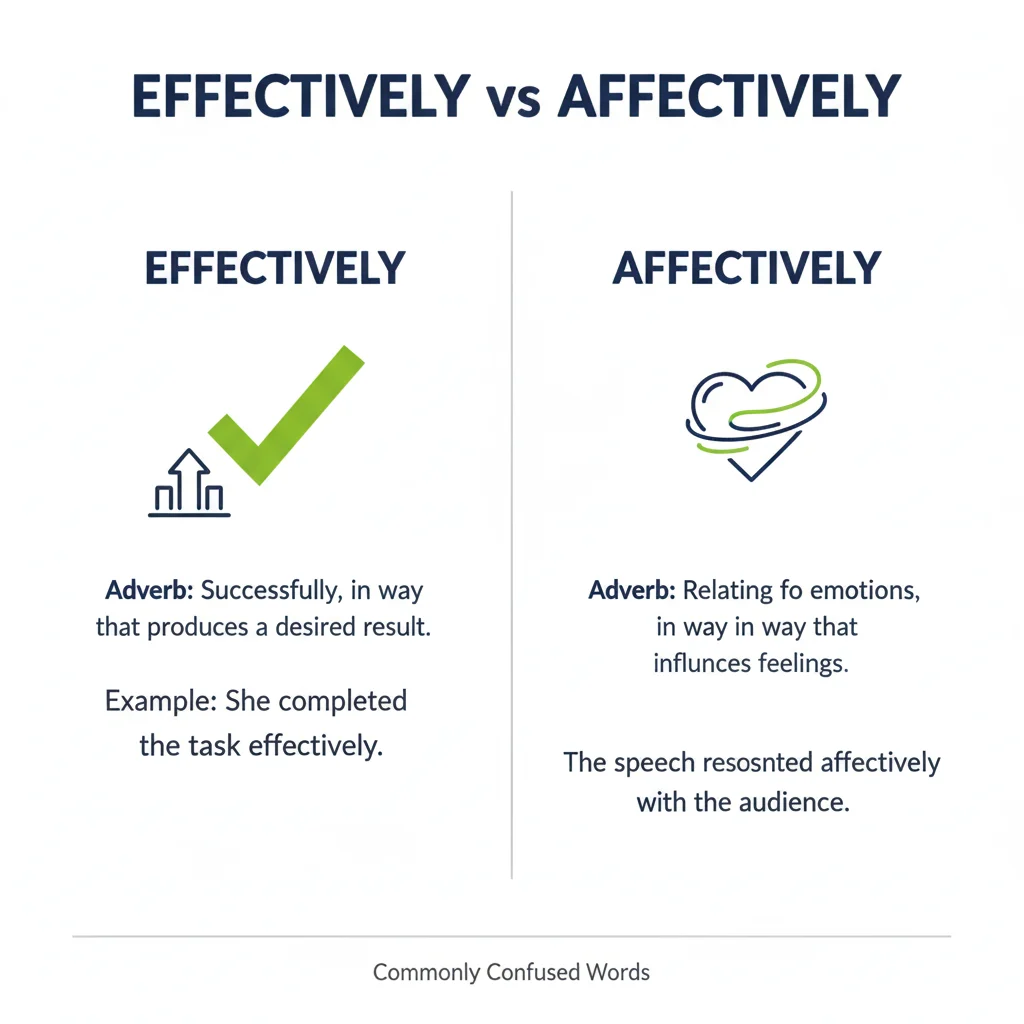
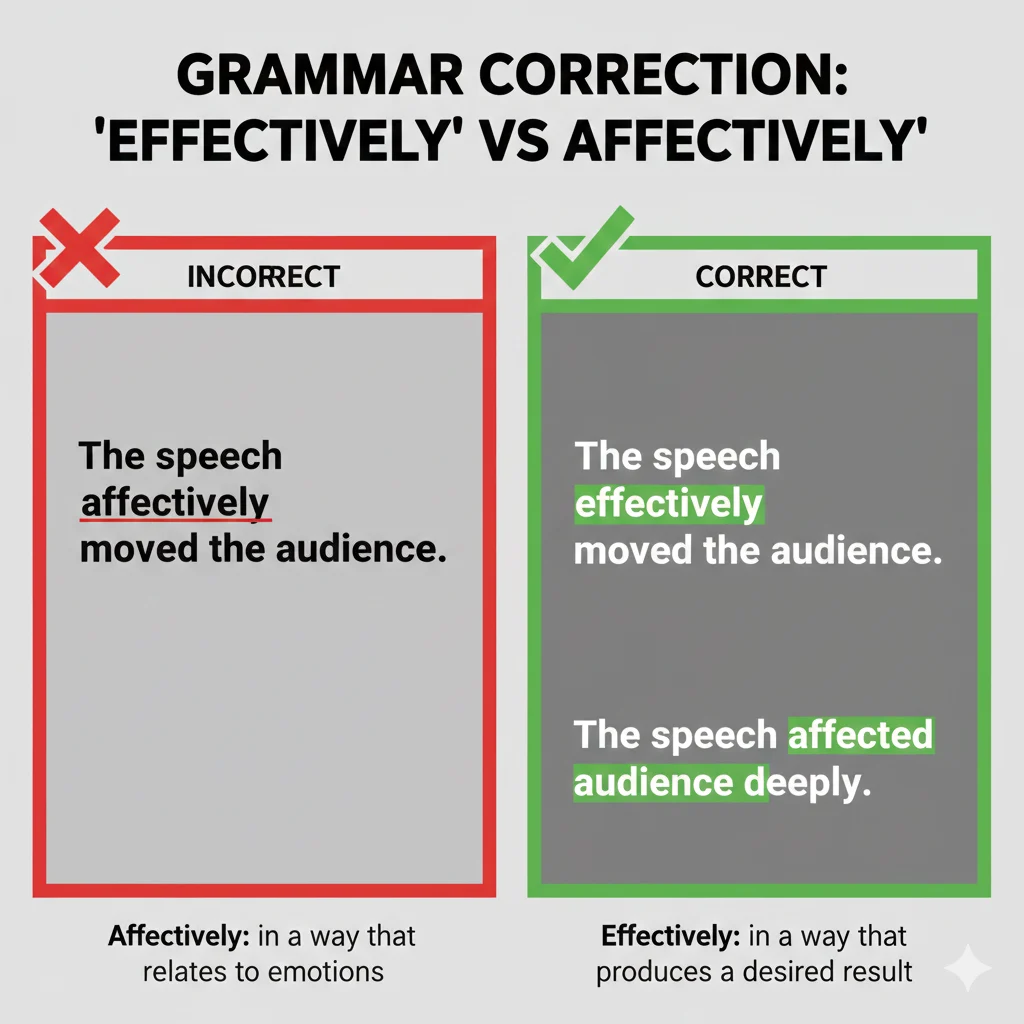
Effectively means achieving a successful result.
Affectively relates to emotions or feelings.
Featured Snippet Definition
Effectively means achieving a desired result or working successfully, while affectively refers to emotions or feelings. Use effectively for performance and outcomes, and affectively when describing emotional responses.
Quick Examples
- She solved the issue effectively.
- The film connected with viewers affectively.
Memory Trick
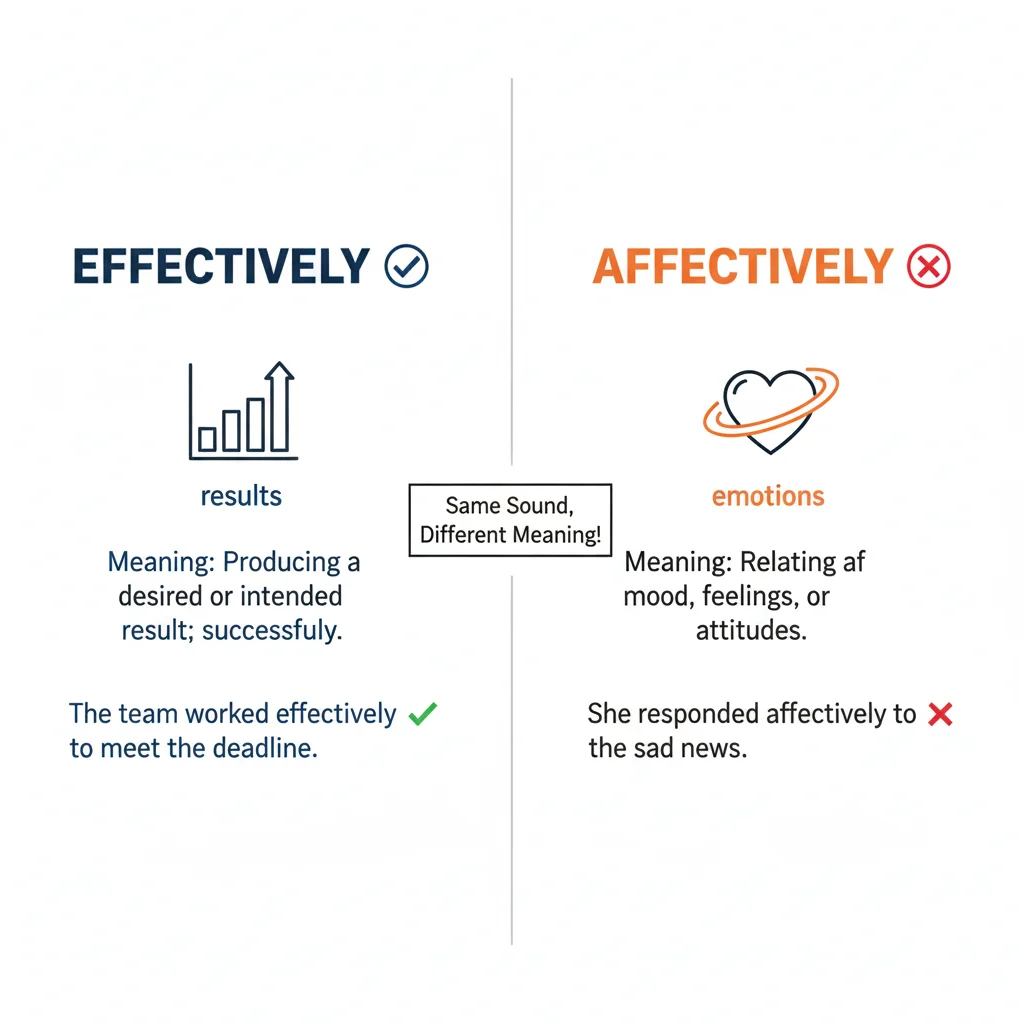
👉 Results → Effectively
👉 Emotions → Affectively
The Origin of Effectively or Affectively
Understanding the roots helps explain the confusion.
Effectively
- From Latin effectus → result, accomplishment
- Focuses on outcomes and success
Affectively
- From Latin affectus → feeling, emotion
- Focuses on emotional responses
Why They Look Similar
Both come from the Latin root facere (“to do”), which explains their similar spelling but different meanings.
Effectively or Affectively in British vs American English
There is no spelling difference between British and American English. The choice depends entirely on meaning.
| Context | US Usage | UK Usage | Notes |
|---|---|---|---|
| Business writing | Effectively | Effectively | Results-focused |
| Psychology | Affectively | Affectively | Emotional context |
| Everyday speech | Effectively | Effectively | Most common |
Costed or Cost: Which Past Tense Is Correct?
Which Spelling Should You Use?
Use “Effectively” When You Mean:
- Successfully completing a task
- Producing results
- Improving performance
Example:
The team communicated effectively.
Use “Affectively” When You Mean:
- Emotional influence
- Feelings or mood
- Psychological response
Example:
Music connects affectively with listeners.
Audience-Based Advice
- Business & global audience → effectively
- Academic psychology → affectively
Common Mistakes with Effectively or Affectively
| Incorrect | Correct | Why |
|---|---|---|
| Teach affectively | Teach effectively | Refers to performance |
| Manage a team affectively | Manage a team effectively | Results-focused |
| The speech worked effectively on emotions | The speech worked affectively | Emotional impact |
Why These Mistakes Happen
People confuse affect vs effect, then apply the wrong adverb form.
Real-Life Scenario: Office vs Classroom
Understanding effectively or affectively becomes easier with real situations.
Office Example
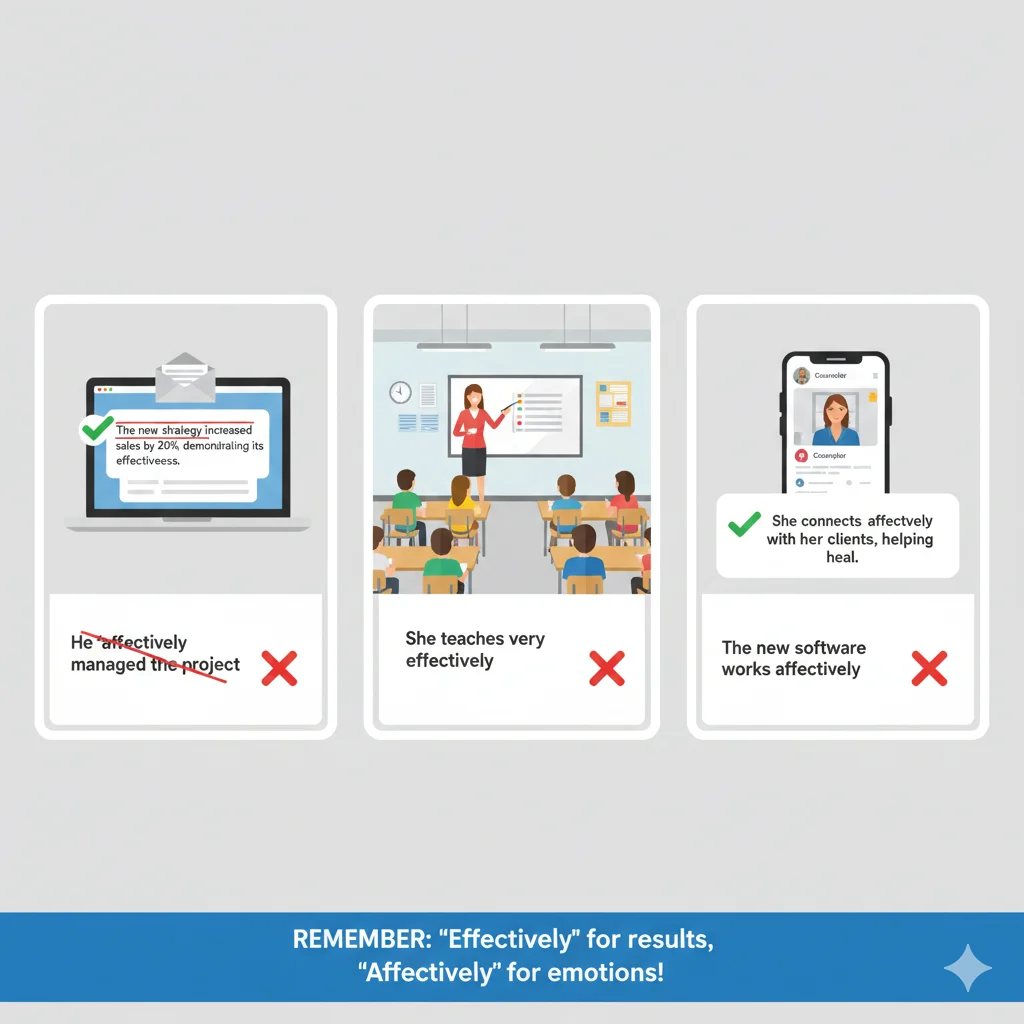
- Correct: The manager communicated effectively with the team.
- Incorrect: The manager communicated affectively.
👉 Communication success = effectively
Classroom Example
- Correct: The teacher explained the lesson effectively.
- Correct (emotional context): The story affected students affectively.
👉 Teaching success vs emotional impact
Effectively or Affectively in Everyday Examples
Emails
- We completed the project effectively.
- Your message spoke affectively to staff concerns.
News Writing
- The policy effectively reduced costs.
- The memorial affected citizens affectively.
Social Media
- Learn English effectively with this app!
- That movie hit me affectively.
Formal Writing
- The system works effectively in large organizations.
- The therapy engages patients affectively.
Effectively or Affectively – Google Trends & Usage Data
Real Usage Insight
- Effectively appears on millions of web pages and dominates business, education, and online content.
- Affectively appears far less often and is mostly used in psychology and academic research.
Popularity by Context
| Context | Common Term |
|---|---|
| Business & education | Effectively |
| Psychology & therapy | Affectively |
| Everyday communication | Effectively |
Why Effectively Dominates
Most communication focuses on results rather than emotions.
Comparison Table: Effectively vs Affectively
| Word | Meaning | Context | Example | Synonyms |
|---|---|---|---|---|
| Effectively | Successfully | Business, education | She leads effectively. | efficiently, successfully |
| Affectively | Emotionally | Psychology, art | The story moved me affectively. | emotionally, sentimentally |
Extended Comparison: Affect vs Effect vs Effective vs Affective
| Word | Part of Speech | Meaning | Example |
|---|---|---|---|
| Affect | Verb | To influence | The weather affects mood. |
| Effect | Noun | Result | The effect was clear. |
| Effective | Adjective | Producing results | An effective method |
| Affective | Adjective | Emotional | Affective response |
Effectively or Affectively Synonyms
- Effectively → efficiently, successfully, productively
- Affectively → emotionally, expressively, sentimentally
FAQs
1. What is the difference between effectively and affectively?
Effectively refers to results; affectively refers to emotions.
2. What is the difference between effect and effective?
Effect is a result (noun). Effective means producing results (adjective).
3. What is the meaning of affectively?
It means in an emotional or feeling-based way.
4. Is it teach effectively or affectively?
Teach effectively is correct because teaching refers to performance.
5. Is affectively a real word?
Yes. It is used mainly in psychology and emotional contexts.
6. Why do people confuse affect and effect?
They sound similar and have related meanings.
7. Can affectively mean effectively?
No. Their meanings are different.
Conclusion
Understanding the difference between effectively or affectively helps you write clearly and avoid common grammar mistakes. Although these words look similar, their meanings are very different. Effectively focuses on results, success, and productivity, making it the correct choice for business writing, education, and everyday communication. Affectively, however, relates to emotions and emotional responses and is mainly used in psychology, therapy, and artistic discussions.
The easiest way to avoid mistakes is to remember this rule:
👉 Results = effectively
👉 Emotions = affectively

“Charles Dickens shares soulful prayers and uplifting reflections on PrayVibe.com, guiding readers toward hope, comfort, and a deeper connection with God.”