Have you ever paused while writing and wondered: “Is it lie or lye in bed?” You’re not alone. Many people search for lie or lye meaning, lie or lye grammar, and lye or lie down because these words sound the same but mean very different things. This confusion often appears in emails, schoolwork, social media posts, and even professional writing.
The mix-up happens because English has many homophones—words that sound alike but have different spellings and meanings. In this case, “lie” relates to resting or not telling the truth, while “lye” is a chemical used in soap making and cleaning. Understanding the difference helps you write clearly and avoid embarrassing mistakes.
This guide gives a quick answer, clear examples, grammar tips, and real-world usage. Whether you’re asking “Is it lie or lye for sleeping?” or checking the spelling of lie, this article will solve your confusion in simple terms.
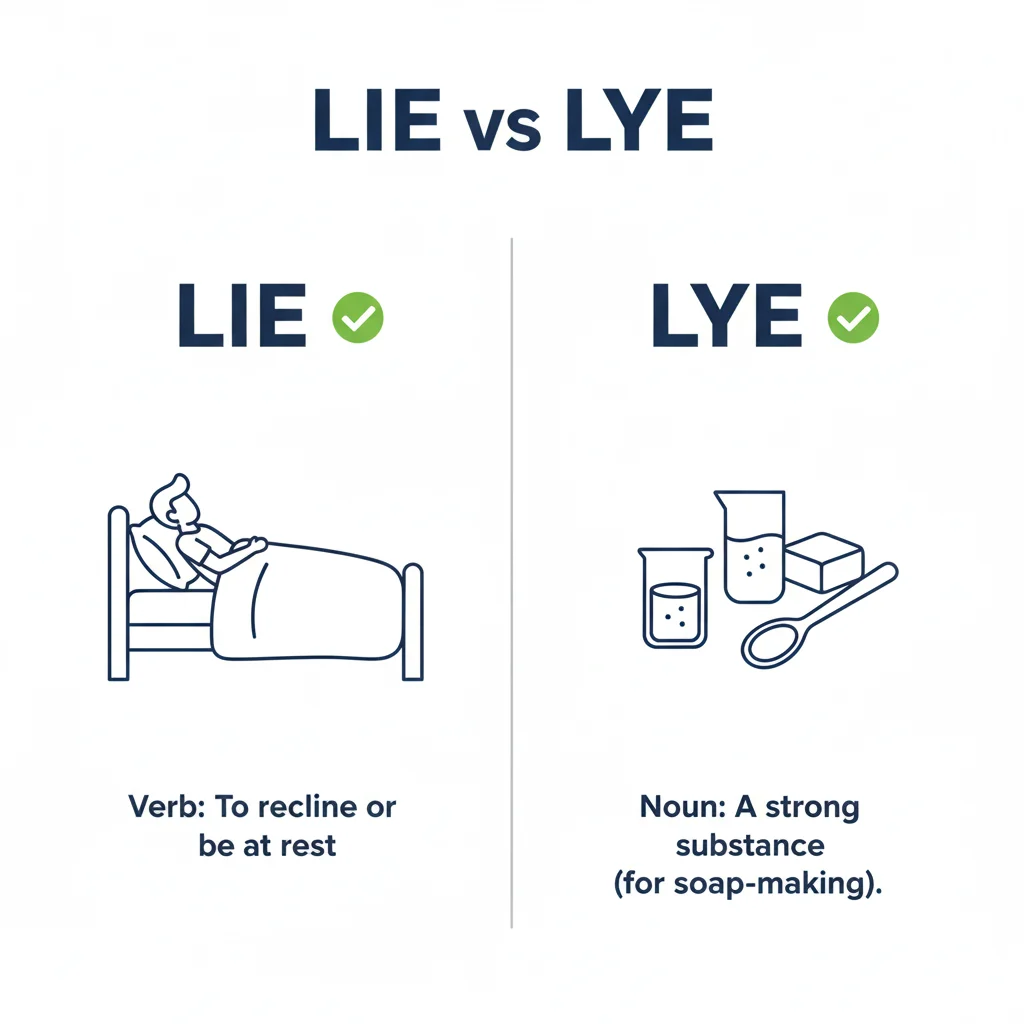
Lie or Lye
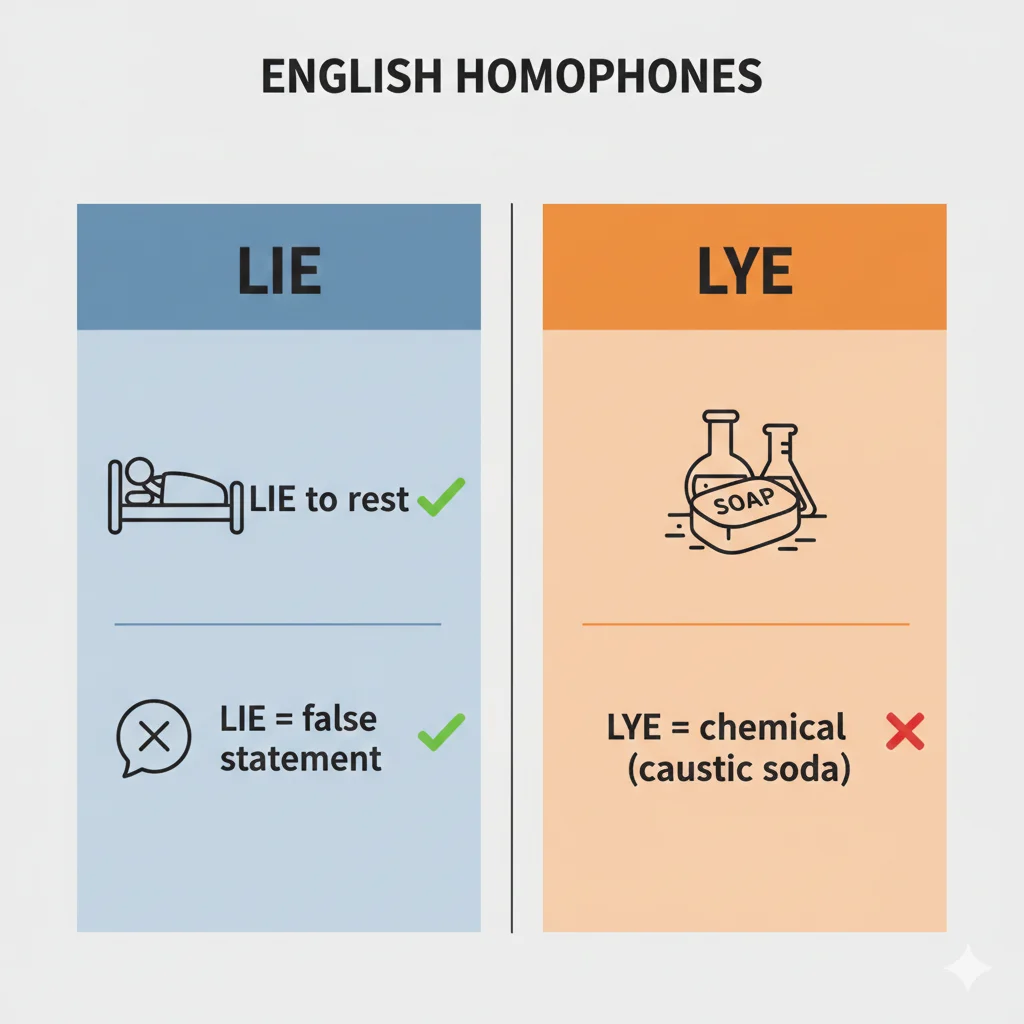
Lie = to rest or recline, or to say something untrue.
Lye = a strong chemical (sodium hydroxide) used in soap and cleaning.
Examples
- I will lie down to rest.
- Please don’t lie to me.
- The soap contains lye.
👉 If you mean sleeping or resting, the correct word is lie, not lye.
The Origin of Lie or Lye
The spelling differences exist because the words come from different roots.
- Lie (to rest) comes from Old English licgan, meaning to recline.
- Lie (not truth) comes from Old English lēogan, meaning to deceive.
- Lye comes from Old English lēag, meaning alkaline solution used for washing.
Over time, pronunciation became similar, but spelling stayed different to show meaning.
Why English Keeps Both Spellings
English keeps historical spellings to preserve meaning. Without this difference, sentences like “I will lie in bed” could be misunderstood.
British English vs American English Spelling
Good news: lie and lye are spelled the same in both British and American English.
Comparison Table
| Meaning | Word | British English | American English | Example |
|---|---|---|---|---|
| Rest/sleep | Lie | Lie | Lie | I will lie down. |
| Not truth | Lie | Lie | Lie | He told a lie. |
| Chemical | Lye | Lye | Lye | Soap contains lye. |
👉 Unlike many words, there is no US vs UK difference here.
Which Spelling Should You Use?
Choosing the correct spelling depends on meaning, not region.
Use Lie when:
- Talking about resting → “I need to lie down.”
- Talking about falsehood → “That is a lie.”
Use Lye when:
- Talking about chemicals → “Lye is used in soap.”
Global Advice
For US, UK, Pakistan, and worldwide English users:
✔ Always use lie for sleeping or resting.
✔ Use lye only for chemical contexts.
Common Mistakes with Lie or Lye
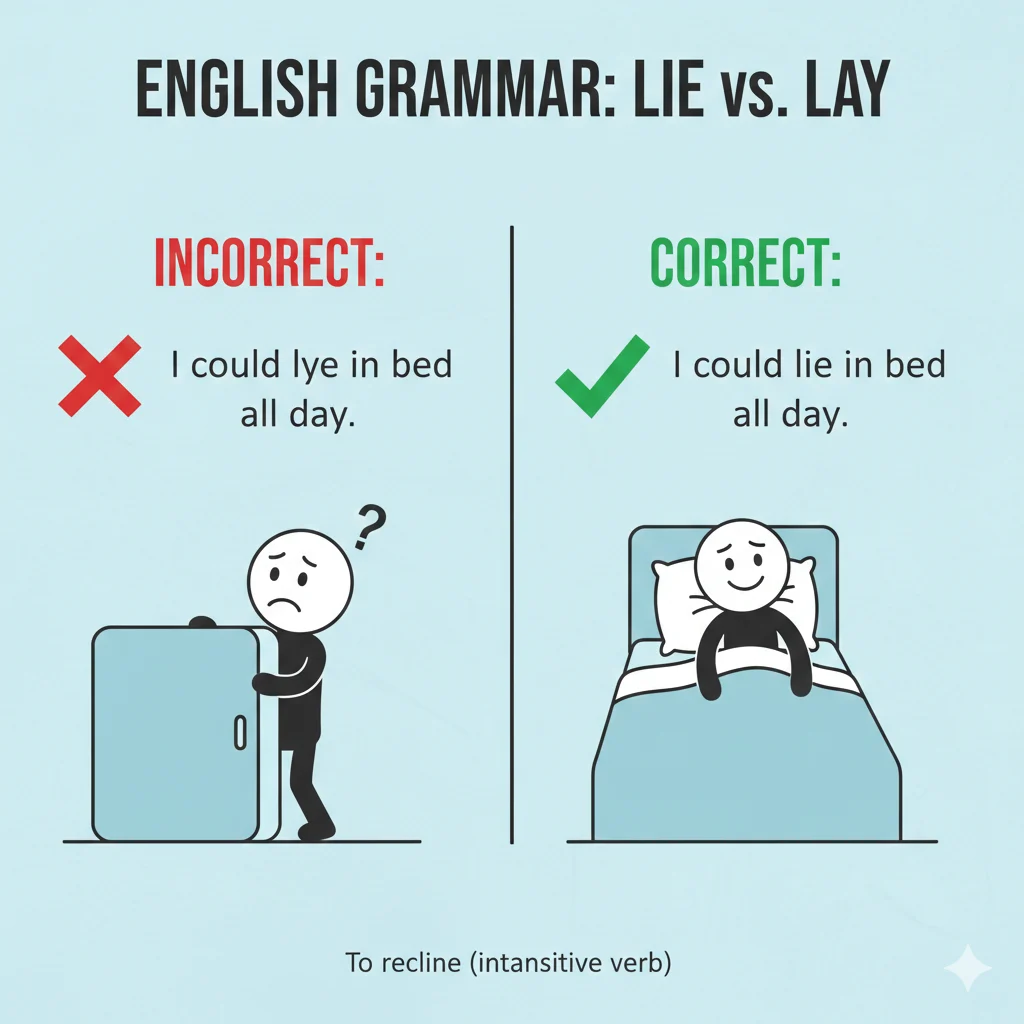
❌ Incorrect: I will lye in bed.
✔ Correct: I will lie in bed.
❌ Incorrect: She told a lye.
✔ Correct: She told a lie.
❌ Incorrect: The soap contains lie.
✔ Correct: The soap contains lye.
Confusion: Is lier or liar correct?
✔ Correct spelling: liar (a person who tells lies)
Either vs Eather: Correct Spelling, Meaning and Usage Guide
Lie or Lye in Everyday Examples
Emails
- I will lie down after work due to a headache.
- The product contains no lye.
News Writing
- The suspect admitted the statement was a lie.
- Traditional soap uses lye in production.
Social Media
- “I just want to lie in bed all day.”
- “Did you know soap is made with lye?”
Formal Writing
- Patients should lie down after the procedure.
- Lye is a caustic substance used in industry.

Lie or Lye – Google Trends & Usage Data
Search data shows people often ask:
- “Is it lie or lye in bed?”
- “What are two meanings of lie?”
- “Is it lie or lye for sleeping?”
Popularity by Context
- Lie (resting) → most searched globally.
- Lie (falsehood) → common in news and education.
- Lye → searched in DIY, soap making, and chemistry topics.
Countries with High Search Interest
- United States – grammar questions.
- United Kingdom – spelling and usage.
- India & Pakistan – English learning queries.
Comparison Table: Lie vs Lye
| Feature | Lie | Lye |
|---|---|---|
| Part of speech | Verb & noun | Noun |
| Meaning | Rest or false statement | Chemical substance |
| Example | Lie down to sleep | Lye in soap |
| Common confusion | Sleeping vs chemical | Rare outside chemistry |
FAQs
1. Is it lie or lye in bed?
It is lie in bed. Lye is a chemical.
2. What are two meanings of lie?
- To rest or recline.
- To say something untrue.
3. Is it lie or lye for sleeping?
Use lie for sleeping or resting.
4. Is lier or liar correct?
Liar is correct. “Lier” is incorrect.
5. What does lye in bed meaning refer to?
“Lye in bed” is incorrect. The correct phrase is lie in bed.
6. How do I use lie or lye in a sentence?
- I will lie down now.
- The soap contains lye.
7. Why is lie confusing in grammar?
Because “lie” has multiple meanings and similar pronunciation to “lye.”
Conclusion
Understanding lie or lye is simple once you know their meanings. Lie relates to resting or telling an untruth, while lye is a chemical used in soap and cleaning. If you’re asking, “Is it lie or lye in bed?”, the answer is always lie. This rule applies worldwide, whether you write in American, British, or international English.
The confusion exists because English keeps historical spellings even when words sound the same. By learning the origins and meanings, you can avoid common mistakes such as writing “lye down” or confusing liar with incorrect forms like “lier.” Clear usage improves your writing in emails, academic work, and professional communication.
When in doubt, remember this simple tip:
👉 If it involves sleep or rest, use lie.
👉 If it involves soap or chemicals, use lye.
Mastering this small difference builds confidence and makes your English more accurate and professional.

“Charles Dickens shares soulful prayers and uplifting reflections on PrayVibe.com, guiding readers toward hope, comfort, and a deeper connection with God.”