Many learners of English feel confused about does or do. You may see both words every day in emails, schoolwork, and social media. They look simple, but choosing the right one can feel hard. People search for this keyword because they want quick grammar help, clear rules, and real examples they can trust.
The confusion often comes from subjects like he, she, they, or you. Should you say “She do her work” or “She does her work”? Small mistakes can change how professional your writing looks. This guide solves that problem in a simple way. You will learn do and does grammar, see do and does examples, and understand do, does, did rules with examples.
By the end, you will know where to use each word, avoid common errors, and write with confidence. Whether you are a student, blogger, or professional, this guide will help you use do and does questions, answers, and sentences correctly.
Does or Do
Do and does are forms of the verb do. We use them in the present simple tense.
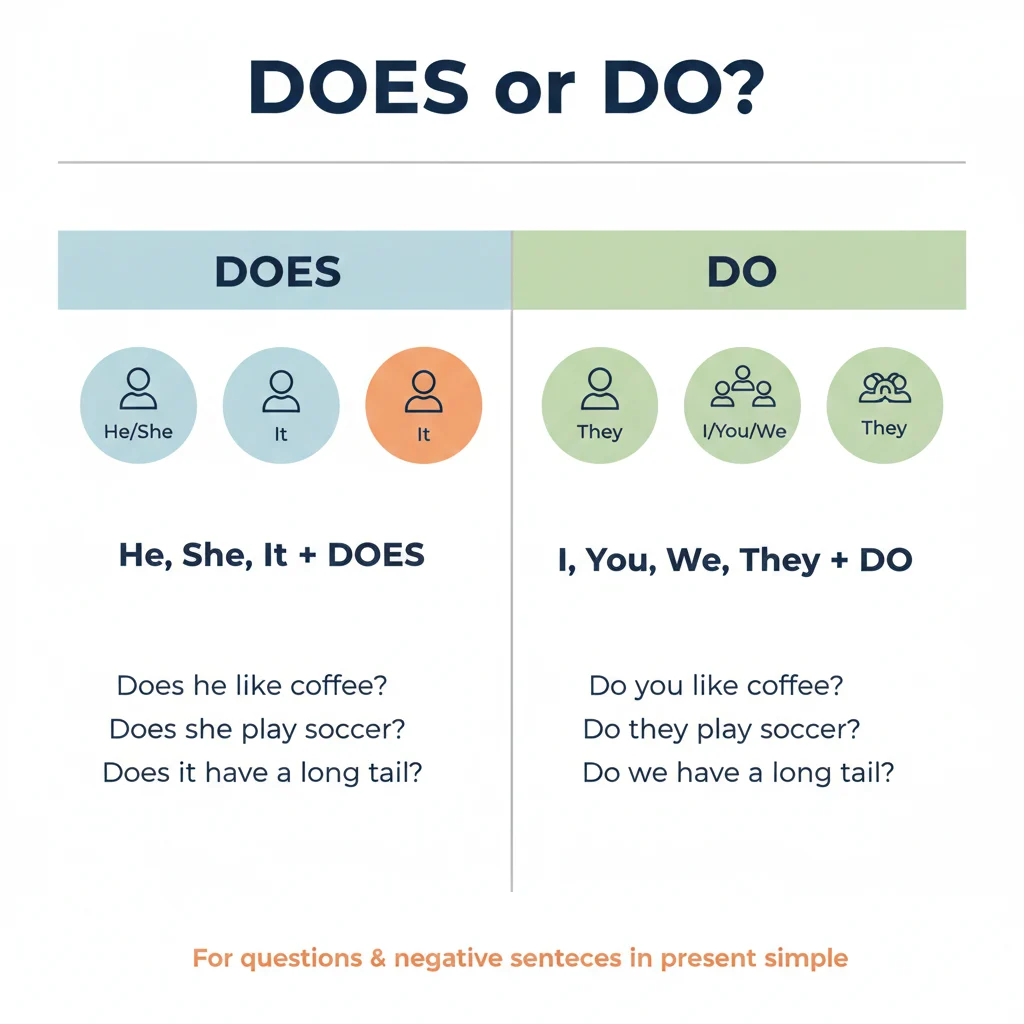
Basic Rule
- Do → used with I, you, we, they
- Does → used with he, she, it
Examples
- I do my homework.
- They do their jobs well.
- She does her homework.
- He does the work on time.
In Questions
- Do you like tea?
- Does she play football?
This simple rule solves most confusion about does vs do examples.

The Origin of Does or Do
The words do and does come from Old English dōn, which meant “to perform” or “to act.” Over time, English grammar added forms like does for third-person singular subjects. This change helped speakers show who is doing the action.
Why spelling differences exist:
- English verbs change form based on the subject.
- The -es ending in does follows a pattern seen in verbs like go → goes and fix → fixes.
- This structure helps listeners understand meaning quickly.
Today, the difference is grammatical, not regional. Both forms exist in all English varieties.
British English vs American English Spelling
Good news: does or do has no spelling difference between British and American English. The rules are the same.
Examples in Both Styles
- UK: She does her work daily.
- US: She does her work daily.
Comparison Table
| Subject | British English | American English |
|---|---|---|
| I | do | do |
| You | do | do |
| He | does | does |
| They | do | do |
Unlike words like colour/color, do and does grammar stays consistent worldwide.
Feel or Feal: Correct Spelling, Meaning and Usage Guide
Which Spelling Should You Use?
Since there is no spelling difference, your choice depends only on the subject.
Audience-Based Advice
- US audience → Follow standard grammar rules.
- UK/Commonwealth audience → Same rules apply.
- Global audience → Use simple sentences to avoid confusion.
Quick Tip
If your subject is singular (he, she, it), use does.
If plural or first/second person, use do.
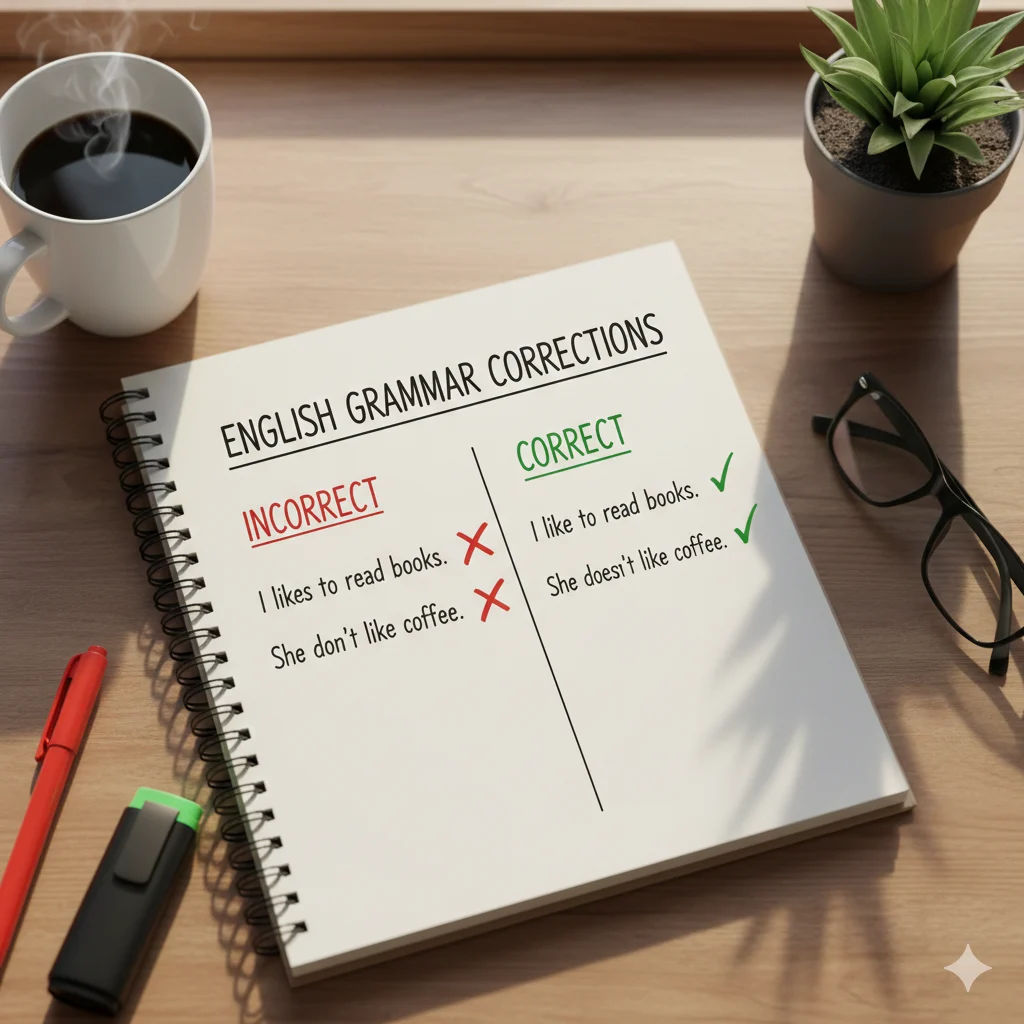
Common Mistakes with Does or Do
❌ Incorrect → ✅ Correct
- She do her work. → She does her work.
- He do not like tea. → He does not like tea.
- They does play well. → They do play well.
Frequent Errors
- Mixing singular and plural subjects.
- Forgetting does in questions.
- Using do with he/she/it.
Special Case
Does your team or do your team?
Correct: Does your team play today?
Reason: Team is singular.
Does or Do – Complete Guide with Rules, Examples, and Tips
Does or Do in Everyday Examples
Emails
- Do you have the report?
- Does she handle the meeting notes?
News Writing
- The company does well in global markets.
- They do business across Asia.
Social Media
- Do you agree?
- Does this look good?
Formal Writing
- The system does not respond.
- Employees do follow safety rules.
These examples show real-life do and does examples.

Does or Do – Google Trends & Usage Data
Search interest for does or do meaning and grammar rules is high in countries where English is a second language.
Popular Regions
- India
- Pakistan
- Philippines
- Nigeria
Why People Search
- School assignments
- Job applications
- Writing emails
- Learning spoken English
Contexts of Use
- Education → worksheets and grammar lessons
- Professional writing → formal communication
- Online learning → grammar tutorials
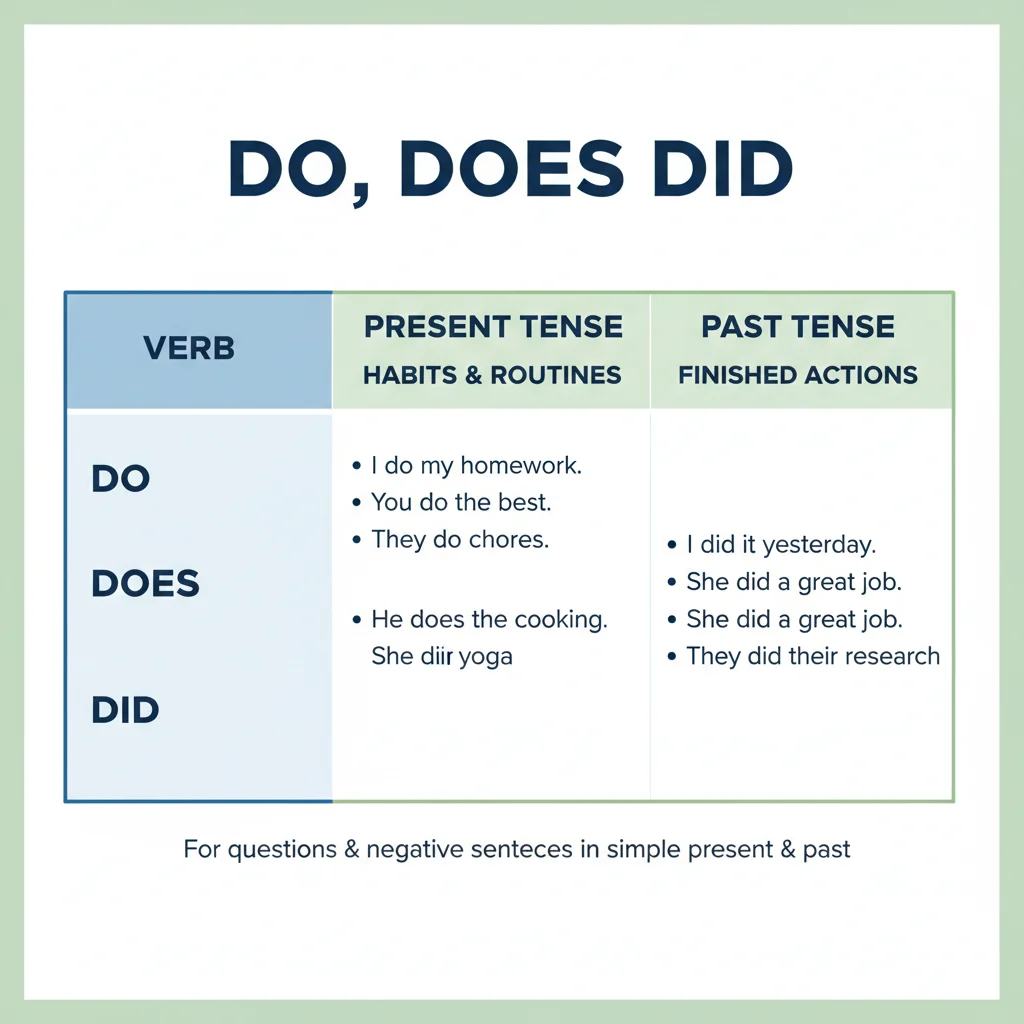
Comparison Table: Do, Does, Did
| Form | Tense | Subject | Example |
|---|---|---|---|
| Do | Present | I/You/We/They | They do the work. |
| Does | Present | He/She/It | She does the work. |
| Did | Past | All subjects | They did the work. |
This table explains did and do difference examples clearly.
Do and Does Questions and Answers
Question Forms
- Do you like coffee?
- Does she work here?
Short Answers
- Yes, I do.
- No, she does not.
Do and Does Questions Practice
- Do they play cricket?
- Does he study daily?
These are useful for does or do worksheet practice.
Do, Does, Did Rules with Examples
Present Simple
- I do my job.
- She does her job.
Past Simple
- I did my job yesterday.
- They did the work.
Negative Sentences
- I do not like tea.
- He does not like tea.
Where Do We Apply Do or Does?
Use do and does in:
- Questions
- Negative sentences
- Emphasis
Examples
- Do you understand?
- She does not agree.
- I do want to help.
FAQs
1. What is the difference between do and does?
Do is used with plural subjects and I/you. Does is used with he, she, it.
2. Can I use “do” with he or she?
No. Use does: He does his work.
3. What is the past form of do and does?
The past form is did for all subjects.
4. Why do we use does in questions?
It helps form correct present simple questions: Does she play?
5. Is “do your team” correct?
No. Use does your team because team is singular.
6. How can I practice do and does?
Use worksheets, write sentences, and practice do and does questions daily.
7. Are do and does used in formal writing?
Yes. They are essential in both formal and informal English.
Conclusion
Understanding does or do is a small step that makes a big difference in your English. These words are simple, but they follow clear grammar rules. Use do with I, you, we, and they. Use does with he, she, and it. This rule works in questions, negatives, and statements.
We also learned the origin of the words, saw that British and American English use the same forms, and explored common mistakes. Real-life examples showed how these verbs appear in emails, news, and social media. The comparison with did helped explain past tense usage, while FAQs answered common learner questions.
If you want to improve, practice daily. Write sentences, ask questions, and check your grammar. Over time, choosing between do and does will feel natural. Clear grammar builds confidence, improves communication, and helps you sound more professional in every situation.

“Jane Austen shares heartfelt, graceful prayers on PrayVibe.com, offering comfort, hope, and gentle spiritual guidance to readers seeking peace and clarity.”