English spelling can be confusing, even for native speakers. One common question people search online is “bussed or bused?” You might see both spellings used in news articles, school notices, or emails and wonder which one is actually correct. This confusion becomes stronger when you compare British English vs American English, or when spell-check tools flag one spelling but not the other.
People search for bussed or bused meaning because the word appears in daily life: students are bused or bussed to school, restaurants bussed or bussed tables, and workers are sometimes bussed out to job sites. On top of that, some people confuse bussed with busted, which changes the meaning completely.
This article solves all of that. You’ll get a quick answer, the origin of the word, a UK vs US comparison, real-life examples, common mistakes, and professional advice on which spelling to use. By the end, you’ll know exactly how to use bussed or bused in English—with confidence.
Bussed or Bused
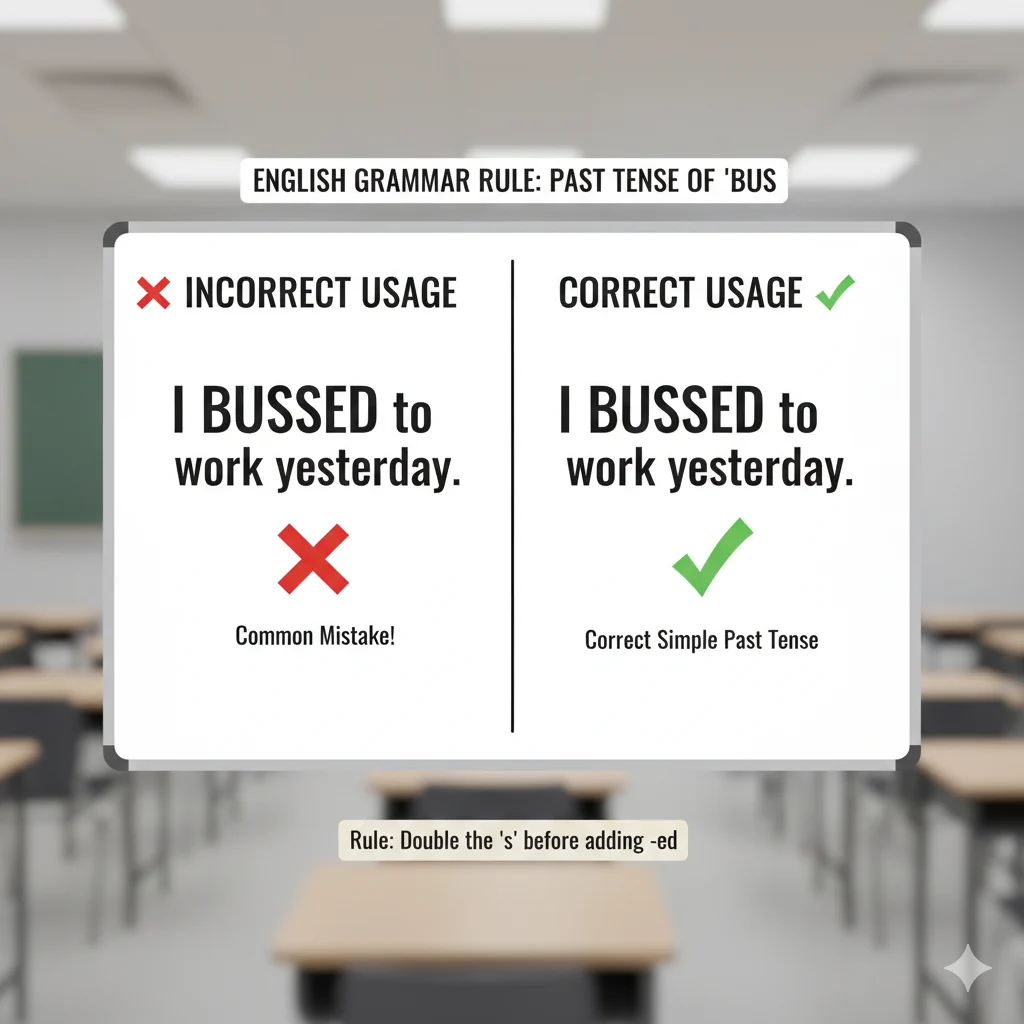
Both bussed and bused are correct spellings.
- Bussed is more common in British English
- Bused is more common in American English
Examples:
- UK: The students were bussed to school.
- US: The students were bused to school.
Both mean the same thing: transported by bus.
The Origin of Bussed or Bused
The word bus comes from the Latin word omnibus, meaning “for everyone.” In the 1800s, it became shorted to bus, and soon people needed a verb form: to bus.
When verbs in English end with a short vowel and consonant, British spelling often doubles the final consonant before adding -ed. That’s how bussed appeared.
American English prefers simpler spelling, so it usually avoids doubling consonants unless needed. That’s why bused became standard in the US.
This spelling split explains why both forms exist today—and why neither is wrong.
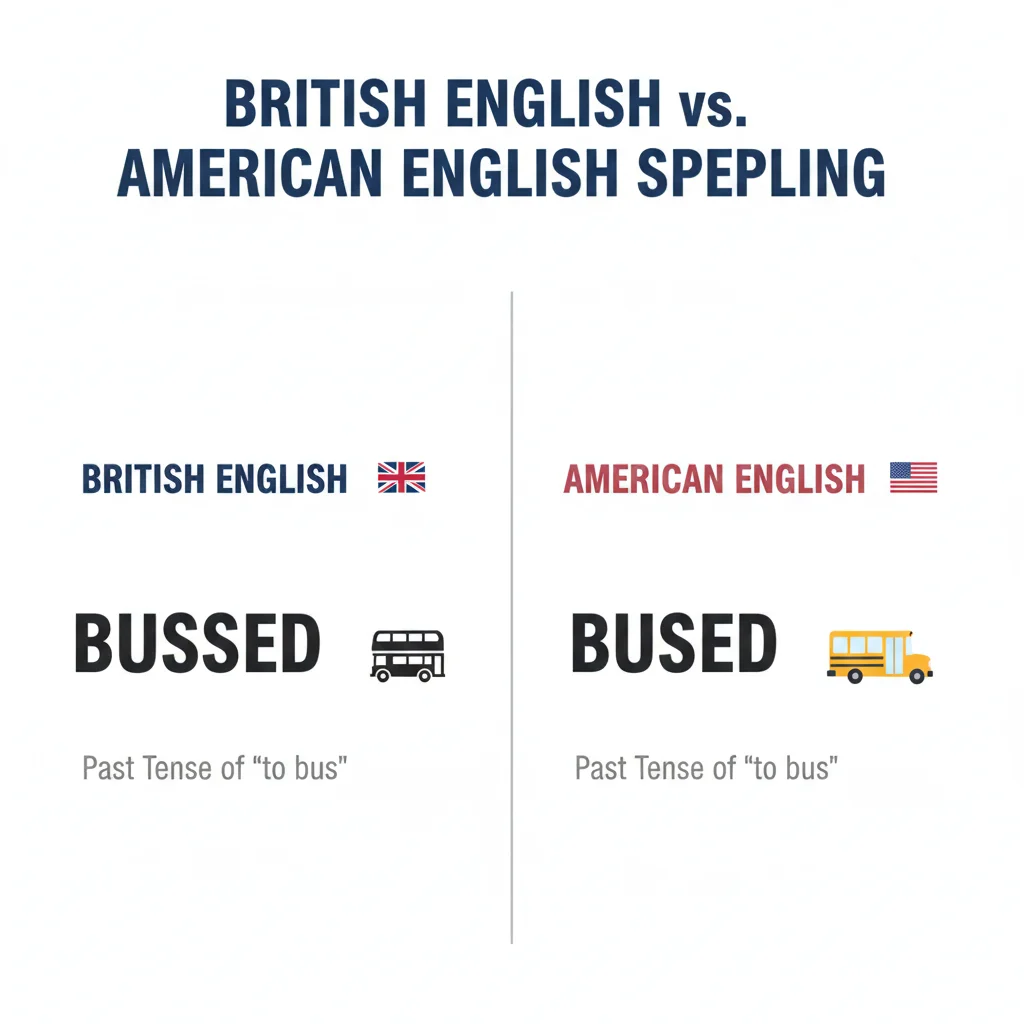
British English vs American English Spelling
Understanding spelling rules makes this easy.
Key Difference
- British English → doubles consonants
- American English → keeps them single
Examples:
- UK: travelled, cancelled, bussed
- US: traveled, canceled, bused
Comparison Table
| Context | British English | American English |
|---|---|---|
| Past tense of bus | bussed | bused |
| Students | bussed to school | bused to school |
| Restaurant work | bussed tables | bused tables |
| Media usage | Very common | Very common |
So, is it bused or bussed in the UK?
👉 Bussed is preferred in the UK.
Which Spelling Should You Use?
Choose based on your audience.
Use bused if:
- Your readers are in the United States
- You write for American blogs or news sites
- You follow US grammar rules
Use bussed if:
- Your audience is in the UK
- You write for British or Commonwealth readers
- You follow UK spelling guides
For global audiences:
Both spellings are acceptable. Pick one style and stay consistent.
Common Mistakes with Bussed or Bused
Here are mistakes people often make—and how to fix them.
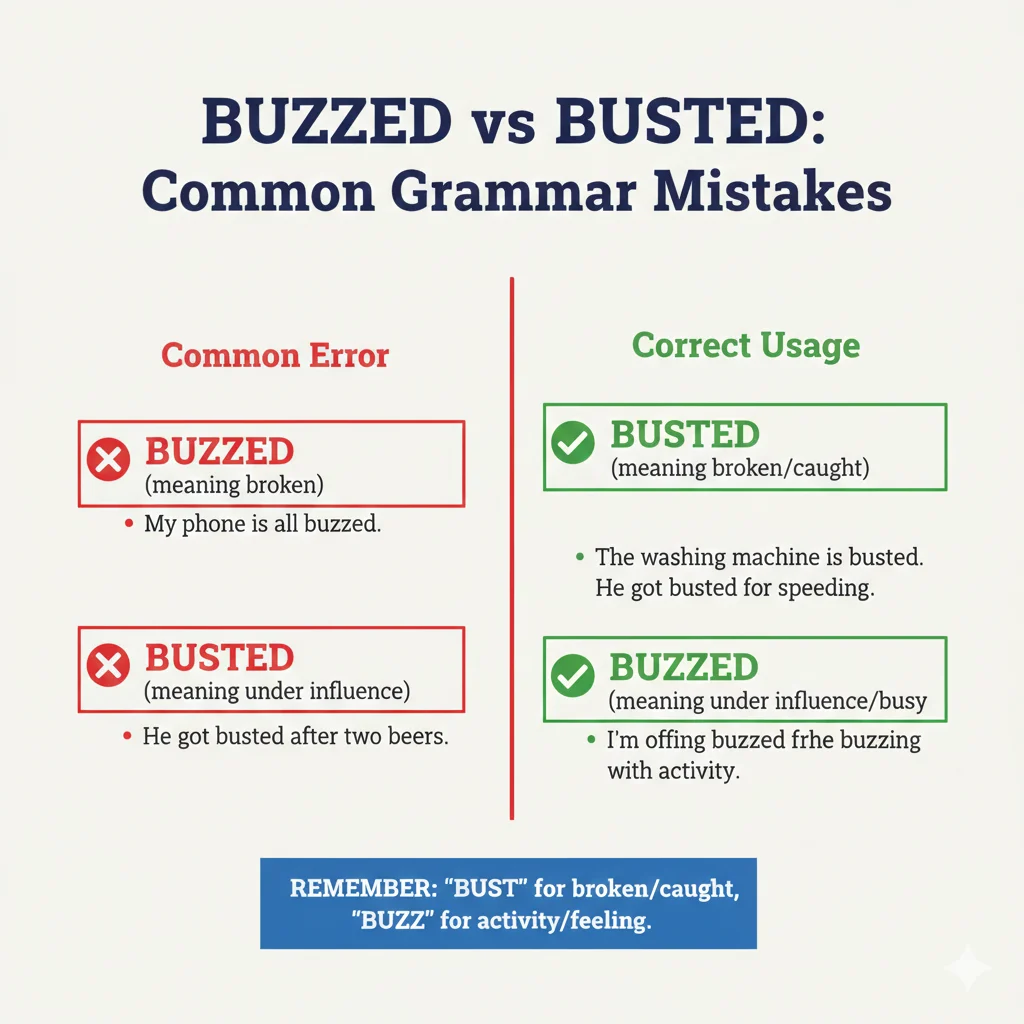
❌ Confusing bussed with busted
- Busted means broken or caught
- Bussed means transported by bus
✔ Correct:
- The students were bussed to school.
❌ Wrong: - The students were busted to school.
❌ Confusion with plural form
Is it buses or busses in the UK?
- Buses = correct plural noun
- Busses = rare, but used as a verb form
Bearing or Baring: One Word Changes Everything
Bussed or Bused in Everyday Examples
Emails
- Employees will be bused to the office.
- Staff will be bussed from the station.
News
- Refugees were bussed out of the city for safety.
Social Media
- Kids got bused to school early today!
Formal Writing
- Participants were bussed to the conference venue.

Bussed or Bused Meaning
Bussed / Bused means:
👉 transported by bus
Related meanings:
- Bussed tables → cleared tables in a restaurant
- Bussed out → sent away by bus
- Bused or bussed synonym → transported, shuttled
BUSSED Urban Dictionary
In slang, bussed can sometimes mean excellent or impressive, but this is informal and not standard English.
Bussed or Bused in English
School
- Children were bused or bussed to school daily.
Restaurants
- The waiter bussed tables after lunch.
Work
- Workers were bussed out to the site.
Bussed or Bused – Google Trends & Usage Data
Search data shows:
- Bused is more popular in the United States
- Bussed is searched more in the UK, Australia, and Canada
People search this keyword mostly when:
- Writing school notices
- Editing articles
- Learning English grammar
- Comparing UK vs US spelling
The intent is clear: people want the correct spelling fast.
Keyword Comparison Table
| Term | Meaning | Usage |
|---|---|---|
| bussed | transported by bus | UK English |
| bused | transported by bus | US English |
| bussed tables | cleared tables | restaurant work |
| bused to school | school transport | US |
| bussed out | sent away by bus | UK & US |
| busted | broken or caught | different word |
Frequently Asked Questions
1. Is it bused or bussed in the UK?
Bussed is the correct and preferred spelling in the UK.
2. What does it mean to be bused?
It means to be transported by bus.
3. Is it buses or busses in the UK?
Buses is the correct plural noun.
4. Is it busted or bussed?
Bussed relates to transport. Busted means broken or caught.
5. Can I use bused in British English?
Yes, but bussed is more natural.
6. Is bussed correct in American English?
Yes, but bused is more common.
7. What is bussed meaning in restaurants?
It means clearing tables after customers leave.
Conclusion
The confusion between bussed or bused is completely normal. English spelling changes depending on region, and this word is a perfect example. The good news is simple: both spellings are correct. The difference depends on where your audience is and which style of English you follow.
If you write for American readers, bused is the better choice. If your audience is in the UK or Commonwealth countries, bussed will feel more natural. What matters most is consistency. Pick one spelling and use it throughout your writing.
Remember also to avoid common mistakes, especially confusing bussed with busted, or mixing plural forms like buses and busses incorrectly. With clear understanding and real-world examples, this word becomes easy to use.
Once you know the rule, you’ll never hesitate again when writing bussed or bused in English.

“Jane Austen shares heartfelt, graceful prayers on PrayVibe.com, offering comfort, hope, and gentle spiritual guidance to readers seeking peace and clarity.”