English learners and even native speakers often stop and think when choosing between bit or bitten. You may have heard both sentences: “I was bit by a dog” and “I was bitten by a dog.” One sounds common in speech, while the other feels more correct in writing. This confusion is exactly why people search for bit or bitten every day.
The problem comes from verb forms. English verbs change depending on tense, and bite is an irregular verb. Many people are unsure about the bit or bitten meaning, the correct grammar, and which form to use in real life. Others search for quick help for exams, quizzes, or writing emails and reports.
This article solves that confusion step by step. You will learn the quick answer, the grammar rules, and clear examples. We will also explain British vs American usage, common mistakes, and how Google Trends shows real-world use. By the end, you will confidently know is it bit or bitten, and you will never hesitate again when writing or speaking.
Bit or Bitten
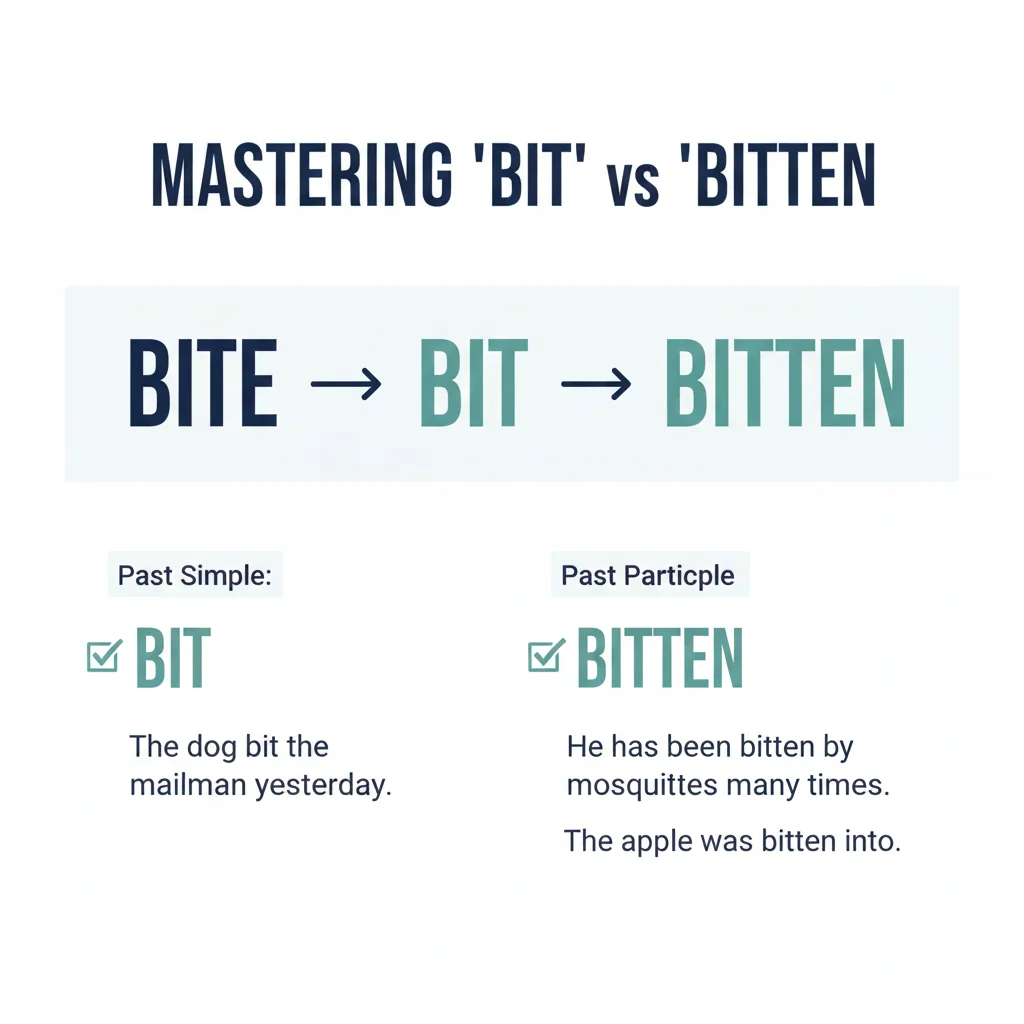
Short answer:
- Bit = simple past tense
- Bitten = past participle (used with has, have, had, was, were)
Examples:
- ✅ The dog bit my hand.
- ✅ I was bitten by a dog.
- ❌ I was bit by a dog. (informal, not grammatically correct)
If you use was, were, has, have, or had, you usually need bitten.
The Origin of Bit or Bitten
The verb bite comes from Old English bītan, meaning to cut with teeth. Over time, English kept strong (irregular) verb forms.
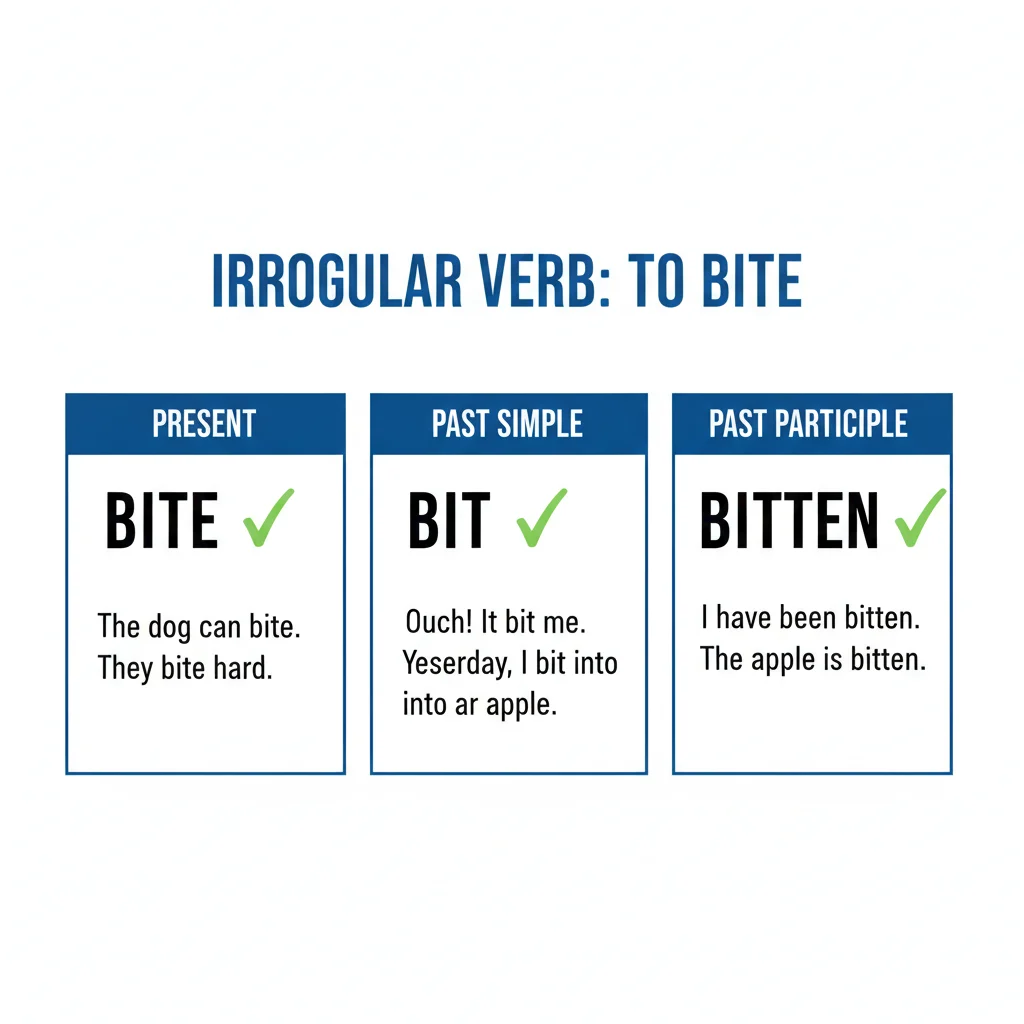
Verb forms of bite:
- Base form: bite
- Past tense: bit
- Past participle: bitten
The spelling difference exists because English kept older Germanic verb patterns instead of making all verbs regular. That is why we say bitten and not bited.
This history explains why bit or bitten grammar feels confusing. Both forms are correct, but only in the right structure.
British English vs American English Spelling
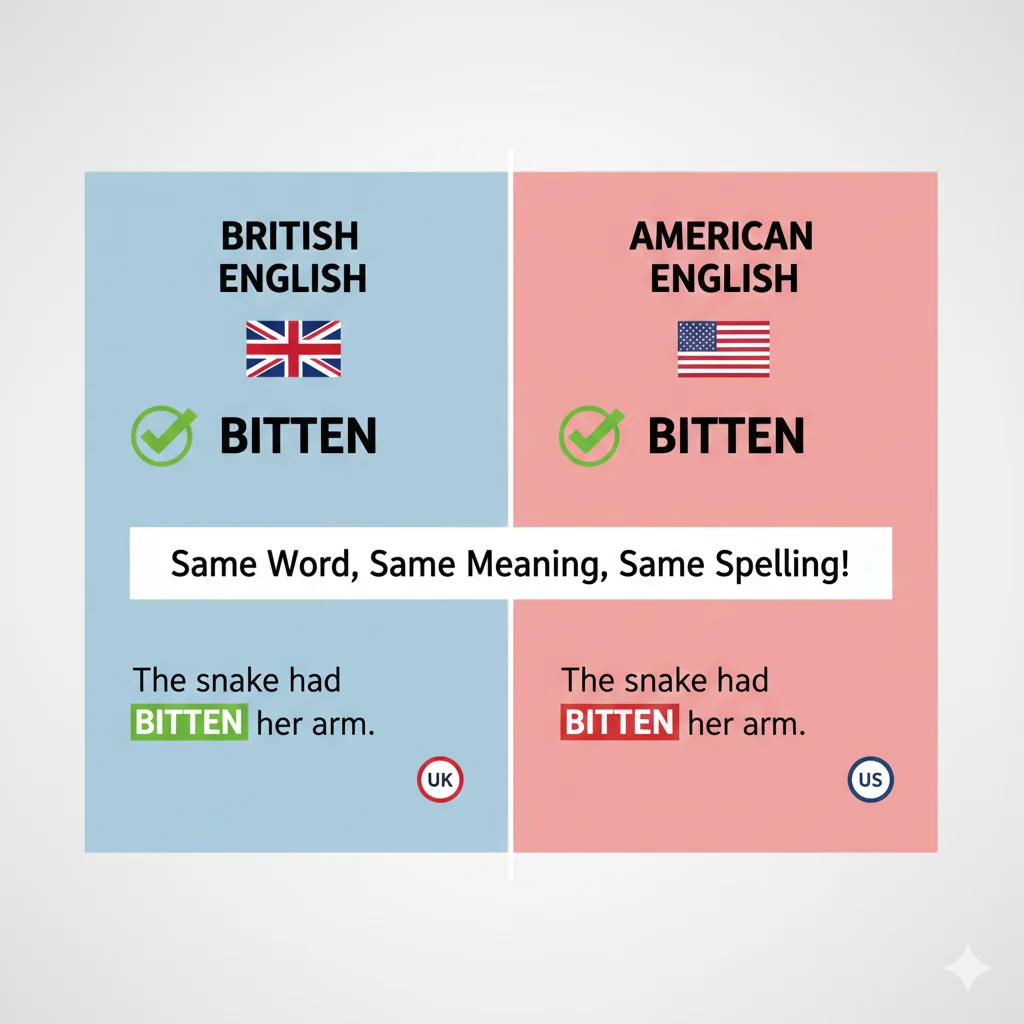
There is no spelling difference between British and American English for bit and bitten. However, there is a usage difference in speech.
Key difference:
- American English (spoken): “I got bit” (very common but informal)
- British English: “I got bitten” (preferred and correct)
Comparison Table
| Context | British English | American English |
|---|---|---|
| Formal writing | bitten | bitten |
| News reports | bitten | bitten |
| Casual speech | bitten | bit / bitten |
| Exams & tests | bitten | bitten |
👉 For professional writing, bitten is always safer.
Which Spelling Should You Use?
Choose based on audience and purpose.
- US audience:
Use bitten in writing. “Bit” is okay only in casual speech. - UK & Commonwealth (Pakistan, India, Australia):
Always use bitten in passive forms. - Global or professional audience:
Use bitten. It is clear, correct, and accepted everywhere.
Rule to remember:
If the sentence can use has/have/was/were, choose bitten.
Common Mistakes with Bit or Bitten
Many errors happen in daily speech and writing.
Mistake 1:
❌ I was bit by a dog.
✅ I was bitten by a dog.
Mistake 2:
❌ He has bit his tongue.
✅ He has bitten his tongue.
Mistake 3:
❌ Is it correct to say I was bit or bitten?
✅ Correct form: I was bitten.
Quick Fix Tip:
If you can add “has” before the verb, use bitten.
Bit or Bitten in Everyday Examples
Emails:
- I was bitten by an insect and need sick leave.
News:
- The child was bitten by a stray dog.
Social Media:
- Almost got bit today! (informal but common)
Formal Writing:
- The worker was bitten during the incident.
Bit or Bitten Sentences:
- The snake bit the farmer.
- The farmer was bitten by a snake.
Bit or Bitten Grammar Explained Simply
Tense Table
| Form | Example |
|---|---|
| Present | The dog bites. |
| Past | The dog bit him. |
| Past participle | He was bitten. |
Key Grammar Rule:
- Bit never follows was, were, has, have.
- Bitten often follows them.
This rule answers questions like:
- Is bit or is bitten? → is bitten
- Is it almost got bit or bitten? → grammatically got bitten
Bit or Bitten by a Dog – Correct Usage
This is one of the most searched phrases.
Correct forms:
- ✅ The dog bit the man.
- ✅ The man was bitten by the dog.
Common question:
Is it bit or bitten by a dog?
✔ Correct: bitten by a dog

Bit or Bitten Examples
- She bit into the apple.
- She has bitten into the apple.
- He was bitten by mosquitoes.
- The cat bit my finger.
These examples help with bit or bitten exercises and exam prep.
Bit or Bitten – Google Trends & Usage Data
Search data shows:
- “I got bit” is common in the US (spoken English).
- “was bitten” dominates in:
- UK
- Pakistan
- India
- Academic and news writing
Usage Context:
- Casual talk → bit
- Education, SEO, news → bitten
Google Trends confirms bitten is safer and more professional worldwide.
Bit or Bitten Quiz
Choose the correct option:
- He was ___ by a spider.
- a) bit
- b) bitten ✅
- The dog ___ my shoe.
- a) bit ✅
- b) bitten
- She has ___ her nails.
- a) bit
- b) bitten ✅
Comparison Table: Bit vs Bitten
| Feature | Bit | Bitten |
|---|---|---|
| Verb type | Past tense | Past participle |
| Used with has/have | ❌ | ✅ |
| Formal writing | ❌ | ✅ |
| Spoken English | ✅ | ✅ |
FAQs: Bit or Bitten
1. Is it correct to say I was bit or bitten?
Correct grammar: I was bitten.
2. Is it bit or bitten by a dog?
Correct form: bitten by a dog.
3. Is it almost got bit or bitten?
Grammatically correct: almost got bitten.
4. Is bit or is bitten correct?
Use is bitten, not is bit.
5. What is the bit or bitten past participle?
The past participle is bitten.
6. Can I use “bit” in exams?
Only as simple past. Avoid it in passive sentences.
7. Why do Americans say “I got bit”?
It is informal speech, not standard grammar.
Conclusion
Understanding bit or bitten is easier once you learn one simple rule: bit is past tense, and bitten is the past participle. If your sentence uses was, were, has, or have, the correct choice is almost always bitten. This rule helps you avoid common mistakes in exams, emails, and professional writing.
While casual American speech often uses “I got bit,” it is not grammatically correct in formal English. British English, academic writing, and global standards strongly prefer bitten. That is why news reports, books, and official documents always use “was bitten.”
If you remember nothing else, remember this: Use “bit” for action in the past, and “bitten” for results or passive voice. This knowledge will improve your grammar, writing confidence, and test performance. With practice and examples, choosing between bit or bitten becomes natural and stress-free.

“Agatha Christie writes comforting, faith-filled prayers on PrayVibe.com, offering hope, guidance, and spiritual peace to readers seeking God’s light.”