Have you ever wondered what is the difference between an archaeologist and an archeologist? Both terms refer to experts who study human history through artifacts, fossils, and ancient sites, but the spelling often depends on regional preferences. While “archaeologist” is the standard in British English, “archeologist” is commonly used in American English. Regardless of spelling, their work uncovers the secrets of the past and preserves human heritage for future generations.
If you’re curious about this fascinating career, you might want to know how to become an archaeologist. It typically requires formal education in archaeology, anthropology, or history, combined with fieldwork experience. Alongside this, many aspiring professionals research the archaeologist salary to understand the earning potential, which varies based on location, experience, and specialization.
In this article, we’ll also explore the archaeologist meaning, highlight the skills needed for this exciting profession, and guide you through the steps to enter the field. By the end, you’ll have a clear understanding of the role, responsibilities, and opportunities for those passionate about uncovering the mysteries of the past.
Archeologist or Archaeologist
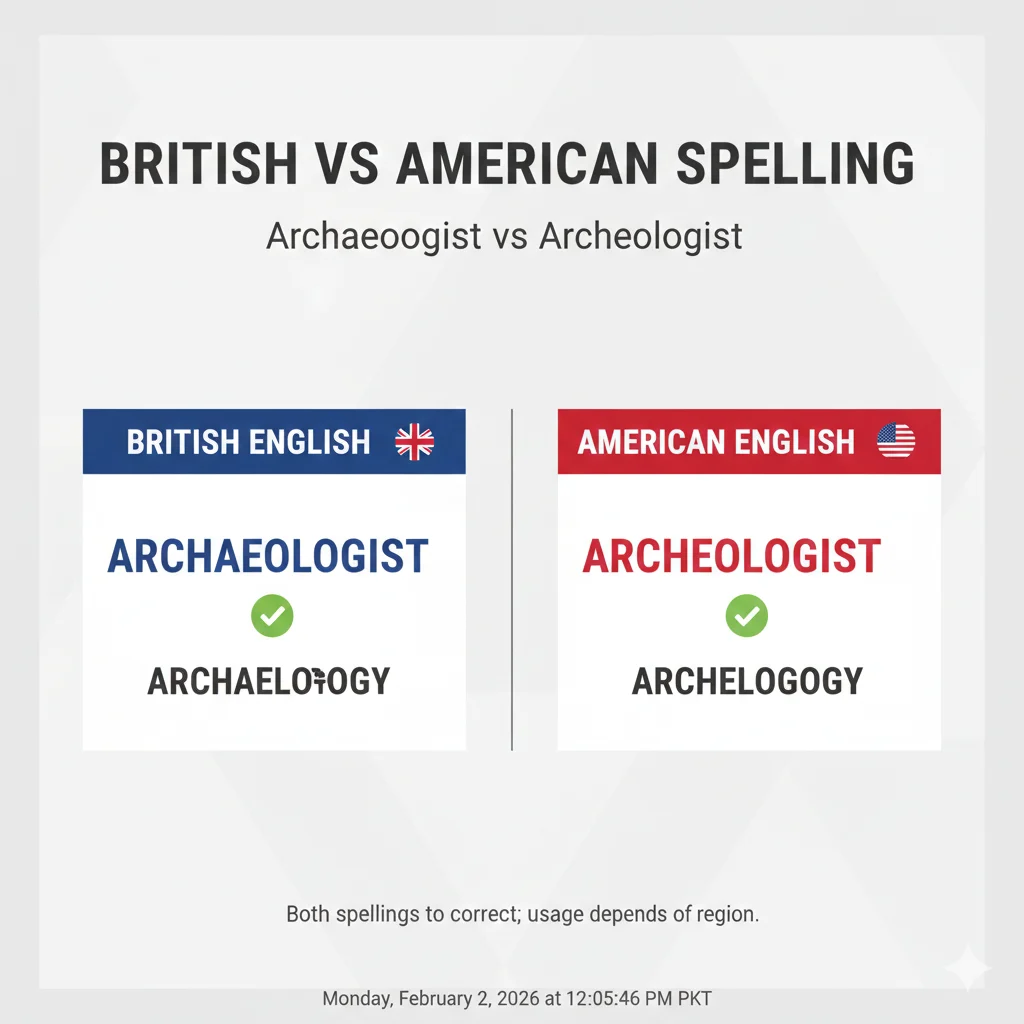
Quick Answer: Both spellings refer to someone who studies human history through excavation, artifacts, and ancient sites.
- Archaeologist – British English, widely accepted internationally, especially in professional and academic contexts.
- Archeologist – American English, less common but still correct in casual US writing.
Examples:
- “The archaeologist discovered ancient pottery in Egypt.”
- “The archeologist led a dig in Arizona last summer.”
Tip: For global audiences or formal writing, use archaeologist. For American media or casual contexts, archeologist is acceptable.

The Origin of Archeologist or Archaeologist
The word comes from Greek: archaios meaning “ancient,” and logos meaning “study.” It first appeared in English in the 19th century.
- Archaeologist – Original British spelling, retained historical letters to match the Greek roots.
- Archeologist – Simplified American version, became popular in early 20th century to align with American spelling trends.
Spelling differences often reflect British preference for traditional forms versus American preference for simplicity, similar to “colour” vs “color” or “honour” vs “honor.”
British English vs American English Spelling
Here’s a clear comparison for easy reference:
| Feature | British English | American English |
|---|---|---|
| Spelling | Archaeologist | Archeologist |
| Pronunciation | /ˌɑː.kiˈɒl.ə.dʒɪst/ | /ɑːr.kɪˈɒl.ə.dʒɪst/ |
| Common Usage | UK, Commonwealth, global academic writing | US media, some US universities |
| Preferred in Exams | Archaeologist | Archeologist |
| Related Word | Archaeology | Archeology |
Archaeologist pronunciation varies slightly by region but both are widely understood.
Which Spelling Should You Use?
Audience Matters:
- US Audience: Use archeologist in articles, newspapers, or casual writing.
- UK/Commonwealth: Use archaeologist for consistency with academic standards.
- Global or Professional: Archaeologist is safer, especially for research papers, CVs, and professional publications.
On platforms like Reddit, searching “archeologist or archaeologist reddit” shows users often prefer archaeologist, particularly in academic discussions.
Common Mistakes with Archeologist or Archaeologist
Even experienced writers make these mistakes:
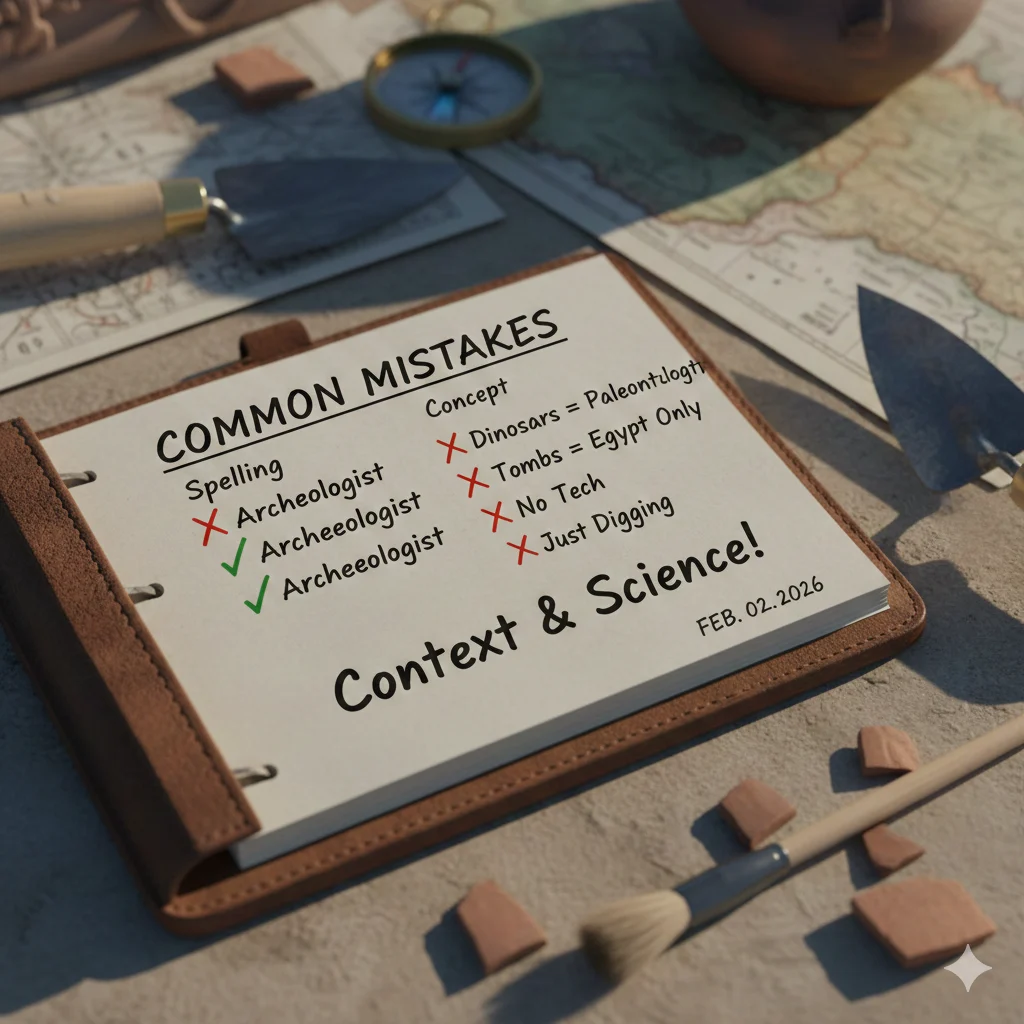
- Wrong spelling – “archeaologist” ❌
- Confusing fields – archeologist vs paleontologist: archaeologists study humans, paleontologists study fossils and prehistoric life.
- Mispronunciation – saying “ark-ee-oh-lo-jist” instead of “ahr-kee-oh-lo-jist.”
- Mixing words with archaeology/archeology – ensure the same spelling style throughout your text.
Correct spelling improves clarity, professionalism, and credibility.
Archeologist or Archaeologist in Everyday Examples
Emails:
- “Our archaeologist team will examine the newly discovered artifacts next week.”
News Headlines:
- “Local archeologist uncovers Roman villa in Italy.”
Social Media:
- “Excited to start fieldwork as an archaeologist this summer!”
Formal Writing:
- “Understanding the archaeologist meaning is essential for students entering this field.”
Career Advice:
- “If you’re wondering how to become an archaeologist, start by studying history or anthropology and gaining field experience.”
Analog or Analogue: The Simple Answer You Need
Archeologist vs Paleontologist
Many people confuse these careers.
| Field | Studies | Key Focus | Example Work |
|---|---|---|---|
| Archaeologist | Human history | Artifacts, ruins, ancient cultures | Excavating Roman ruins |
| Paleontologist | Fossils & prehistoric life | Dinosaurs, plants, ancient animals | Studying dinosaur skeletons |
Always clarify the difference to avoid using the wrong term in writing or conversation.
Archeologist or Archaeologist – Google Trends & Usage Data
Google Trends shows:
- “Archaeologist” dominates in the UK, Canada, Australia, and international searches.
- “Archeologist” spikes occasionally in the US, especially in casual news or media stories.
- Related searches like “archaeologist salary,” “how to become an archaeologist,” and “what is the highest paid archeologist” are steadily increasing globally.
Salary Insight:
- US: Entry-level archaeologists earn $40,000–$60,000; senior researchers or professors can earn $100,000+.
- UK: £25,000–£40,000 for entry-level, £60,000+ for senior positions.
Trend Insight: Align spelling with your target audience to match search behavior and engagement.
Variations Comparison Table
| Keyword | Meaning / Use | Notes |
|---|---|---|
| Archeologist | US spelling | Informal or American English contexts |
| Archaeologist | UK & global | Preferred for academic/professional use |
| Archaeologist meaning | Definition of the profession | Helpful for students & beginners |
| How to become an archaeologist | Career guidance | Step-by-step search intent |
| Archeologist vs paleontologist | Field distinction | Clarifies study focus |
| Archaeologist salary | Income info | Useful for career planning |
| Archaeologist pronunciation and meaning | Pronunciation guide | ESL learners & students |
| Archeologist or archaeologist reddit | Community preference | Real-world usage data |
How to Become an Archaeologist
- Education: Bachelor’s in archaeology, anthropology, or history.
- Field Experience: Participate in digs, volunteer, or internships.
- Advanced Studies: Consider a master’s or PhD for research or university positions.
- Networking: Join archaeology societies or forums (e.g., Reddit communities).
- Career Paths: Museums, universities, government agencies, and private consulting.
FAQs
1. Who is an archeologist?
A professional who studies past human societies through excavation and artifacts.
2. What is the difference between an archaeologist and an archeologist?
Mostly spelling: archaeologist (UK) vs archeologist (US).
3. Is archeology a British spelling?
No. British spelling is archaeology; American spelling can be archeology.
4. What is the highest paid archeologist?
Senior researchers, university professors, and government consultants can earn over $100,000/year.
5. How to become an archaeologist?
Get a relevant degree, gain field experience, pursue advanced studies, and join professional networks.
6. Archaeologist pronunciation – how do you say it?
/ˌɑː.kiˈɒl.ə.dʒɪst/ in UK English, /ɑːr.kɪˈɒl.ə.dʒɪst/ in US English.
7. Archeologist or archaeologist Reddit – which do people prefer?
Most discussions favor archaeologist, especially in academic and professional contexts.
Conclusion
Choosing between archeologist or archaeologist is simple once you know your audience. For global, academic, and professional readers, archaeologist is the safest and most widely accepted spelling. For American casual writing, archeologist is acceptable.
Understanding spelling differences helps avoid common mistakes, improves professionalism, and makes your writing credible. Whether you’re exploring archaeologist meaning, planning a career, or curious about archaeologist salary, correct usage ensures clarity.
Remember: spelling reflects not just letters but also audience, professionalism, and trustworthiness. Use the version that aligns with your context, and your writing will always be accurate and authoritative.

“George Orwell shares clear, heartfelt prayers on PrayVibe.com, offering hope, reflection, and spiritual strength to readers seeking comfort and guidance.”