Many English learners and even native speakers search for “apon or upon” because the two words look and sound similar—but only one is correct in standard English. You may have seen apon used online, in casual messages, or even in subtitles, which creates real confusion. People ask questions like “When to use apon or upon?”, “What is meant by ‘upon’?”, and “What is the difference between upon and on?”
This confusion often happens because English spelling is not always logical, and pronunciation can mislead writers. When spoken quickly, upon may sound like apon, especially to non-native speakers. As a result, many assume apon is a valid alternative spelling—but it is not.
This article clearly explains apon or upon meaning, grammar rules, examples, and correct usage. You’ll get a quick answer, historical background, British vs American spelling rules, common mistakes, real-life examples, FAQs, and professional advice. By the end, you’ll know exactly when should I use the word “upon” and why apon should almost always be avoided.
Apon or Upon
Quick answer:
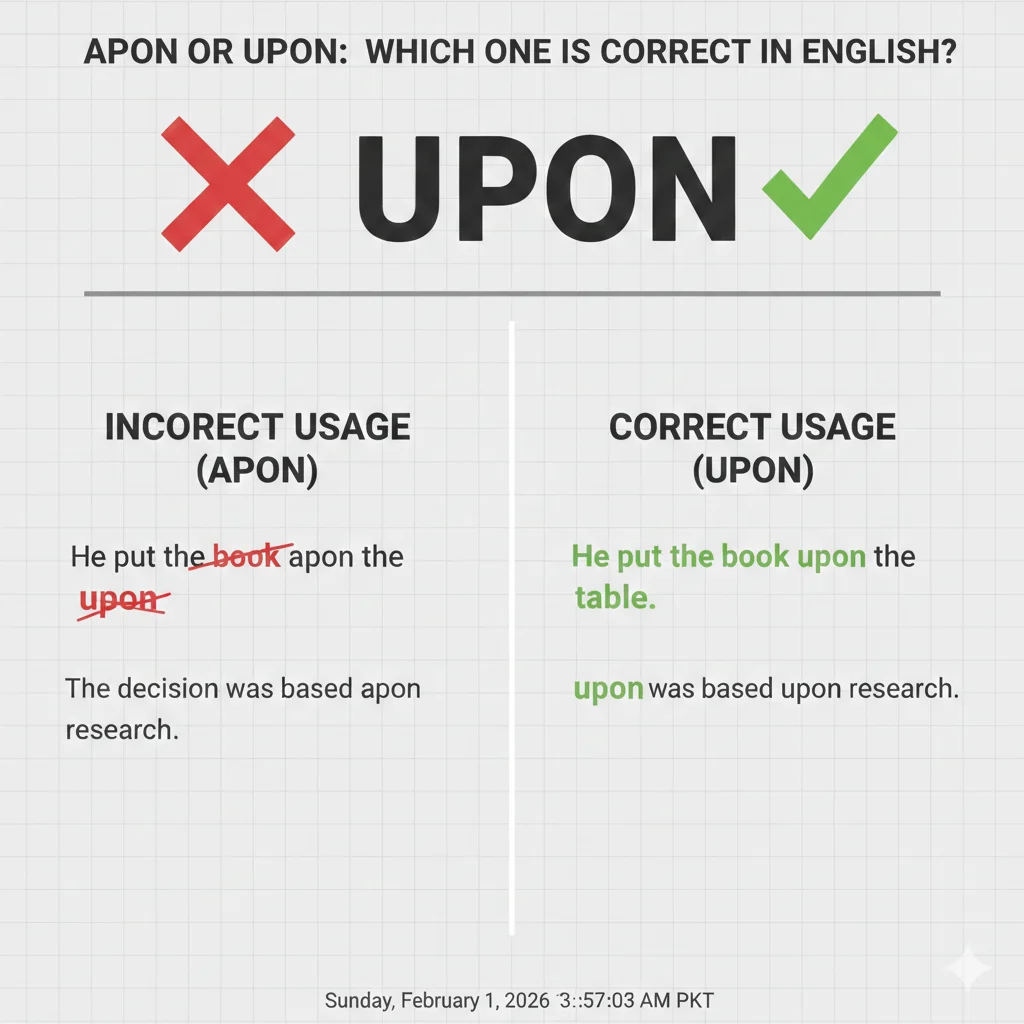
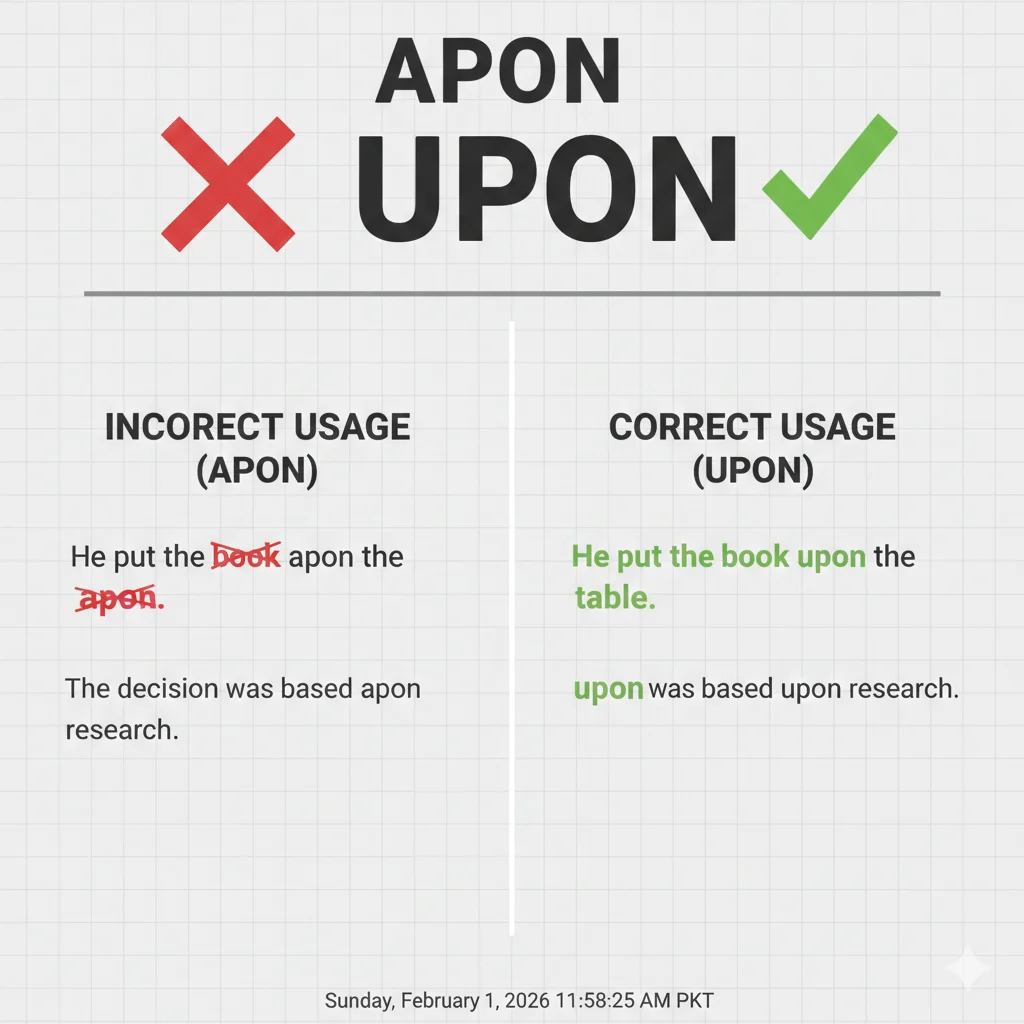
👉 “Upon” is correct English. “Apon” is incorrect.
- ✅ Upon = a real English preposition
- ❌ Apon = a common spelling mistake
Examples:
- ✅ Upon arrival, please report to reception.
- ❌ Apon arrival, please report to reception.
Meaning of “upon”:
- On
- Immediately after
- Based on
So if you’re wondering “Apon or upon grammar?”, the answer is simple: always use “upon.”
The Origin of Apon or Upon
The word “upon” comes from Old English “uppan” and “upan,” meaning “on” or “above.” Over time, spelling evolved into the modern form upon.
Why does “apon” exist?
- It comes from phonetic spelling
- People write what they hear
- It appears in informal or non-native writing
Important note:
- “Apon” has no historical or grammatical basis in modern English
- It does not appear in standard dictionaries
So when people search “apon meaning” or “apon meaning in English,” the correct explanation is: it has no accepted meaning.
Analog or Analogue: The Simple Answer You Need
British English vs American English Spelling
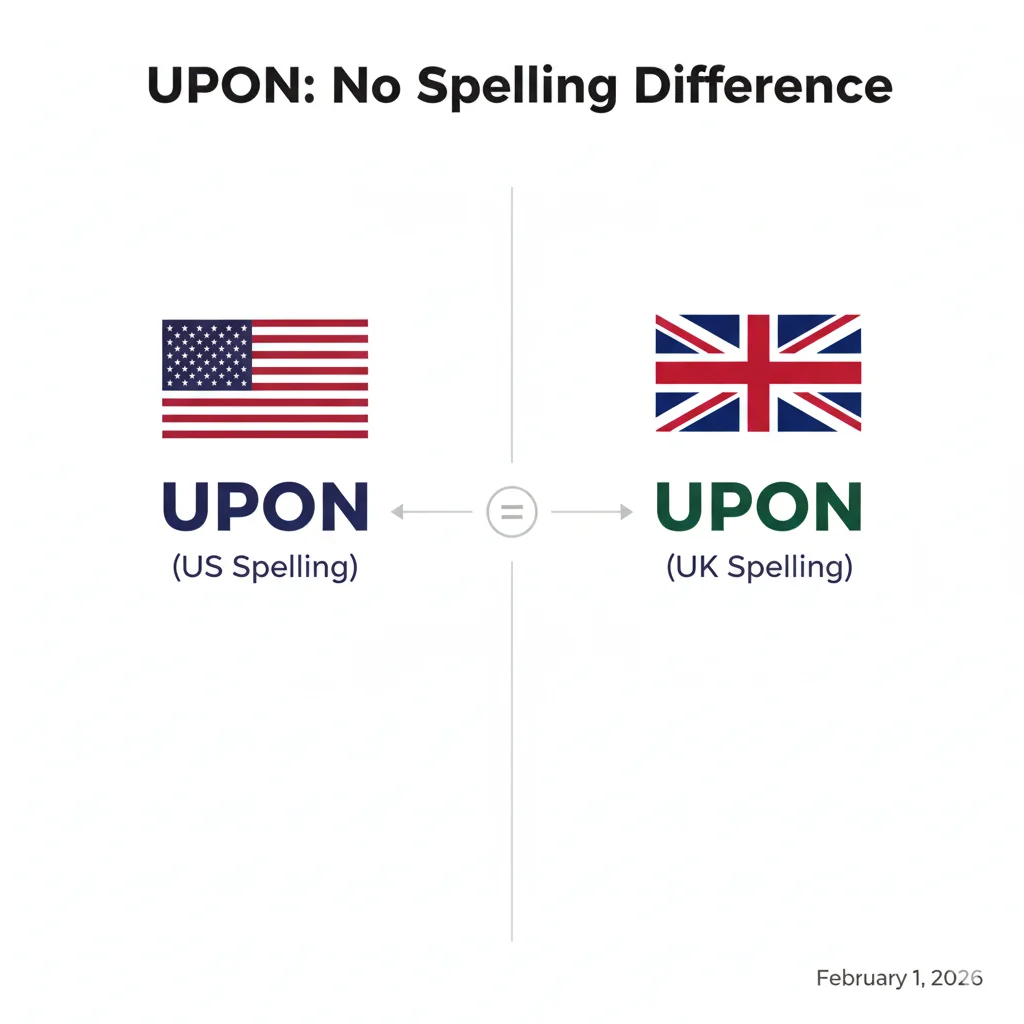
Unlike colour vs color or centre vs center, “upon” does not change spelling in British or American English.
| Feature | British English | American English |
|---|---|---|
| Correct form | Upon | Upon |
| “Apon” accepted? | ❌ No | ❌ No |
| Formal writing | Upon | Upon |
| Informal use | Upon | Upon |
📌 Conclusion:
There is no British or American variation here. Upon is universal.
Which Spelling Should You Use?
Use “upon” in all situations, no matter your audience:
- 🇺🇸 US audience: Use upon
- 🇬🇧 UK & Commonwealth: Use upon
- 🌍 Global English / SEO / exams: Use upon
If you want professional, correct, and SEO-safe writing—never use “apon.”
Common Mistakes with Apon or Upon
Here are frequent errors and fixes:
| Mistake | Correct Form |
|---|---|
| Apon arrival | Upon arrival |
| Apon request | Upon request |
| Apon this issue | Upon this issue |
| Apon completion | Upon completion |
Rule to remember:
If you mean “on” or “after,” the word is upon.
Apon or Upon in Everyday Examples
Emails
- ✅ Upon receiving your email, I will respond.
News
- ✅ The policy will change upon approval.
Social Media
- ✅ Life changes upon reflection.
Formal Writing
- ✅ Payment is due upon delivery.
This clearly shows apon or upon in English usage—and only upon works.

Apon or Upon – Google Trends & Usage Data
Search data shows:
- “Upon” is widely used in:
- United States
- United Kingdom
- India
- Pakistan
- Australia
- “Apon” appears mainly as:
- A spelling error
- A learner mistake
- Low-authority content
Google favors “upon” in:
- Legal documents
- Academic writing
- SEO content
- News articles
That’s why “apon vs upon arrival” searches always lead to upon as the correct form.
Comparison Table: Apon vs Upon
| Feature | Apon | Upon |
|---|---|---|
| Correct English | ❌ No | ✅ Yes |
| Dictionary entry | ❌ No | ✅ Yes |
| Grammar use | ❌ Incorrect | ✅ Correct |
| Formal writing | ❌ Never | ✅ Always |
| Meaning | None | On / After / Based on |
FAQs: Apon or Upon
1. When to use apon or upon?
Always use upon. Apon is incorrect.
2. When should I use the word “upon”?
Use it to mean on, after, or immediately following.
3. What is the difference between upon and on?
Upon sounds more formal and often implies immediacy.
4. What is meant by “upon”?
It means on, at the time of, or as soon as something happens.
5. Is “apon” ever correct?
No. It has no standard meaning or grammar role.
6. What is a synonym of “upon”?
On, after, following, based on.
7. Is “upon arrival” correct English?
Yes. “Upon arrival” is fully correct and formal.
Conclusion
The confusion around apon or upon is common, but the rule is simple. “Upon” is the only correct word in English. It has a clear meaning, strong grammatical support, and is accepted in all forms of writing—from casual messages to legal documents. On the other hand, “apon” has no meaning in standard English and should be avoided in professional, academic, or SEO content.
If you remember just one thing, let it be this: when you mean on, after, or immediately following, the correct choice is upon. Whether you’re writing emails, articles, exams, or formal notices, using upon keeps your English clear, correct, and credible. Avoid phonetic spellings, trust dictionary-backed words, and your writing will instantly look more polished and professional.

“Jane Austen shares heartfelt, graceful prayers on PrayVibe.com, offering comfort, hope, and gentle spiritual guidance to readers seeking peace and clarity.”