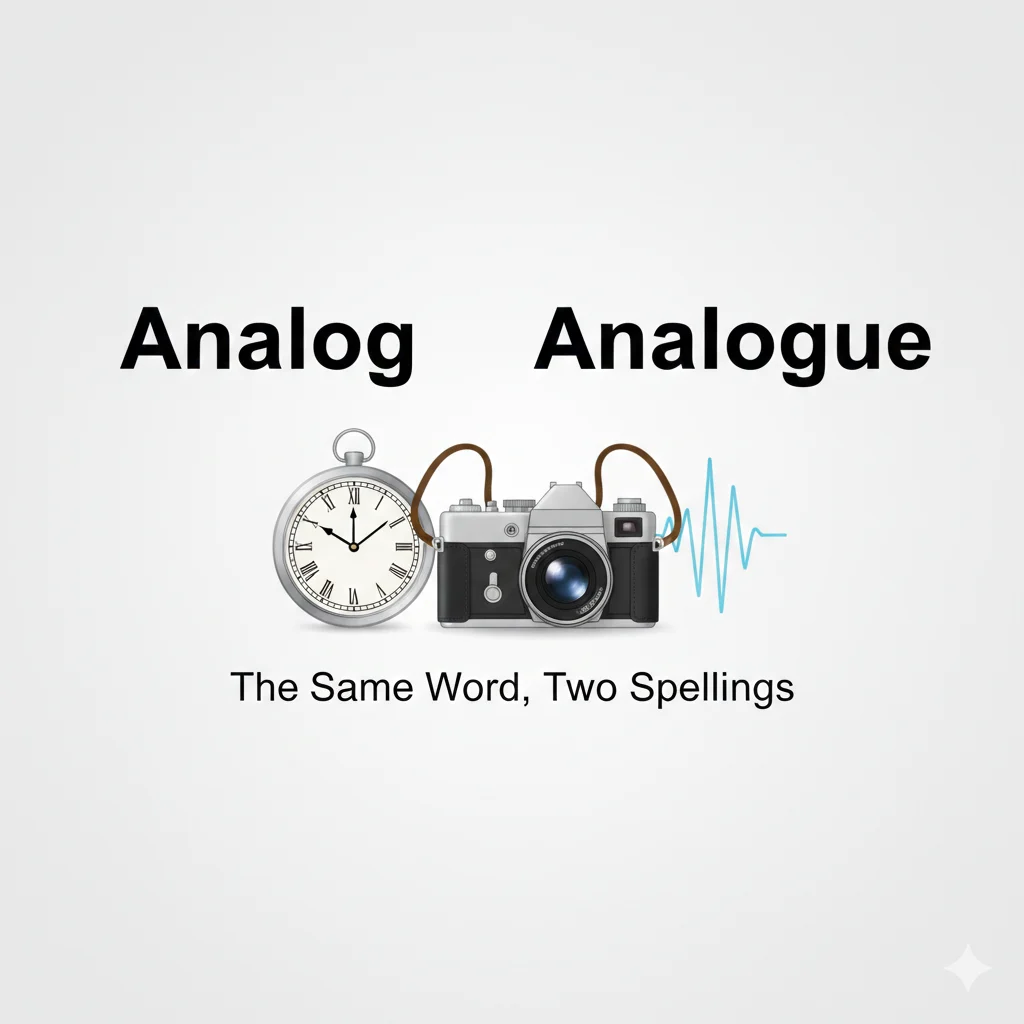
When writing or speaking, many people get confused about whether to use analog or analogue. Both words exist, but which spelling is correct? Understanding this difference can prevent grammar mistakes, especially in professional, academic, or technical writing.
People often search for analog or analogue meaning, trying to clarify its usage in sentences, photography, electronics, or grammar rules. While analog is the preferred spelling in American English, analogue is used in British English and other Commonwealth countries. This article will explain the origins, differences, common mistakes, and practical examples of using analog or analogue, helping you write confidently and correctly.
By the end, you’ll know which spelling to use, how to apply it in different contexts, and understand why this small difference matters for clarity and professionalism.
Analog or Analogue – Quick Answer
Quick Answer:
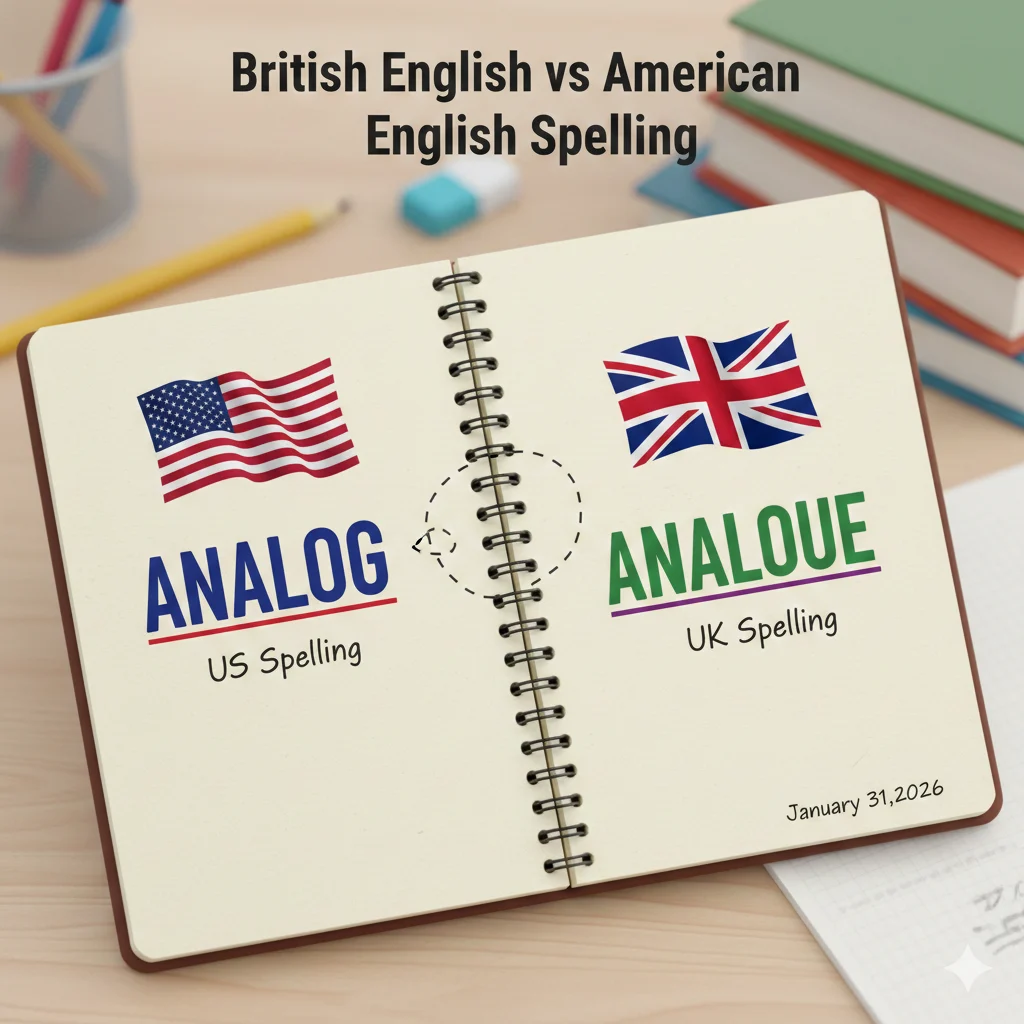
- Analog → American English spelling
- Analogue → British English spelling
- Both refer to the same concept: a system, signal, or object representing something else in a continuous way.
Examples:
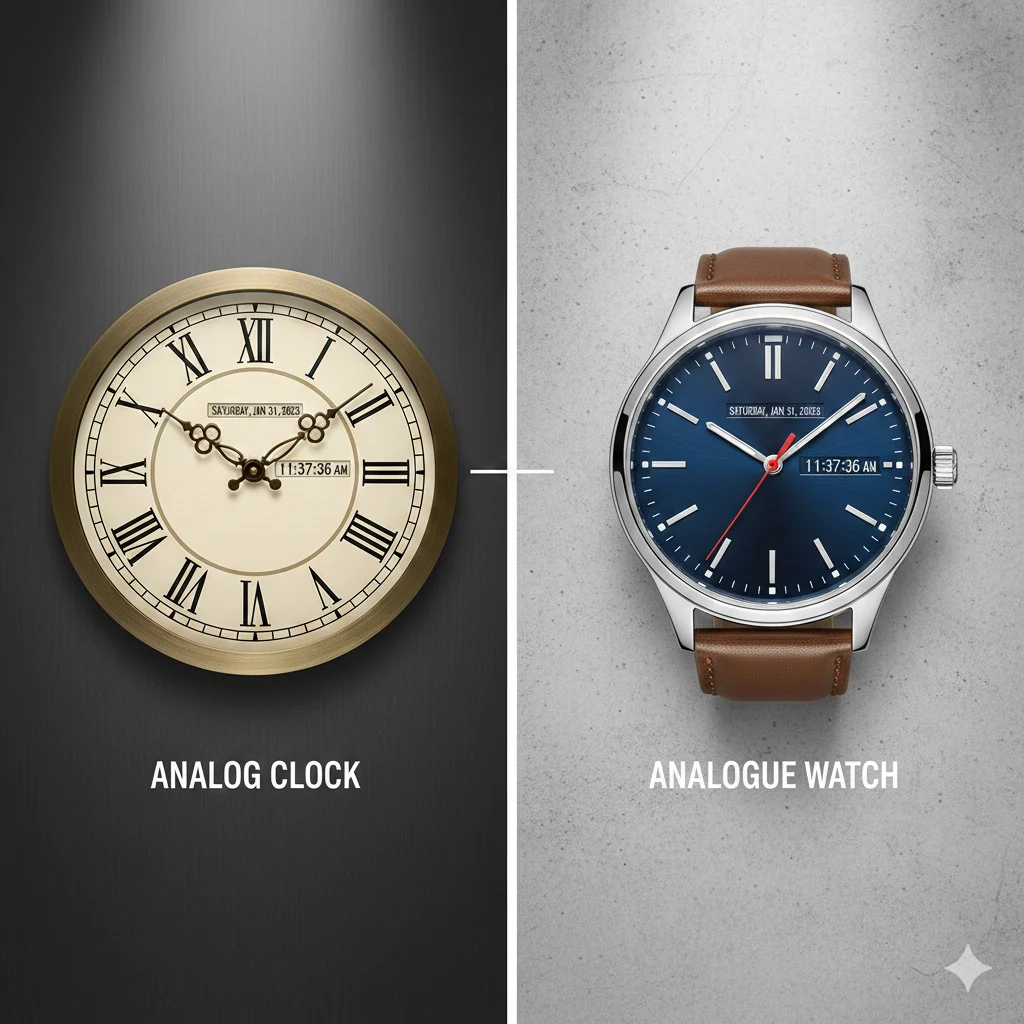
- Analog in a sentence: “The old clock uses an analog display.”
- Analogue in a sentence: “The analogue watch has a classic style.”
- Analog or analogue photography: Film cameras are often called analog or analogue cameras, depending on the region.
Keyword naturally used: analog or analogue meaning, analog or analogue in a sentence, analog or analogue examples, analog or analogue photography.
The Origin of Analog or Analogue
The word comes from the Greek “analogia,” meaning proportion or correspondence. Over time:
- Analogue became the standard spelling in British English.
- Analog simplified the spelling for American English during the 20th century, following trends to remove “ue” endings (like “catalogue → catalog”).
So, when you wonder “Is it analog or analogue in British English?”, remember: UK → analogue, US → analog.
British English vs American English Spelling
| Feature | American English | British English |
|---|---|---|
| Spelling | Analog | Analogue |
| Photography context | Analog camera | Analogue camera |
| Electronics context | Analog electronics | Analogue electronics |
| Everyday writing | Use analog | Use analogue |
Notes:
- In technical fields, US publications usually use analog, even globally.
- In literature, journalism, and formal writing in the UK, analogue is preferred.
Keyword naturally used: analog or analogue UK, analog vs analogue electronics, analogue vs digital.
Amid or Amidst: What’s the Difference and Which Is Correct?
Which Spelling Should You Use?
Your choice depends on your audience:
- US audience: Use analog.
- UK/Commonwealth audience: Use analogue.
- Global, mixed audience: Pick one and stay consistent, though analog is often easier for international readers.
If you write for technical blogs, electronics manuals, or software documentation, analog is almost always correct.
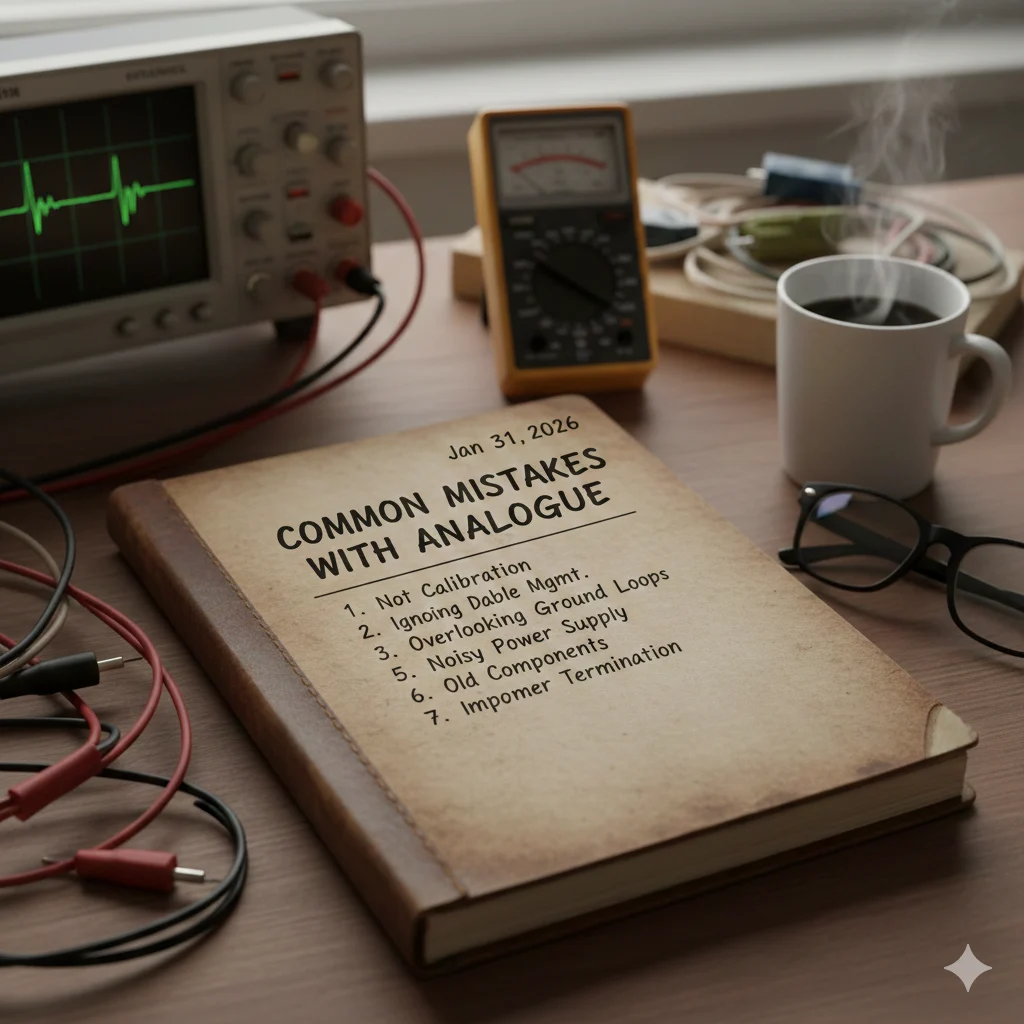
Common Mistakes with Analog or Analogue
- Mixing US and UK spelling in the same text.
- ❌ “The analogue display is analog.”
- ✅ “The analogue display is analogue.”
- Confusing analogy with analogue.
- ❌ “This is an analogy of the device.”
- ✅ “This is an analogue of the device.”
- Using analog in formal British English writing.
- ❌ “She prefers an analog clock.”
- ✅ “She prefers an analogue clock.”
- Forgetting electronics context: analog signals, not digital.
Keyword naturally used: analog or analogue grammar, which is correct analog or analogue?, what does “analog” mean?, what is the difference between an analogy and an analogue?
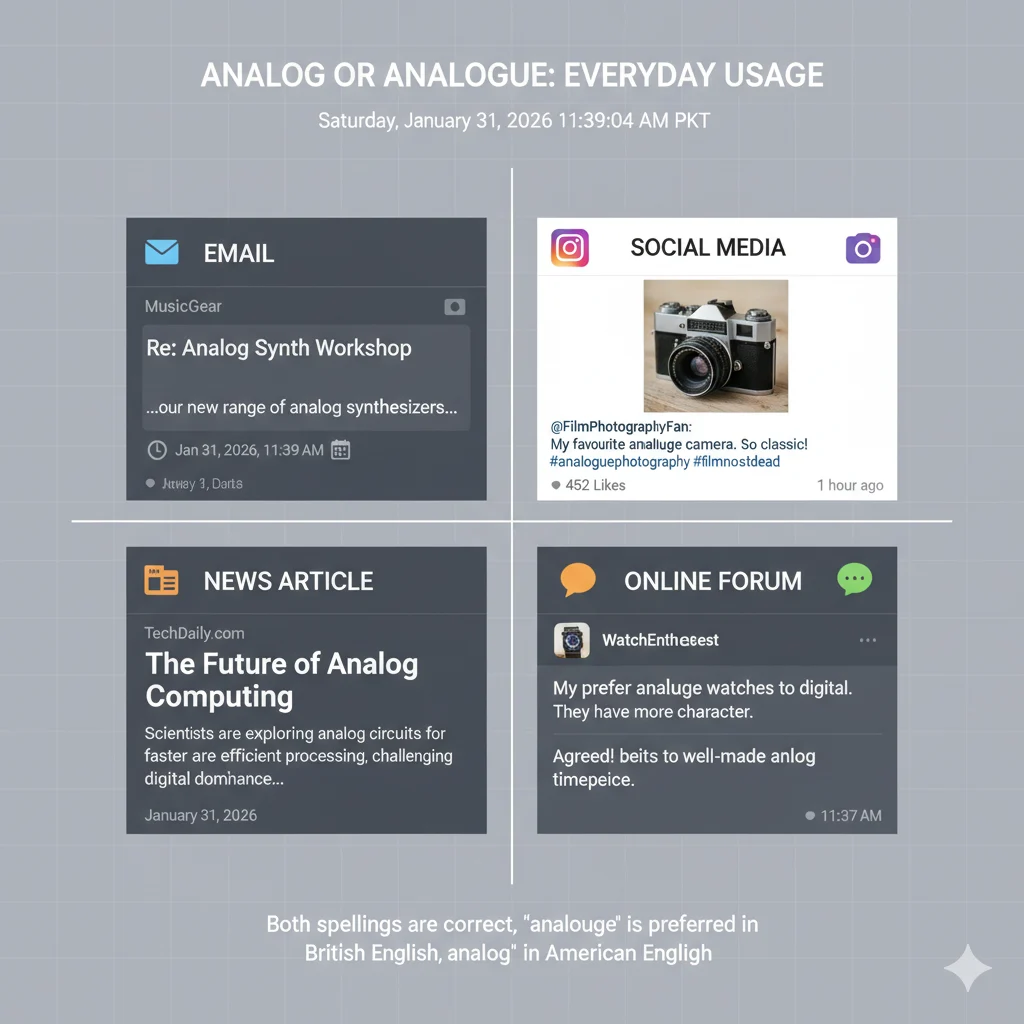
Analog or Analogue in Everyday Examples
Emails: “Please check the analog clock settings.”
News articles: “Analogue cameras are making a comeback among enthusiasts.”
Social media: “I love analog photography over digital filters!”
Formal writing: “The device outputs an analogue signal rather than a digital one.”
This shows that analog or analogue is widely used in both casual and professional contexts.
Alum or Alumni: Complete Guide on Correct Usage
Analog or Analogue – Google Trends & Usage Data
- Popularity by country:
- USA → analog dominates
- UK, Australia, Canada → analogue dominates
- Context: Electronics, photography, and clocks are top search areas.
- Trends: Analog photography is trending globally as a niche hobby, while digital continues to dominate.
Variations Comparison Table
| Variation | Usage Example |
|---|---|
| Analog | Analog electronics, analog clock |
| Analogue | Analogue camera, analogue display |
| Analogue vs Digital | Analogue vs digital music recording |
| Analogy vs Analogue | The device is an analogue of the original |
| Analog or Analogue meaning | Clarifies spelling and context |
| Analog or Analogue in a sentence | Correct usage in writing |
FAQs About Analog or Analogue
Q1: Is it analog or analogue in British English?
- Analogue is correct in British English.
Q2: Which is correct, analog or analogue?
- Both are correct; use analog for US, analogue for UK.
Q3: What does “analog” mean?
- It refers to something representing another thing in a continuous way, not digital.
Q4: Can I use analog in the UK?
- Yes, but analogue is preferred in formal UK writing.
Q5: What is the difference between an analogy and an analogue?
- Analogy = comparison of ideas.
- Analogue = thing representing another in function or form.
Q6: Can analog or analogue be used in electronics?
- Yes, you can say analog electronics (US) or analogue electronics (UK).
Q7: Are analog and digital the same?
- No, analog is continuous, digital is discrete.
Conclusion
Understanding analog or analogue is essential for clear, professional writing. Remember:
- Analog → American English, US audience, technical fields.
- Analogue → British English, UK/Commonwealth audience, formal writing.
- Avoid mixing spellings in the same text.
- Use the word correctly in photography, electronics, and clocks.
- Check context: analogue vs digital, analogy vs analogue.
By following these simple rules, your writing will be accurate, polished, and globally understandable. Whether you are writing for emails, blogs, or academic papers, knowing which spelling to use ensures clarity and professionalism.

“Jane Austen shares heartfelt, graceful prayers on PrayVibe.com, offering comfort, hope, and gentle spiritual guidance to readers seeking peace and clarity.”