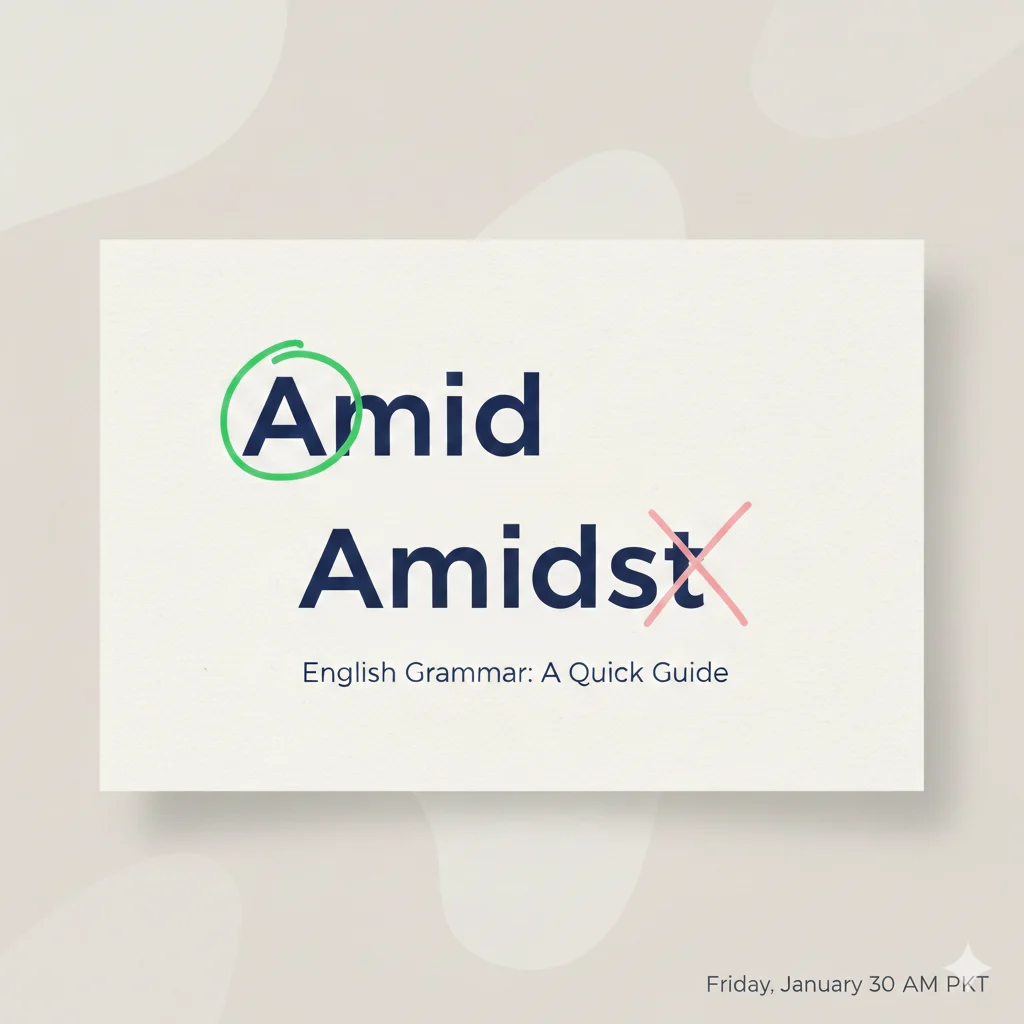
Small English words often cause big confusion. Amid and amidst are perfect examples. Many writers stop mid-sentence and wonder: Which one is correct? Do they mean the same thing? Does one sound too formal or outdated?
People search for this topic because both words appear in books, news articles, emails, and social media. They look similar, sound similar, and share the same meaning—but they feel different in tone. Some writers worry that amidst sounds old-fashioned. Others fear that amid might be too simple or informal.
This guide clears up that confusion once and for all. You will get a quick answer, followed by a clear explanation of meaning, pronunciation, origin, and correct usage in modern English. You’ll also see real examples from daily life and professional writing. By the end, you will know exactly which word to use—and when—without hesitation.
Amidst or Amid – Quick Answer
Both words mean “in the middle of” or “surrounded by.”
They are grammatically correct and can usually replace each other.
Examples:
- She stayed calm amid the chaos.
- She stayed calm amidst the chaos.
Key point:
- Amid is more common in modern English.
- Amidst sounds more formal or literary.
If you want safe, natural usage, choose “amid.”
The Origin of Amid and Amidst
The word amid comes from Old English and originally meant “in the middle.” Over time, it became shorter and simpler.
Amidst developed later when English writers added “-st” endings to some words. This happened during Middle English and affected words like whilst and amongst.
Why do both forms still exist?
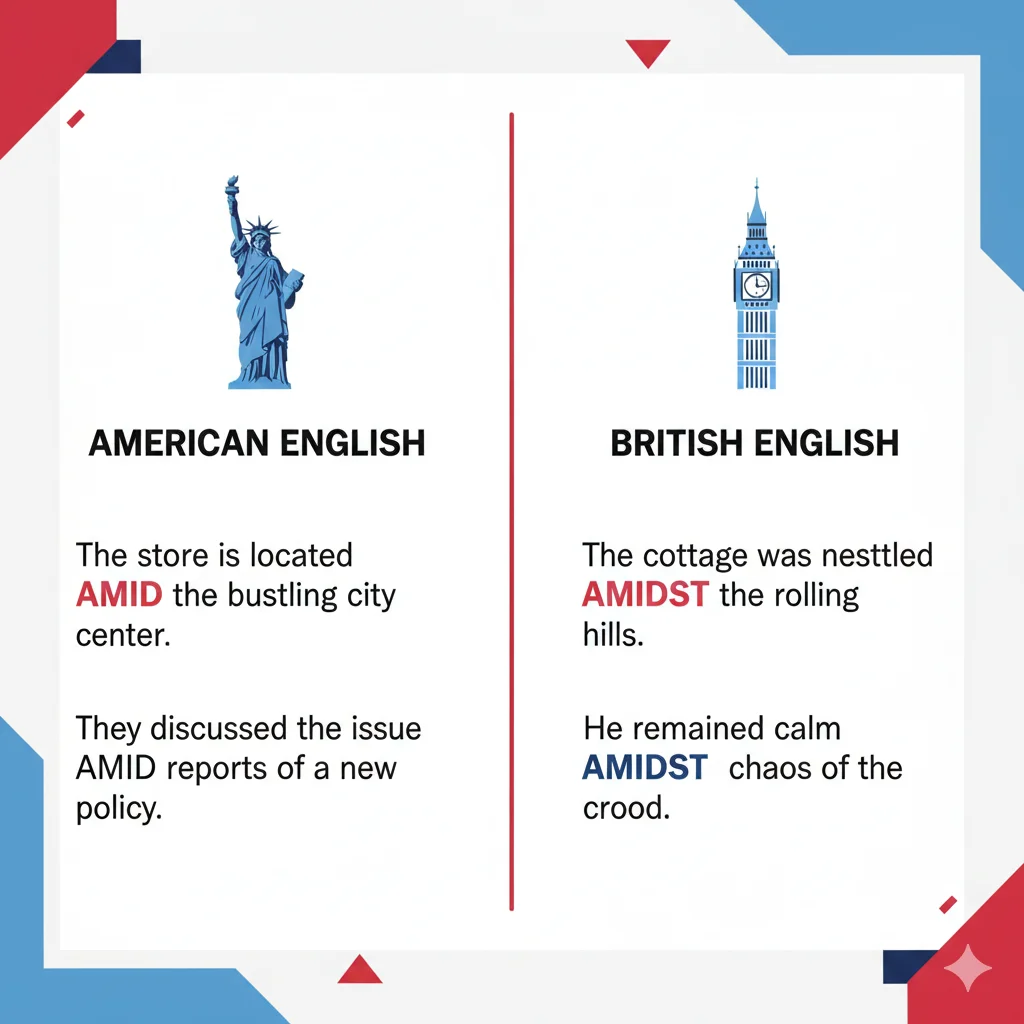
Because English evolved differently across regions. American English favored shorter forms, while British English kept some traditional spellings.
That history explains why both versions are correct today.
British English vs American English Spelling
There is no spelling mistake here—only style preference.
| Feature | Amid | Amidst |
|---|---|---|
| American English | Preferred | Rare |
| British English | Common | Common |
| Tone | Neutral | Slightly formal |
| Modern digital use | Very high | Medium |
| Literary writing | Less common | More common |
Example:
- US news: Markets fell amid global uncertainty.
- UK writing: Hope survived amidst the turmoil.
Which Spelling Should You Use?
Your audience matters more than personal preference.
- US audience: Use amid
- UK or Commonwealth readers: Either is fine
- Global or SEO content: Use amid
- Formal or literary tone: Amidst is acceptable
Professional tip: Pick one form and stay consistent throughout your writing.
Common Mistakes Writers Make
Here are frequent errors to avoid:
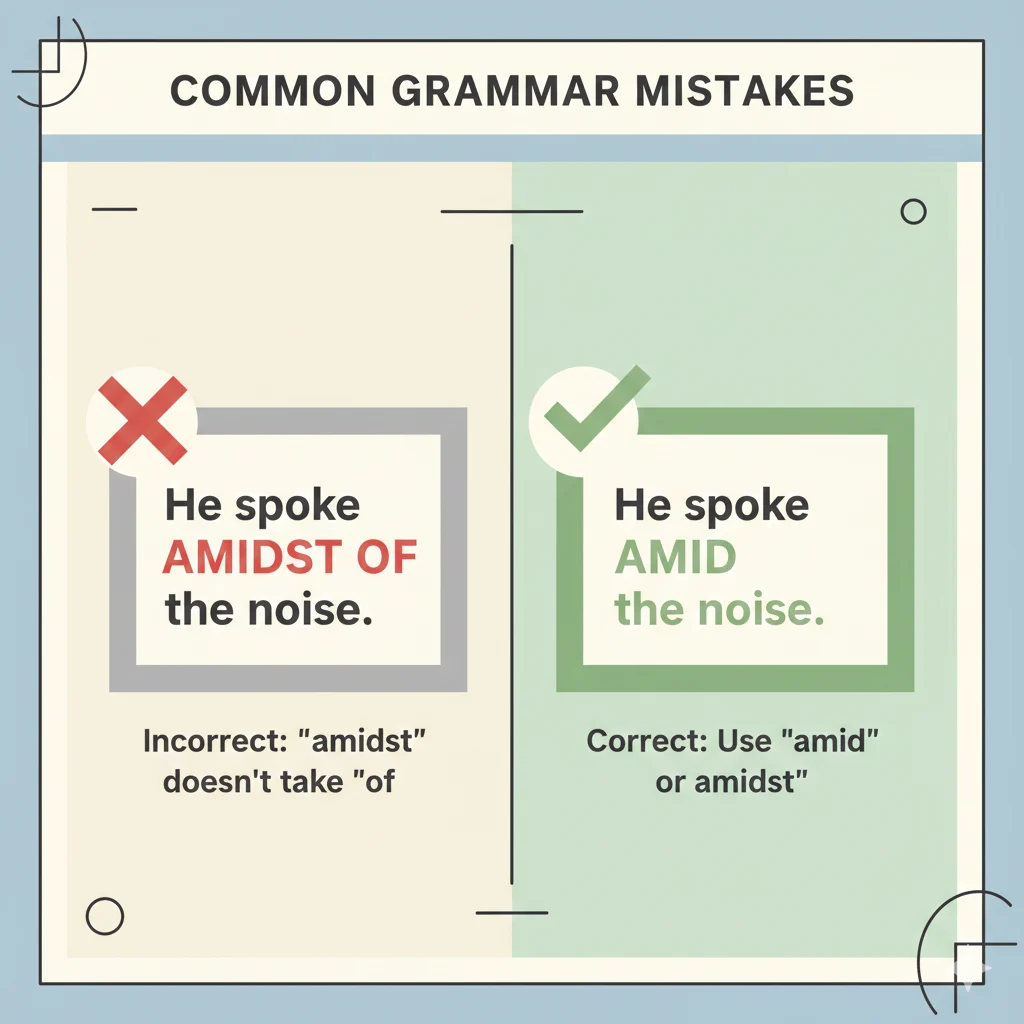
❌ Amidst of the noise
✅ Amid the noise
❌ Amidst between the crowd
✅ Amid the crowd
❌ Mixing both forms in one article
✅ Choose one style only
❌ Thinking amidst is “more correct”
✅ Both are correct English words
Amid and Amidst in Everyday Examples
Emails
- Please remain patient amid ongoing updates.
News Headlines
- The nation united amid rising tensions.
Social Media
- Finding peace amid the chaos 🌿
Formal Writing
- Progress continued amidst economic challenges.

Aisles or Isles – Meaning, Difference & Correct English Usage
Usage Trends and Popularity
Content analysis and usage patterns show clear trends:
- “Amid” dominates in American media, blogs, and SEO content
- “Amidst” appears more in British writing and literature
- Headlines prefer amid because it is shorter and clearer
For online writing and global audiences, amid performs better due to readability and simplicity.
Comparison Table: Amid vs Amidst
| Aspect | Amid | Amidst |
|---|---|---|
| Meaning | In the middle of | In the middle of |
| Pronunciation | uh-MID | uh-MIDST |
| Tone | Neutral | Slightly formal |
| Modern usage | High | Medium |
| Feels pretentious? | No | Sometimes |
FAQs
1. What is meant by “amidst”?
It means being surrounded by or happening in the middle of something.
2. Is it “amid” or “amidst” the chaos?
Both are correct, but “amid the chaos” sounds more modern.
3. How do you use amid in a sentence?
She smiled amid the confusion.
4. Is using amid pretentious?
No. Amid is simple, clear, and widely accepted.
5. Are amid and amidst interchangeable?
Yes, in most cases they can replace each other without changing meaning.
6. What is the pronunciation difference?
- Amid pronunciation: uh-MID
- Amidst pronunciation: uh-MIDST
Conclusion
The choice between amid and amidst is not about correctness—it is about tone and audience. Both words mean the same thing and are accepted in standard English. The difference lies in style.
Amid is shorter, clearer, and more common in modern writing. It works best for emails, blogs, news articles, and SEO content. Amidst carries a slightly traditional or literary feel and fits better in formal or creative writing.
If your goal is clarity and global readability, use “amid.” If you want a classic tone, “amidst” is still valid. Choose the word that fits your audience, stay consistent, and write with confidence.

“George Orwell shares clear, heartfelt prayers on PrayVibe.com, offering hope, reflection, and spiritual strength to readers seeking comfort and guidance.”