When it comes to contracts, legal documents, or official writings, many people stumble over the words “addendums or addenda.” Are they the same? Which one is correct? And why do spelling differences exist? This confusion is common because these terms are rarely used in everyday conversation but carry high importance in formal writing, contracts, and professional communication.
Understanding addendums or addenda is essential for anyone dealing with agreements, contracts, or publications. Using the wrong form can make a document look unprofessional or even cause misunderstandings in legal or construction contexts.
In this guide, we will answer the pressing questions: What is the correct plural for addendum? Should I use addendums or addenda? and provide clear examples and professional advice on usage. By the end of this article, you’ll confidently know how to use these terms in the right context.
Addendums or Addenda
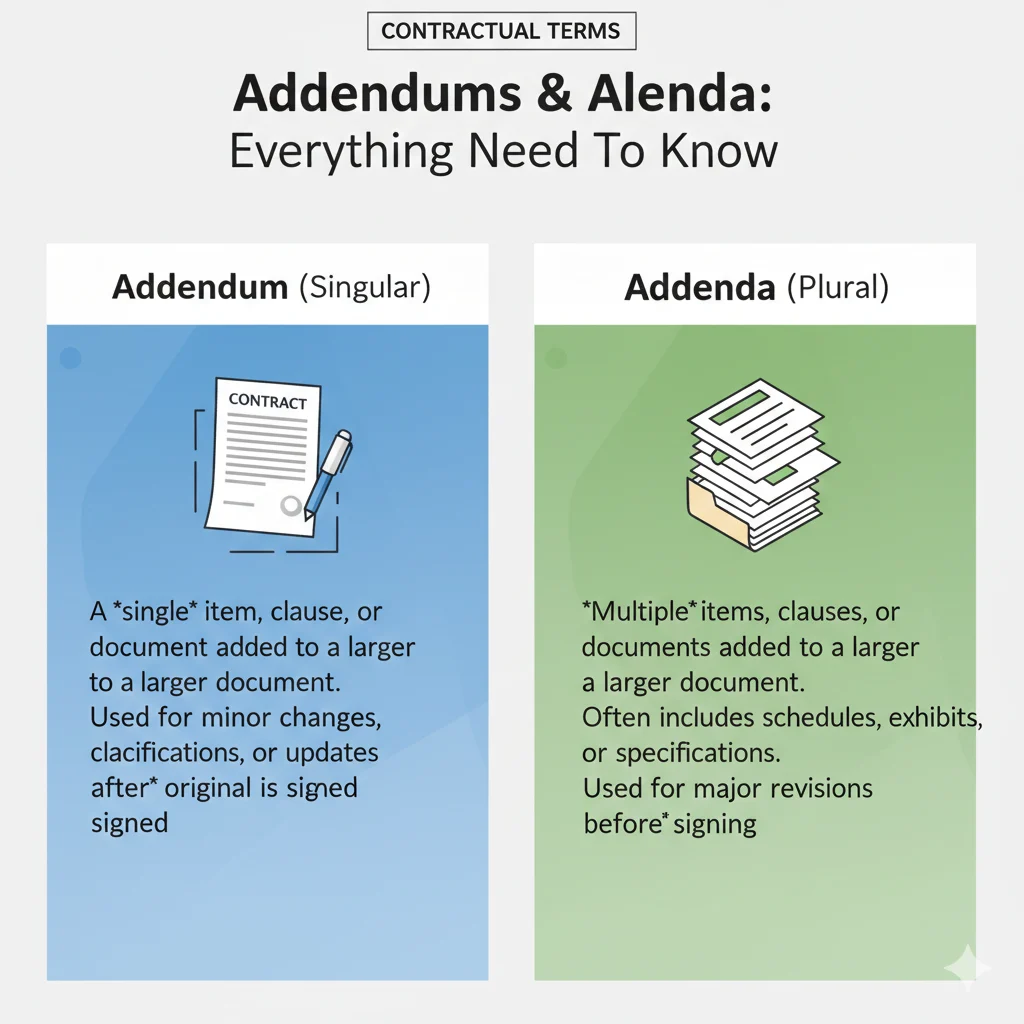
The word “addendum” (singular) refers to something added, usually to a document. Its plural can be “addenda” (traditional, Latin-based) or “addendums” (modern English).
Examples:
- Addendum (singular): The contract included an addendum regarding payment terms.
- Addenda (plural): The project proposal has three addenda attached.
- Addendums (plural): The legal team reviewed all addendums before signing.
In contracts: Both plural forms are accepted in English, though “addenda” is more formal and preferred in legal or academic contexts.
Tip: Use addenda when writing for professional, legal, or international audiences; addendums is widely accepted in casual and American English.

The Origin of Addendums or Addenda
The word “addendum” comes from Latin, meaning “something to be added.” In Latin, the plural form of words ending in “-um” is usually “-a,” which gives us “addenda.”
History:
- First used in English in the 1600s in formal texts and legal documents.
- Originally, all plurals followed Latin rules; over time, English speakers adapted some words to modern plural forms by adding “-s”, leading to “addendums.”
Why spelling differences exist:
- Addenda: Preserves Latin origin, considered more formal and proper in legal, academic, or construction documents.
- Addendums: Modern English adaptation, easier for everyday use and widely accepted in American English.
Aisles or Isles – Meaning, Difference & Correct English Usage

British English vs American English Spelling
Spelling differences are subtle but important. Let’s compare:
| Aspect | British English | American English | Notes |
|---|---|---|---|
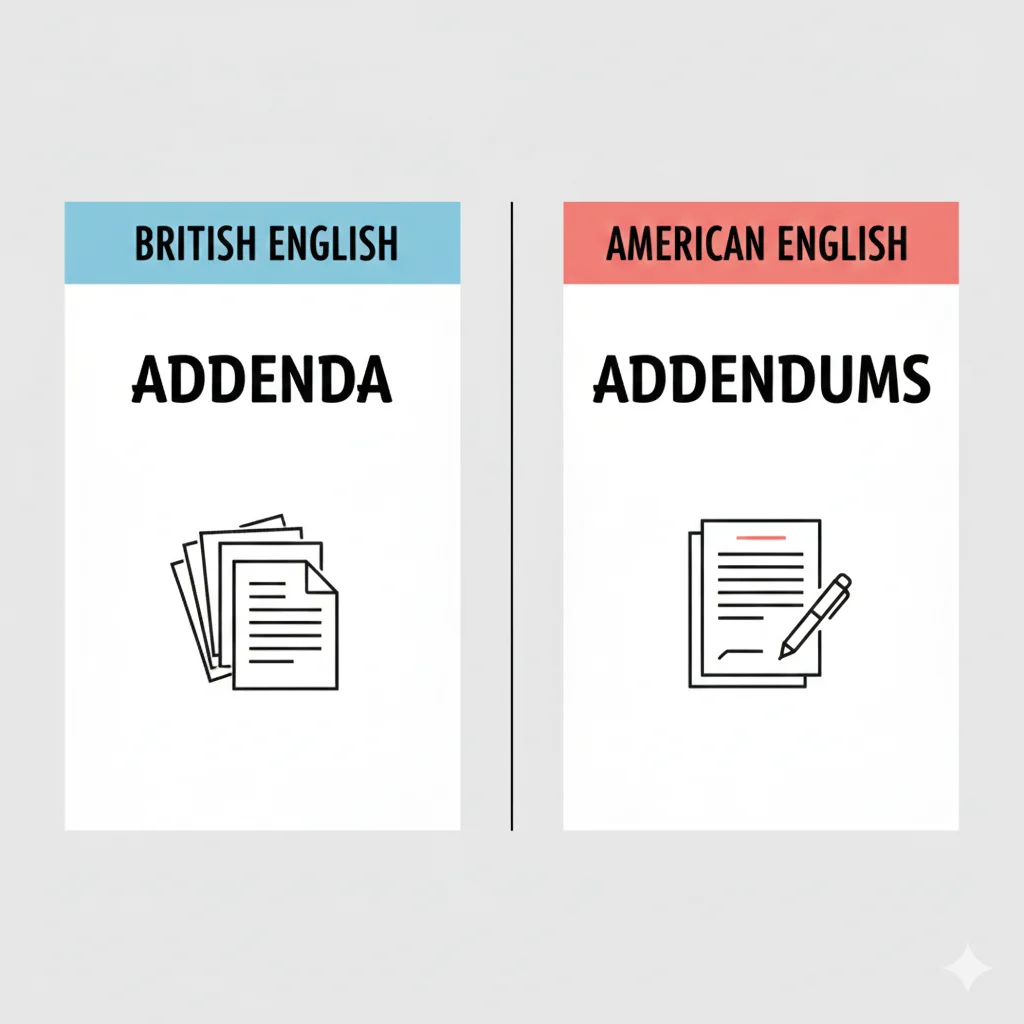
| Plural of Addendum | Addenda | Addendums | Addenda is traditional, Addendums is modern |
| Usage in Contracts | Preferred | Accepted | Both understood, Addenda sounds formal |
| Everyday Writing | Less common | More common | Addendums used in emails, blogs, casual writing |
Key Takeaway: British English leans toward addenda, American English allows addendums. Either is correct, but context matters.
Examples:
- British English: The report included several addenda outlining policy changes.
- American English: The meeting handouts had multiple addendums for reference.
Which Spelling Should You Use?
Choosing the right spelling depends on your audience:
- US audience (informal or business): Use addendums.
- UK/Commonwealth or international formal audience: Use addenda.
- Legal or construction documents: Prefer addenda, even in the US.
Quick advice: If unsure, use addenda; it’s universally accepted and more formal.
Examples:
- Contract clause: “Refer to the addenda for additional terms.”
- Email: “Attached are the latest addendums for review.”
Common Mistakes with Addendums or Addenda
Many writers make errors when using these words. Here’s what to avoid:
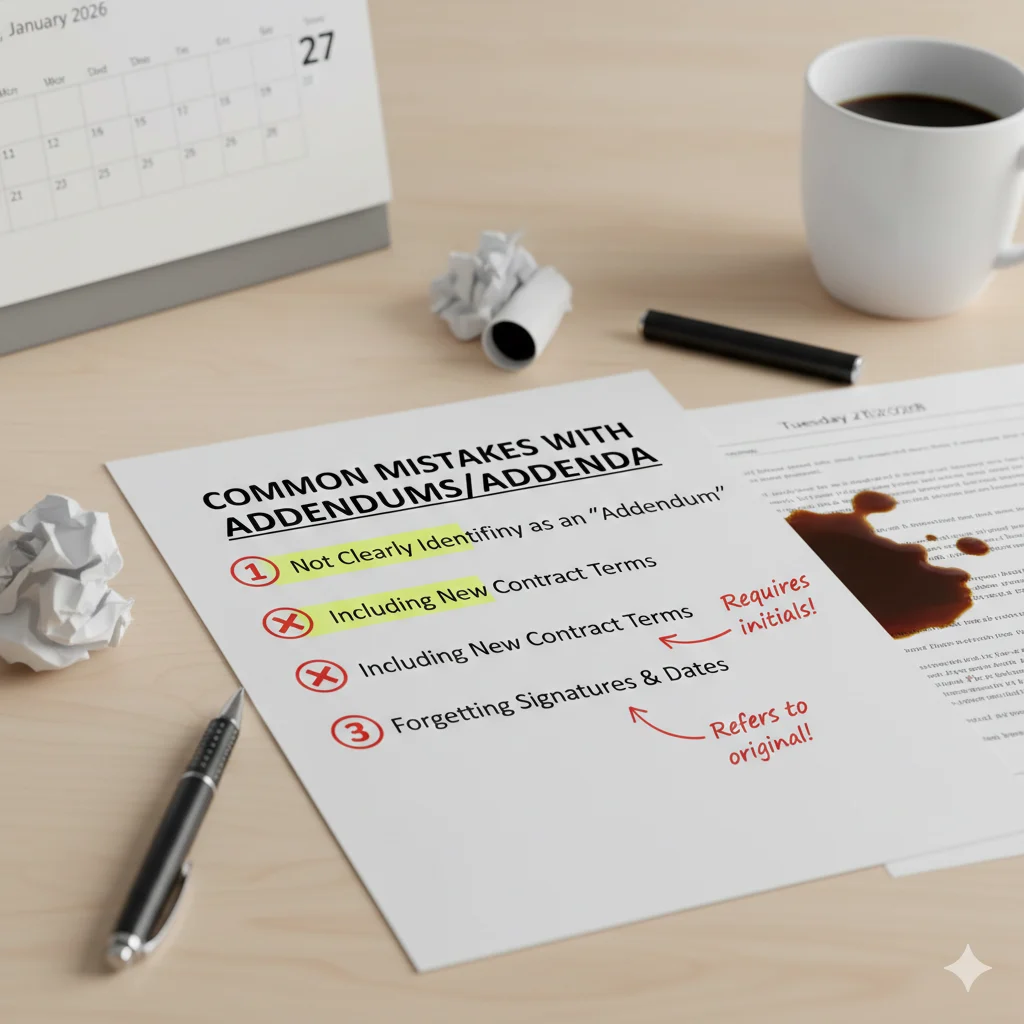
- Wrong plural: Saying “addendumses” or “addendum’s” instead of addendums/addenda.
- Confusing with amendments: An addendum adds information, while an amendment changes existing content.
- Example: “This addendum adds a new clause.” vs “This amendment changes clause 3.”
- Spelling mismatch in the same document: Don’t mix addendums and addenda. Choose one style.
- Incorrect usage in sentences:
- ❌ “The addendums is attached.” → Correct: “The addendums are attached.”
Addendums or Addenda in Everyday Examples
These words are not limited to legal documents; you’ll see them in various contexts:
1. Emails:
- “Please see the attached addendums for the updated schedule.”
2. News articles:
- “The report’s addenda clarify the initial findings.”
3. Social media or blogs:
- “Check out the addendums we added to our latest guide.”
4. Formal writing:
- “The final manuscript includes three addenda summarizing peer feedback.”
5. Contracts and construction:
- “Addenda vs addendum in construction documents should be clearly labeled.”
Tip: Always ensure your audience understands the plural form and context.
Addendums or Addenda – Google Trends & Usage Data
Google Trends shows interesting patterns:
- Top countries searching: United States, United Kingdom, Canada, Australia.
- Search peaks: Often during legal and academic submission periods, contract reviews, or construction project timelines.
- Common queries:
- “Addendums or addenda meaning”
- “Plural of addendum”
- “Addenda vs amendment”
Insight: Both terms are actively searched, but addenda dominates in professional and international contexts, while addendums is popular in casual American English.
Comparison Table –
| Variation | Meaning | Usage Example | Formality Level |
|---|---|---|---|
| Addendum | Singular; something added | “The contract has an addendum.” | Formal |
| Addenda | Plural (traditional) | “Three addenda are attached.” | Very formal |
| Addendums | Plural (modern English) | “The reports include addendums.” | Informal/US |
FAQs
1. What is the correct plural for addendum?
- Both addenda (formal) and addendums (modern English) are correct.
2. Should I use addendums or addenda?
- For legal, academic, or international documents, use addenda. For casual American English, addendums is fine.
3. Is addendum the same as addenda?
- Addendum is singular; addenda is its plural.
4. What do you call multiple addendums?
- You can say addendums or addenda, depending on context and audience.
5. Addenda vs amendment – what’s the difference?
- An addendum adds new information; an amendment changes existing content.
6. Can I mix addendums and addenda in the same document?
- No, choose one style for consistency.
7. Addenda in a sentence – how to use it?
- “The manuscript includes three addenda summarizing reviewer feedback.”
Conclusion
Understanding addendums or addenda is crucial for anyone writing contracts, legal documents, or professional reports. While both plural forms are accepted, addenda is formal and internationally recognized, whereas addendums is a modern English adaptation suitable for American audiences and casual writing. Always consider your audience, the context, and the formality of your document when choosing which form to use.
Remember: addenda adds information, amendments modify content, and consistency is key. Use examples in emails, contracts, and reports to ensure clarity. With this knowledge, you can confidently handle any document, avoiding common mistakes and communicating professionally.

“Agatha Christie writes comforting, faith-filled prayers on PrayVibe.com, offering hope, guidance, and spiritual peace to readers seeking God’s light.”